
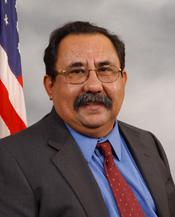
Historical · U.S. House · Arizona · District 7
Raúl Grijalva
Former U.S. Representative · Arizona District 7 · 2003–2025 · Democratic
Raúl Grijalva represented Arizona's District 7 in the United States House of Representatives (2003–2025) for the Democratic party. The page below collects sourced biographical facts, term history, committee roles, and provenance for Grijalva.
Bioguide ID: G000551
Key facts
- Full name
- Raúl Grijalva
- State
- Arizona
- District
- District 7
- Party
- Democratic
- House service
- 2003–2025
- First House term
- 2003
- Status
- Left office
- Current term ends
- —
- Born
- 1948
- Bioguide ID
- G000551
- Committee assignments
- —
- Dataset version
- 1.20261007
Biographical narrative
1,184 words · sourced from the Wikipedia REST extract
Raúl M. Grijalva was an American politician and activist who served as a member of the United States House of Representatives from Arizona. A member of the Democratic Party, he represented Arizona's 7th congressional district from 2003 until 2013, then Arizona's 3rd congressional district from 2013 to 2023, and returned to the 7th district from 2023 until his death in 2025. Grijalva's political career spanned over two decades, during which he focused on various issues, including education, natural resources, and social justice. His tenure in Congress was marked by significant legislative efforts and committee leadership, particularly in the realm of natural resources.
Early life and career
Raúl M. Grijalva was born on February 19, 1948, in Canoa Ranch, Arizona, located approximately 30 miles south of Tucson. He was the son of Rafaela and Raúl Grijalva, with his father being a migrant worker who entered the United States through the Bracero Program in 1945. Grijalva's early life was influenced by his family's experiences and the socio-economic challenges faced by migrant workers. He graduated from Sunnyside High School in 1967, where he later became an inductee into the Sunnyside High School Alumni Hall of Fame in 2004.
Following high school, Grijalva attended the University of Arizona, where he earned a bachelor's degree in sociology. His educational background provided him with a foundation for understanding the complexities of social issues, which would later inform his political career. Grijalva initially became involved in politics as a leader of the Raza Unida Party, a political organization that aimed to address the needs and rights of Mexican Americans. His early activism was characterized by a strong commitment to civil rights, although his approach was sometimes viewed as militant, leading to tensions within the local Mexican-American community.
Grijalva's first attempt at elected office came in 1972 when he ran for a seat on the Tucson school board but was unsuccessful. He shifted his strategy and, in 1974, was elected to the Tucson Unified School District board, serving until 1986. His contributions to education were recognized in 1987 when Grijalva Elementary School in Tucson was named in his honor. In addition to his role on the school board, Grijalva worked as the director of the El Pueblo Neighborhood Center from 1975 to 1986, where he focused on community development and support for local residents.
In 1987, he took on the role of Assistant Dean for Hispanic Student Affairs at the University of Arizona, further demonstrating his commitment to education and advocacy for Hispanic students. Grijalva's political career continued to evolve when he was elected to the Pima County Board of Supervisors, representing the 5th district from January 1, 1989, until February 6, 2002. During his time on the board, he served as chair from 2000 to 2002, overseeing various initiatives and policies affecting the local community. He resigned from this position in 2002 to pursue a congressional seat, marking the beginning of his long tenure in the U.S. House of Representatives.
House tenure
Raúl Grijalva was elected to the U.S. House of Representatives in 2002, beginning his first term in the 108th Congress. He represented Arizona's 7th congressional district, which included parts of Tucson and surrounding areas. As a freshman congressman, one of his initial legislative efforts was the introduction of the Tohono O'odham Citizenship Act of 2003, aimed at granting U.S. citizenship to members of the Tohono O'odham Nation. Although the bill did not pass, it highlighted Grijalva's commitment to addressing the rights of indigenous peoples.
Throughout his congressional career, Grijalva served multiple terms and represented different congressional districts due to redistricting. He was a member of the House Natural Resources Committee and later became its chair during the 116th Congress. His leadership in this role was recognized with an "A" grade from the nonpartisan Lugar Center's Congressional Oversight Hearing Index, reflecting his effectiveness in overseeing legislative matters related to natural resources.
Grijalva's tenure was not without controversy. In 2015, he settled a complaint regarding allegations of creating a hostile workplace environment, which involved a payment made from House funds. He faced additional scrutiny during the 116th Congress due to concerns about his alcohol use and workplace conduct, leading to an Ethics Committee investigation. Despite these challenges, he remained an influential figure in Congress, particularly on issues related to environmental policy and social justice.
During the 117th Congress, Grijalva was present at the U.S. Capitol on January 6, 2021, when the Capitol was attacked by supporters of then-President Donald Trump. He condemned the attack, labeling it a dark day for the republic, and called for accountability for those responsible. Grijalva voted to impeach Trump for a second time in the aftermath of the events of January 6, aligning with his party's stance on the issue.
In the 118th Congress, Grijalva returned to serve as the ranking member of the House Natural Resources Committee, continuing his advocacy for environmental protection and resource management. His legislative work included support for various bills aimed at addressing climate change and promoting sustainable practices.
Grijalva's final term in Congress began in 2023, but it was cut short due to health issues. He battled lung cancer and announced in October 2024 that he would not seek re-election in 2026. He passed away on March 13, 2025, after serving nearly 12 terms in Congress. Following his death, a special election was held to fill his seat, resulting in his daughter, Adelita Grijalva, being elected to complete his term.
Legislative focus and committees
Throughout his congressional career, Raúl Grijalva was known for his focus on a range of legislative issues, particularly those related to education, natural resources, and social equity. His committee assignments reflected his interests and expertise, particularly in the areas of education and natural resource management. In the 118th Congress, he served on the Committee on Education and the Workforce, where he was involved in subcommittees addressing early childhood education, elementary and secondary education, as well as higher education and workforce development.
Grijalva was also a prominent member of the House Natural Resources Committee, where he held the position of ranking member. His work on this committee allowed him to advocate for policies aimed at protecting the environment, managing public lands, and addressing climate change. He was involved in various legislative initiatives that sought to balance economic development with environmental sustainability.
In addition to his committee work, Grijalva was a member of several caucuses, including the Congressional Progressive Caucus, Congressional Hispanic Caucus, and Congressional Equality Caucus. His involvement in these groups underscored his commitment to advancing progressive policies and advocating for the rights of marginalized communities.
Grijalva's legislative record was characterized by his alignment with the Democratic Party's positions, particularly during the Biden administration. He voted consistently in support of the administration's initiatives, reflecting his commitment to the party's goals and priorities.
Overall, Raúl M. Grijalva's career in the U.S. House of Representatives was marked by a dedication to public service, advocacy for social justice, and a focus on environmental issues. His contributions to Congress and his community have left a lasting impact, and his legacy continues through the work of those he inspired.
Notable legislation
Sponsored and co-sponsored legislation for Raúl Grijalva is pending operator curation. The biographical narrative above carries the same provenance trail until per-bill rows are written.
Sources
- [1]https://en.wikipedia.org/wiki/Ra%C3%BAl_GrijalvaWikipedia · retrieved 2026-10-07
Notable quotes
Sourced quotes for Raúl Grijalva are pending operator curation. Narrative-scope provenance remains attached below.
Sources
- [1]https://en.wikipedia.org/wiki/Ra%C3%BAl_GrijalvaWikipedia · retrieved 2026-10-07
Key positions
Curated policy positions for Raúl Grijalva are pending operator review. The biographical narrative above carries the same provenance trail until per-topic positions are written.
Sources
- [1]https://en.wikipedia.org/wiki/Ra%C3%BAl_GrijalvaWikipedia · retrieved 2026-10-07
Terms served
- 2003–2005U.S. House · Term 1 · Democratic
- 2005–2007U.S. House · Term 2 · Democratic
- 2007–2009U.S. House · Term 3 · Democratic
- 2009–2011U.S. House · Term 4 · Democratic
- 2011–2013U.S. House · Term 5 · Democratic
- 2013–2015U.S. House · Term 6 · Democratic
- 2015–2017U.S. House · Term 7 · Democratic
- 2017–2019U.S. House · Term 8 · Democratic
- 2019–2021U.S. House · Term 9 · Democratic
- 2021–2023U.S. House · Term 10 · Democratic
- 2023–2025U.S. House · Term 11 · Democratic
- 2025–2025U.S. House · Term 12 · Democratic
Sources & provenance
Every attributable claim above carries a per-section [N] marker that resolves to the corresponding URL below. Each entry records the upstream provider, the canonical URL, and the timestamp at which the source was retrieved by the ingest pipeline.
Key facts
- https://bioguide.congress.gov/search/bio/G000551bioguide · retrieved 2026-10-07
- https://grijalva.house.govhouse.gov · retrieved 2026-10-07
Biographical narrative
- https://en.wikipedia.org/wiki/Ra%C3%BAl_Grijalvawikipedia · retrieved 2026-10-07
Find your representative
Every U.S. state elects representatives by district. Browse Arizona’s delegation, the full former-representative roster, or explore the role and term length.
Related on The Candidate
- John MurdockFormer U.S. Representative · Arizona District 1 · DemocraticOpen
- John RhodesFormer U.S. Representative · Arizona District 1 · RepublicanOpen
- John Rhodes IIIFormer U.S. Representative · Arizona District 1 · RepublicanOpen
- Rick RenziFormer U.S. Representative · Arizona District 1 · RepublicanOpen
- Democratic PartyFederal candidates and office holders on the Democratic line.Open
- Representatives from ArizonaEvery former U.S. Representative who has represented Arizona.Open