
Historical · U.S. House · Arizona · District 8
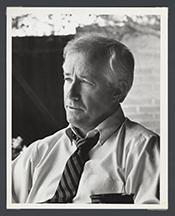
Jim Kolbe
Former U.S. Representative · Arizona District 8 · 1985–2007 · Republican
Jim Kolbe represented Arizona's District 8 in the United States House of Representatives (1985–2007) for the Republican party. The page below collects sourced biographical facts, term history, committee roles, and provenance for Kolbe.
Bioguide ID: K000306
Key facts
- Full name
- Jim Kolbe
- State
- Arizona
- District
- District 8
- Party
- Republican
- House service
- 1985–2007
- First House term
- 1985
- Status
- Left office
- Current term ends
- —
- Born
- 1942
- Bioguide ID
- K000306
- Committee assignments
- —
- Dataset version
- 1.20260605
Biographical narrative
1,012 words · sourced from the Wikipedia REST extract
Jim Kolbe was a prominent American politician who served as a Republican member of the United States House of Representatives. He represented Arizona's 5th congressional district from 1985 until 2003 and subsequently served Arizona's 8th congressional district from 2003 until the conclusion of his congressional career in 2007. Known for his moderate stance within the Republican Party, Kolbe was notable for his support of abortion rights and his status as one of the first openly gay Republicans elected to Congress. After leaving office, he continued to engage in public service and political discourse, including serving on an advisory committee under President Barack Obama and later transitioning to independent political affiliation.
Early life and career
Jim Kolbe was born on June 28, 1942, in Evanston, Illinois, a suburb of Chicago. He was the son of Helen Nevada Reed and Walter William Kolbe. At the age of five, his family relocated to a ranch in rural Santa Cruz County, Arizona, where he spent his formative years. Kolbe attended Patagonia Elementary School and Patagonia Union High School before graduating from the United States Capitol Page School in 1960. His early political engagement included serving as a United States Senate Page for Barry Goldwater, a significant figure in Arizona politics.
Kolbe pursued higher education at Northwestern University, where he earned a bachelor's degree in political science in 1965. During his time at Northwestern, he was involved in campus life as a member of the Acacia fraternity. He furthered his education by obtaining a master's degree in business administration from Stanford University in 1967. Following his academic pursuits, Kolbe served in the United States Navy, including a year in Vietnam as part of the riverine "Swift Boat" force. After his military service, he worked as a special assistant to Illinois Republican Governor Richard B. Ogilvie before moving to Tucson, Arizona, where he became a business executive.
Kolbe's political career began in the Arizona Senate, where he was elected in 1976 to represent a Tucson-area district. He successfully defeated incumbent Democrat Lucy Davidson and subsequently served three terms in the Arizona Senate. During his tenure, he held the position of majority whip from 1979 to 1982, establishing himself as a key figure in state politics.
House tenure
In 1982, Kolbe made his first bid for the United States House of Representatives, running in the newly established 5th congressional district. Although he lost the election to Democrat Jim McNulty by a narrow margin, Kolbe returned to contest the seat in 1984. His campaign was bolstered by the national popularity of President Ronald Reagan, who won a significant victory that year. Kolbe emerged victorious, becoming the first Republican to represent the Arizona-Mexico border region in the House of Representatives.
Kolbe's congressional career spanned 11 terms, during which he was reelected ten times, often facing minimal opposition. His moderate political stance resonated with constituents in a district that included Tucson's Republican-leaning suburbs, which traditionally favored centrist and independent-minded candidates. Kolbe's political philosophy aligned with that of his mentor, Barry Goldwater, particularly in his support for abortion rights and environmental legislation. He was affiliated with several moderate Republican organizations, including the Log Cabin Republicans and the Republican Majority for Choice.
Throughout his time in Congress, Kolbe was known for his willingness to break from party lines on certain issues. For instance, he was one of the few Republicans to vote against the Partial-Birth Abortion Ban Act in 2003. He also opposed the Federal Marriage Amendment, which sought to constitutionally ban same-sex marriage, voting against it in both 2004 and 2006.
Kolbe's legislative initiatives included introducing the Legal Tender Modernization Act in 2001, which aimed to cease the production of the U.S. one-cent coin, and the Currency Overhaul for an Industrious Nation (COIN) Act in 2006, which sought to round cash transactions to the nearest five cents. These proposals reflected his belief that the penny had become economically obsolete due to inflation.
In 2004, Kolbe faced a primary challenge from State House Majority Whip Randy Graf, who positioned himself to Kolbe's right on issues such as immigration. Kolbe, a proponent of guest worker programs, successfully defeated Graf in the primary and subsequently won a final term in the House in November 2004. However, in 2005, Kolbe announced that he would not seek reelection for a 12th term in 2006. His decision came amid speculation that his district could become highly competitive in the absence of his incumbency. Ultimately, Graf won the Republican primary in 2006 but lost the general election to Democrat Gabby Giffords.
Legislative focus and committees
During his tenure in the House, Kolbe served on various committees that aligned with his legislative interests and the needs of his constituents. His moderate Republican stance allowed him to engage in bipartisan efforts, particularly on issues related to trade, immigration, and environmental policy. Kolbe's commitment to these issues was evident in his support for guest worker programs, which aimed to address labor shortages in certain industries while providing a legal pathway for immigrants.
Kolbe's legislative record included a mix of votes that reflected his centrist ideology. He often prioritized environmental protection and sustainable practices, distinguishing himself from many of his Republican colleagues. His involvement in moderate Republican groups indicated his alignment with a faction of the party that sought to balance traditional conservative values with progressive social policies.
After leaving Congress in 2007, Kolbe continued to influence public policy through various roles, including his appointment to the Advisory Committee for Trade Policy and Negotiations under President Barack Obama. His political evolution led him to leave the Republican Party in 2018, becoming an independent voter. In the 2020 presidential election, he endorsed Democratic candidate Joe Biden, further illustrating his departure from the party's mainstream positions.
Kolbe's career in public service and his contributions to American politics reflect a complex interplay of personal beliefs and legislative priorities, marking him as a significant figure in the history of Arizona's congressional representation. His legacy includes not only his electoral achievements but also his role in advocating for moderate Republican values in a changing political landscape.
Notable legislation
Sponsored and co-sponsored legislation for Jim Kolbe is pending operator curation. The biographical narrative above carries the same provenance trail until per-bill rows are written.
Sources
- [1]https://en.wikipedia.org/wiki/Jim_KolbeWikipedia · retrieved 2026-06-05
Notable quotes
Sourced quotes for Jim Kolbe are pending operator curation. Narrative-scope provenance remains attached below.
Sources
- [1]https://en.wikipedia.org/wiki/Jim_KolbeWikipedia · retrieved 2026-06-05
Key positions
Curated policy positions for Jim Kolbe are pending operator review. The biographical narrative above carries the same provenance trail until per-topic positions are written.
Sources
- [1]https://en.wikipedia.org/wiki/Jim_KolbeWikipedia · retrieved 2026-06-05
Terms served
- 1985–1987U.S. House · Term 1 · Republican
- 1987–1989U.S. House · Term 2 · Republican
- 1989–1991U.S. House · Term 3 · Republican
- 1991–1993U.S. House · Term 4 · Republican
- 1993–1995U.S. House · Term 5 · Republican
- 1995–1997U.S. House · Term 6 · Republican
- 1997–1999U.S. House · Term 7 · Republican
- 1999–2001U.S. House · Term 8 · Republican
- 2001–2003U.S. House · Term 9 · Republican
- 2003–2005U.S. House · Term 10 · Republican
- 2005–2007U.S. House · Term 11 · Republican
Sources & provenance
Every attributable claim above carries a per-section [N] marker that resolves to the corresponding URL below. Each entry records the upstream provider, the canonical URL, and the timestamp at which the source was retrieved by the ingest pipeline.
Key facts
- https://bioguide.congress.gov/search/bio/K000306bioguide · retrieved 2026-06-05
- http://www.house.gov/kolbehouse.gov · retrieved 2026-06-05
Biographical narrative
- https://en.wikipedia.org/wiki/Jim_Kolbewikipedia · retrieved 2026-06-05
Find your representative
Every U.S. state elects representatives by district. Browse Arizona’s delegation, the full former-representative roster, or explore the role and term length.
Related on The Candidate
- Succeeded by Gabrielle GiffordsLater holder of the Arizona District 8 House seat · Democratic.Open
- John MurdockFormer U.S. Representative · Arizona District 1 · DemocraticOpen
- John RhodesFormer U.S. Representative · Arizona District 1 · RepublicanOpen
- John Rhodes IIIFormer U.S. Representative · Arizona District 1 · RepublicanOpen
- Rick RenziFormer U.S. Representative · Arizona District 1 · RepublicanOpen
- Republican PartyFederal candidates and office holders on the Republican line.Open