
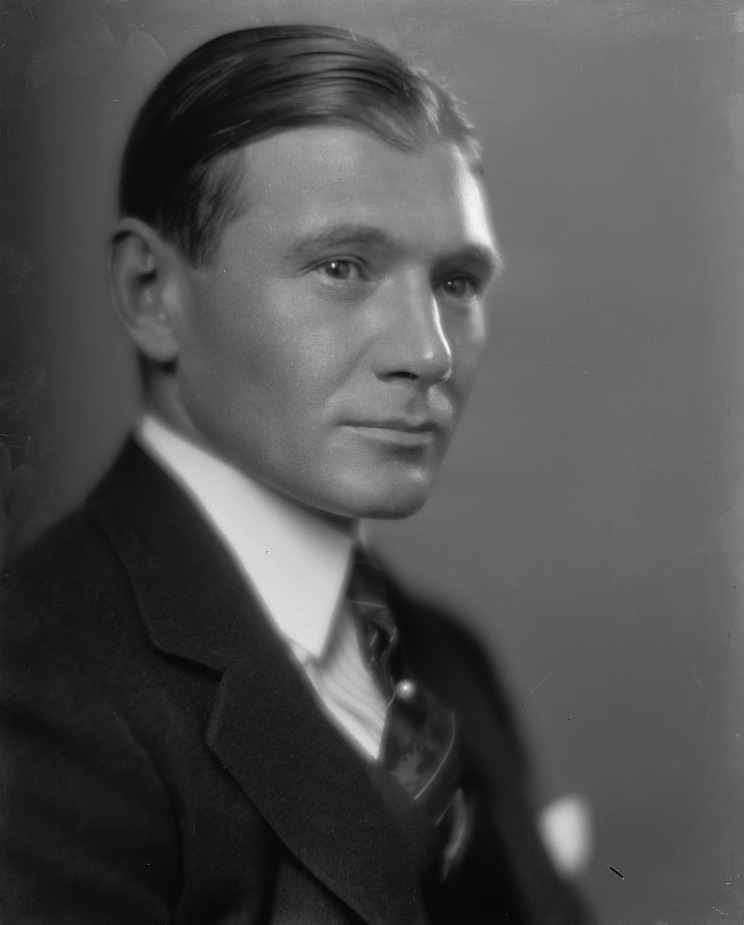
Historical · U.S. House · Arizona · At-Large
Lewis Douglas
Former U.S. Representative · Arizona At-Large · 1927–1933 · Democratic
Lewis Douglas represented Arizona's At-Large in the United States House of Representatives (1927–1933) for the Democratic party. The page below collects sourced biographical facts, term history, committee roles, and provenance for Douglas.
Bioguide ID: D000455
Key facts
- Full name
- Lewis Douglas
- State
- Arizona
- District
- At-Large
- Party
- Democratic
- House service
- 1927–1933
- First House term
- 1927
- Status
- Left office
- Current term ends
- —
- Born
- 1894
- Bioguide ID
- D000455
- Committee assignments
- —
- Dataset version
- 1.20260606
Biographical narrative
928 words · sourced from the Wikipedia REST extract
Lewis Douglas was an American politician, diplomat, businessman, and academic who served as a U.S. Representative for Arizona's at-large congressional district from 1927 until 1933. A member of the Democratic Party, Douglas's political career was marked by his commitment to fiscal conservatism and his involvement in various legislative committees. His tenure in Congress coincided with significant national events, including the onset of the Great Depression, which influenced his political positions and decisions.
Early life and career
Lewis Douglas was born on July 2, 1894, in Bisbee, Arizona, to James Douglas, Jr., a mining executive, and Josephine "Josalee" Williams Douglas. His early life was shaped by his family's involvement in the mining industry, which played a significant role in the economic development of the region. At the age of 11, Douglas was sent to the East Coast to pursue his education, following the wishes of his grandfather, James Douglas. He attended Hackley School for two years before transferring to Montclair Academy, where he excelled academically and in character development, graduating in 1912.
Following his secondary education, Douglas enrolled at Amherst College, where he became involved in student government and athletics. Initially, he did not take his studies seriously, but his academic performance improved significantly after taking a course in logic. He graduated cum laude in 1916 with a degree in economics. After completing his undergraduate education, Douglas pursued further studies at the Massachusetts Institute of Technology, focusing on mining engineering.
With the United States entering World War I, Douglas volunteered for military service and received a commission as a Second Lieutenant in July 1917. He was initially assigned to the field artillery and later served as an assistant to General Henry A. Greene, the commander of the 91st Infantry Division. Douglas was promoted to First Lieutenant in the spring of 1918 and was deployed to France, where he participated in significant military operations, including the Saint-Mihiel and Meuse-Argonne offensives. His service earned him the Belgian Croix de Guerre for heroism.
After his discharge in February 1919, Douglas returned to Jerome, Arizona, where he rekindled a relationship with Margaret "Peggy" Zinsser. The couple married on June 18, 1921, and settled in Jerome, where Douglas took a position at his father's United Verde Extension mine. In 1922, he entered politics, running for a seat in the Arizona State House of Representatives. Despite lacking prior political experience, he won both the primary and general elections, serving a single two-year term. During his time in the state legislature, Douglas advocated for fiscal responsibility and opposed labor legislation, reflecting his conservative Democratic views.
House tenure
In 1926, Douglas decided to run for the U.S. House of Representatives after Carl Hayden announced his candidacy for the U.S. Senate. Leveraging his family's wealth, name recognition, and military service, he secured the Democratic nomination against five rivals and subsequently won the general election by a substantial margin. Douglas began his first term in Congress in 1927 and served through the 73rd Congress, concluding his tenure in 1933.
During his time in the House, Douglas was a member of the Committee on Irrigation and Reclamation and the Committee on Public Lands. He was known for his ability to work collaboratively with colleagues across party lines, despite being a Democrat. Douglas often voted with Republicans, earning a reputation as a principled legislator. His approach to governance was characterized by adherence to the economic orthodoxy of the time, particularly during the Great Depression. He argued for low tariffs and a balanced federal budget as essential components for economic recovery.
Douglas's positions on various issues, particularly regarding economic policy, sometimes led to controversy. He opposed the bonus bill sought by unemployed veterans, which drew criticism from constituents and colleagues alike. His fiscal conservatism was evident in his resistance to expansive government spending, which he believed could exacerbate economic challenges.
Legislative focus and committees
Throughout his congressional career, Douglas focused on issues related to irrigation, land management, and fiscal policy. His involvement in the Committee on Irrigation and Reclamation reflected his interest in water resource management, particularly relevant to Arizona's arid climate and agricultural needs. Douglas's commitment to public lands was also significant, as he navigated the complexities of land use and conservation during a time of rapid development and economic change.
As the Great Depression unfolded, Douglas's adherence to fiscal conservatism became increasingly pronounced. He supported measures such as the Emergency Banking Act and the Economy Act, which aimed to stabilize the economy. However, he opposed several key pieces of legislation that he viewed as excessive government intervention, including the Agricultural Adjustment Act and the Tennessee Valley Authority Act. His concerns about inflation and deficit spending were central to his legislative philosophy, leading to conflicts with the Roosevelt administration.
In December 1932, following the election of Franklin D. Roosevelt, Douglas was invited to join the president-elect's advisory group. Although there was speculation about potential cabinet positions, Douglas was appointed as the Director of the Bureau of the Budget. His tenure in this role was marked by frustration as he grappled with the administration's approach to fiscal policy, particularly regarding deficit spending. Douglas's opposition to increased appropriations and his commitment to a balanced budget ultimately led to his resignation from the position.
Lewis Douglas's congressional career concluded in 1933, but his contributions to American politics and public service continued beyond his time in office. His experiences in the House of Representatives and as Director of the Bureau of the Budget shaped his views on governance and fiscal policy, leaving a lasting impact on the political landscape of his era.
Notable legislation
Sponsored and co-sponsored legislation for Lewis Douglas is pending operator curation. The biographical narrative above carries the same provenance trail until per-bill rows are written.
Sources
- [1]https://en.wikipedia.org/wiki/Lewis_Williams_DouglasWikipedia · retrieved 2026-06-06
Notable quotes
Sourced quotes for Lewis Douglas are pending operator curation. Narrative-scope provenance remains attached below.
Sources
- [1]https://en.wikipedia.org/wiki/Lewis_Williams_DouglasWikipedia · retrieved 2026-06-06
Key positions
Curated policy positions for Lewis Douglas are pending operator review. The biographical narrative above carries the same provenance trail until per-topic positions are written.
Sources
- [1]https://en.wikipedia.org/wiki/Lewis_Williams_DouglasWikipedia · retrieved 2026-06-06
Terms served
- 1927–1929U.S. House · Term 1 · Democratic
- 1929–1931U.S. House · Term 2 · Democratic
- 1931–1933U.S. House · Term 3 · Democratic
Sources & provenance
Every attributable claim above carries a per-section [N] marker that resolves to the corresponding URL below. Each entry records the upstream provider, the canonical URL, and the timestamp at which the source was retrieved by the ingest pipeline.
Key facts
- https://bioguide.congress.gov/search/bio/D000455bioguide · retrieved 2026-06-06
- https://www.govtrack.us/congress/members/403565govtrack · retrieved 2026-06-06
Biographical narrative
- https://en.wikipedia.org/wiki/Lewis_Williams_Douglaswikipedia · retrieved 2026-06-06
Find your representative
Every U.S. state elects representatives by district. Browse Arizona’s delegation, the full former-representative roster, or explore the role and term length.
Related on The Candidate
- Preceded by John WilsonEarlier holder of the Arizona At-Large House seat · Democratic.Open
- Succeeded by Isabella GreenwayLater holder of the Arizona At-Large House seat · Democratic.Open
- John MurdockFormer U.S. Representative · Arizona District 1 · DemocraticOpen
- John RhodesFormer U.S. Representative · Arizona District 1 · RepublicanOpen
- John Rhodes IIIFormer U.S. Representative · Arizona District 1 · RepublicanOpen
- Rick RenziFormer U.S. Representative · Arizona District 1 · RepublicanOpen