
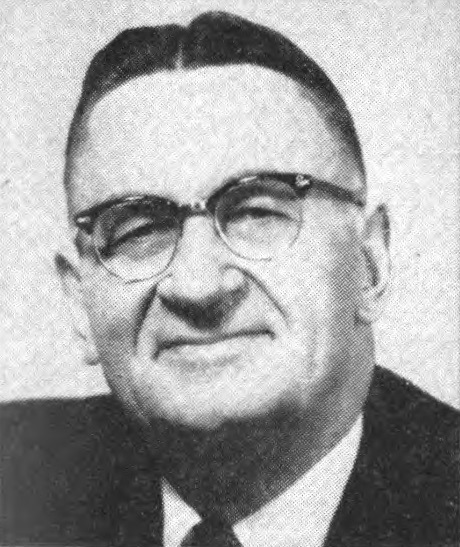
Historical · U.S. House · Colorado · District 3
John Chenoweth
Former U.S. Representative · Colorado District 3 · 1941–1965 · Republican
John Chenoweth represented Colorado's District 3 in the United States House of Representatives (1941–1965) for the Republican party. The page below collects sourced biographical facts, term history, committee roles, and provenance for Chenoweth.
Bioguide ID: C000346
Key facts
- Full name
- John Chenoweth
- State
- Colorado
- District
- District 3
- Party
- Republican
- House service
- 1941–1965
- First House term
- 1941
- Status
- Left office
- Current term ends
- —
- Born
- 1897
- Bioguide ID
- C000346
- Committee assignments
- —
- Dataset version
- 1.20260605
Biographical narrative
954 words · sourced from the Wikipedia REST extract
John Chenoweth was a prominent Republican politician from Colorado who served as a member of the United States House of Representatives for the state's third congressional district. His political career spanned over two decades, during which he was elected to the House multiple times and participated in significant legislative developments, particularly in the realm of civil rights. In addition to his congressional service, Chenoweth had a background in law and held various legal positions, including that of a county judge. His life and career reflect a commitment to public service and the legal profession.
Early life and career
John Edgar Chenoweth was born on August 17, 1897, in Trinidad, Colorado. He was the son of Thomas Beaseman Chenoweth and Esther Rebecca Chenoweth (née Shamberger). Growing up in Trinidad, a city located in southern Colorado, Chenoweth was exposed to the region's unique cultural and economic landscape. He pursued higher education at the University of Colorado at Boulder, where he laid the foundation for his future career in law and politics.
Before entering the legal profession, Chenoweth gained diverse work experience. From 1916 to 1925, he worked in the railroad industry and engaged in trading activities. This period provided him with insights into the economic challenges and opportunities of the time, shaping his understanding of the needs of his constituents in Colorado. In 1925, he successfully passed the bar examination and began practicing law, marking the beginning of his formal legal career.
Chenoweth's legal career was complemented by his involvement in public service. From 1929 to 1933, he served as the assistant district attorney, where he gained valuable experience in the legal system and developed a reputation for his commitment to justice. Following this role, he was appointed as a county judge for Las Animas County, a position he held until 1941. His tenure as a judge allowed him to further influence the legal landscape of his community and solidified his standing as a respected figure in the legal profession.
In his personal life, Chenoweth married Ruth Olivia Crews on December 25, 1919. Together, they raised five children, balancing family life with his burgeoning political and legal career. This family foundation likely provided him with support as he navigated the complexities of public service and law.
House tenure
Chenoweth's political career took a significant turn in 1940 when he was elected to the United States House of Representatives as a Republican. His first term began in 1941, marking the start of an extensive congressional career that would last for over two decades. During his time in the House, he was known for his active participation in legislative matters and his engagement with the issues facing his constituents.
Throughout his congressional tenure, Chenoweth was re-elected multiple times, demonstrating his ability to connect with voters and address their concerns. He served in the House during a period marked by significant national events, including World War II and the subsequent civil rights movement. His legislative actions during this time reflected the evolving political landscape of the United States.
Chenoweth's initial tenure in the House was interrupted when he was defeated in the 1948 election. However, he made a political comeback in 1950, winning back his seat and continuing to serve in Congress. His ability to regain his position after a defeat indicates his resilience and the support he maintained among his constituents. He remained in office until he faced defeat again in the 1964 elections, concluding his congressional career.
During his time in the House, Chenoweth was involved in various legislative initiatives and voted on key issues that shaped American society. Notably, he supported several significant civil rights measures, including the Civil Rights Acts of 1957, 1960, and 1964. These acts aimed to address racial discrimination and promote equality, reflecting a critical shift in American policy during the mid-20th century. Additionally, he voted in favor of the 24th Amendment to the U.S. Constitution, which prohibited poll taxes in federal elections, further demonstrating his commitment to expanding voting rights.
Legislative focus and committees
Throughout his congressional career, Chenoweth's legislative focus encompassed a range of issues pertinent to his constituents and the nation. His support for civil rights legislation positioned him as a participant in the broader movement toward social justice and equality during a transformative era in American history. The civil rights acts he endorsed were pivotal in addressing systemic discrimination and advancing the rights of marginalized communities.
In addition to civil rights, Chenoweth's legislative priorities likely included issues relevant to his home state of Colorado. As a representative from a region with a diverse population and unique economic challenges, he may have engaged with topics such as agriculture, natural resources, and infrastructure development. While specific committee assignments during his tenure are not detailed, members of Congress typically serve on committees that align with their interests and the needs of their constituents. These committees play a crucial role in shaping legislation and overseeing various aspects of government policy.
After leaving Congress in 1965, Chenoweth returned to Trinidad, Colorado, where he resumed his legal practice. His decision to return to law reflects a continued commitment to public service and the legal profession, even after his political career had concluded. He remained active in his community and contributed to the legal landscape of Colorado until his death on January 2, 1986.
In summary, John Chenoweth's life and career were marked by a dedication to public service, law, and the advancement of civil rights. His tenure in the U.S. House of Representatives spanned significant historical events, and his legislative actions contributed to the evolving landscape of American society. Through his work as a lawyer, judge, and congressman, Chenoweth left a lasting impact on his community and the state of Colorado.
Notable legislation
Sponsored and co-sponsored legislation for John Chenoweth is pending operator curation. The biographical narrative above carries the same provenance trail until per-bill rows are written.
Sources
- [1]https://en.wikipedia.org/wiki/John_Chenoweth_(Colorado_politician)Wikipedia · retrieved 2026-06-05
Notable quotes
Sourced quotes for John Chenoweth are pending operator curation. Narrative-scope provenance remains attached below.
Sources
- [1]https://en.wikipedia.org/wiki/John_Chenoweth_(Colorado_politician)Wikipedia · retrieved 2026-06-05
Key positions
Curated policy positions for John Chenoweth are pending operator review. The biographical narrative above carries the same provenance trail until per-topic positions are written.
Sources
- [1]https://en.wikipedia.org/wiki/John_Chenoweth_(Colorado_politician)Wikipedia · retrieved 2026-06-05
Terms served
- 1941–1943U.S. House · Term 1 · Republican
- 1943–1945U.S. House · Term 2 · Republican
- 1945–1947U.S. House · Term 3 · Republican
- 1947–1949U.S. House · Term 4 · Republican
- 1951–1953U.S. House · Term 5 · Republican
- 1953–1955U.S. House · Term 6 · Republican
- 1955–1957U.S. House · Term 7 · Republican
- 1957–1959U.S. House · Term 8 · Republican
- 1959–1961U.S. House · Term 9 · Republican
- 1961–1963U.S. House · Term 10 · Republican
- 1963–1965U.S. House · Term 11 · Republican
Sources & provenance
Every attributable claim above carries a per-section [N] marker that resolves to the corresponding URL below. Each entry records the upstream provider, the canonical URL, and the timestamp at which the source was retrieved by the ingest pipeline.
Key facts
- https://bioguide.congress.gov/search/bio/C000346bioguide · retrieved 2026-06-05
- https://www.govtrack.us/congress/members/402485govtrack · retrieved 2026-06-05
Biographical narrative
- https://en.wikipedia.org/wiki/John_Chenoweth_(Colorado_politician)wikipedia · retrieved 2026-06-05
Find your representative
Every U.S. state elects representatives by district. Browse Colorado’s delegation, the full former-representative roster, or explore the role and term length.
Related on The Candidate
- Preceded by John MartinEarlier holder of the Colorado District 3 House seat · Democratic.Open
- Succeeded by Frank EvansLater holder of the Colorado District 3 House seat · Democratic.Open
- Atterson RuckerFormer U.S. Representative · Colorado District 1 · DemocraticOpen
- Benjamin HilliardFormer U.S. Representative · Colorado District 1 · DemocraticOpen
- Byron RogersFormer U.S. Representative · Colorado District 1 · DemocraticOpen
- Dean GillespieFormer U.S. Representative · Colorado District 1 · RepublicanOpen