
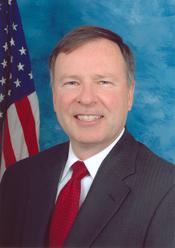
Historical · U.S. House · Colorado · District 5
Doug Lamborn
Former U.S. Representative · Colorado District 5 · 2007–2025 · Republican
Doug Lamborn represented Colorado's District 5 in the United States House of Representatives (2007–2025) for the Republican party. The page below collects sourced biographical facts, term history, committee roles, and provenance for Lamborn.
Bioguide ID: L000564
Key facts
- Full name
- Doug Lamborn
- State
- Colorado
- District
- District 5
- Party
- Republican
- House service
- 2007–2025
- First House term
- 2007
- Status
- Left office
- Current term ends
- —
- Born
- 1954
- Bioguide ID
- L000564
- Committee assignments
- —
- Dataset version
- 1.20260603
Biographical narrative
852 words · sourced from the Wikipedia REST extract
Douglas Lawrence Lamborn is an American attorney and politician who served as the U.S. Representative for Colorado's 5th congressional district from 2007 until 2025. A member of the Republican Party, Lamborn's district was primarily based in Colorado Springs. Over his nearly two decades in public office, he was known for his conservative positions on various issues, including immigration, gun rights, and public funding for media organizations. He announced in January 2024 that he would not seek reelection for a further term.
Early life and career
Doug Lamborn was born on May 24, 1954, in Leavenworth, Kansas. He completed his secondary education at Lansing High School in Lansing, Kansas. Following his high school graduation, he pursued higher education at the University of Kansas, where he earned a Bachelor of Science degree in journalism in 1978. Lamborn later attended the University of Kansas School of Law, obtaining his Juris Doctor degree in 1985. After completing his education, he relocated to Colorado Springs, Colorado, where he began his career as a private attorney. His legal practice focused on business and real estate law, providing him with a foundation in legal matters that would later inform his political career.
Lamborn's entry into politics began at the state level. In 1994, he was elected to the Colorado House of Representatives, marking the start of his legislative career. He was subsequently elected to the Colorado State Senate in 1998. During his time in the state legislature, he held several leadership positions, including serving as the Republican House Whip in 1997 and as the Senate President Pro Tem in 1999. Lamborn's tenure in the Colorado Senate was marked by his advocacy for tax cuts; he sponsored what was recognized as the largest tax cut in Colorado's history and received accolades from conservative groups for his fiscal policies. He remained in the Colorado Senate until he successfully transitioned to the U.S. Congress.
House tenure
Doug Lamborn's congressional career began when he won election to the U.S. House of Representatives in 2006. His predecessor, Joel Hefley, announced his retirement after ten terms, leading to a competitive Republican primary. Lamborn emerged victorious in the primary election held on August 8, 2006, defeating several candidates, including Hefley's aide, Jeff Crank. He campaigned on a platform that emphasized conservative values, including opposition to gun control, restrictions on abortion, and federal funding for embryonic stem cell research. Lamborn won the general election on November 7, 2006, defeating Democratic nominee Lieutenant Colonel Jay Fawcett.
Throughout his time in the House, Lamborn faced various electoral challenges but consistently secured reelection. In the 2008 Republican primary, he faced former opponents Jeff Crank and Major General Bentley Rayburn but won with a significant share of the vote. He continued to win subsequent elections in 2010, 2012, 2014, 2018, and 2020, often running against Democratic nominees and occasionally facing primary challenges from within his party. His electoral success was attributed to his strong conservative stance and the support he garnered from various political action committees.
Lamborn's congressional tenure was characterized by a focus on military and veterans' issues, aligning with the interests of his constituents in Colorado Springs, which is home to several military installations. He advocated for increased immigration enforcement in his district, which included the establishment of an Immigration and Customs Enforcement office in Colorado Springs. His efforts were aimed at addressing illegal immigration and ensuring that those who had committed crimes were deported.
Legislative focus and committees
During his time in the U.S. House of Representatives, Doug Lamborn was known for his alignment with conservative principles, often voting along party lines. He was recognized by Congressional Quarterly as one of the most partisan members of Congress, reflecting his commitment to Republican policies. His legislative focus included a variety of issues, particularly those related to military funding, taxation, and social policies.
Lamborn was a vocal opponent of public funding for organizations such as the Corporation for Public Broadcasting and National Public Radio, arguing that taxpayer dollars should not support what he deemed nonessential government programs. He also took a strong stance on Second Amendment rights, leading efforts to challenge proposed regulations by the Occupational Safety and Health Administration that would affect access to small arms ammunition.
In addition to his legislative activities, Lamborn's tenure was marked by his participation in various committees. He served as the ranking Republican on the Colorado State Military and Veterans Affairs and Appropriations committees during his time in the Colorado legislature, experiences that informed his work in Congress. His focus on military issues was particularly relevant given the significant military presence in his district, including a Brigade Combat Team that was established in Colorado Springs.
Throughout his congressional career, Lamborn maintained a strong connection to his constituents, often addressing their concerns through his legislative initiatives. His approach to governance was characterized by a commitment to conservative values and a focus on issues that resonated with the electorate in Colorado's 5th congressional district. After serving for nearly two decades, Lamborn concluded his tenure in the House on January 3, 2025, having announced in early 2024 that he would not seek reelection.
Notable legislation
Sponsored and co-sponsored legislation for Doug Lamborn is pending operator curation. The biographical narrative above carries the same provenance trail until per-bill rows are written.
Sources
- [1]https://en.wikipedia.org/wiki/Doug_LambornWikipedia · retrieved 2026-06-03
Notable quotes
Sourced quotes for Doug Lamborn are pending operator curation. Narrative-scope provenance remains attached below.
Sources
- [1]https://en.wikipedia.org/wiki/Doug_LambornWikipedia · retrieved 2026-06-03
Key positions
Curated policy positions for Doug Lamborn are pending operator review. The biographical narrative above carries the same provenance trail until per-topic positions are written.
Sources
- [1]https://en.wikipedia.org/wiki/Doug_LambornWikipedia · retrieved 2026-06-03
Terms served
- 2007–2009U.S. House · Term 1 · Republican
- 2009–2011U.S. House · Term 2 · Republican
- 2011–2013U.S. House · Term 3 · Republican
- 2013–2015U.S. House · Term 4 · Republican
- 2015–2017U.S. House · Term 5 · Republican
- 2017–2019U.S. House · Term 6 · Republican
- 2019–2021U.S. House · Term 7 · Republican
- 2021–2023U.S. House · Term 8 · Republican
- 2023–2025U.S. House · Term 9 · Republican
Sources & provenance
Every attributable claim above carries a per-section [N] marker that resolves to the corresponding URL below. Each entry records the upstream provider, the canonical URL, and the timestamp at which the source was retrieved by the ingest pipeline.
Key facts
- https://bioguide.congress.gov/search/bio/L000564bioguide · retrieved 2026-06-03
- https://lamborn.house.govhouse.gov · retrieved 2026-06-03
Biographical narrative
- https://en.wikipedia.org/wiki/Doug_Lambornwikipedia · retrieved 2026-06-03
Find your representative
Every U.S. state elects representatives by district. Browse Colorado’s delegation, the full former-representative roster, or explore the role and term length.
Related on The Candidate
- Preceded by Joel HefleyEarlier holder of the Colorado District 5 House seat · Republican.Open
- Atterson RuckerFormer U.S. Representative · Colorado District 1 · DemocraticOpen
- Benjamin HilliardFormer U.S. Representative · Colorado District 1 · DemocraticOpen
- Byron RogersFormer U.S. Representative · Colorado District 1 · DemocraticOpen
- Dean GillespieFormer U.S. Representative · Colorado District 1 · RepublicanOpen
- Republican PartyFederal candidates and office holders on the Republican line.Open