
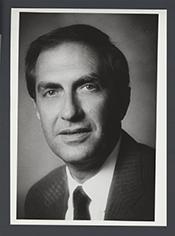
Historical · U.S. House · Colorado · District 5
Joel Hefley
Former U.S. Representative · Colorado District 5 · 1987–2007 · Republican
Joel Hefley represented Colorado's District 5 in the United States House of Representatives (1987–2007) for the Republican party. The page below collects sourced biographical facts, term history, committee roles, and provenance for Hefley.
Bioguide ID: H000444
Key facts
- Full name
- Joel Hefley
- State
- Colorado
- District
- District 5
- Party
- Republican
- House service
- 1987–2007
- First House term
- 1987
- Status
- Left office
- Current term ends
- —
- Born
- 1935
- Bioguide ID
- H000444
- Committee assignments
- —
- Dataset version
- 1.20260605
Biographical narrative
843 words · sourced from the Wikipedia REST extract
Joel Hefley is a former American politician who served as a Republican member of the United States House of Representatives, representing Colorado's 5th Congressional District from 1987 until 2007. Throughout his ten terms in office, he held various leadership roles, including serving as chairman of the House Ethics Committee. Hefley was recognized for his involvement in significant ethical investigations during his tenure, which garnered national attention. He is married to Lynn Hefley, who also has a background in public service as a former member of the Colorado State House of Representatives. Together, they have three daughters.
Early life and career
Joel Hefley was born on April 18, 1935, in Ardmore, Oklahoma, which is located in Carter County in the southeastern part of the state. He pursued higher education at Oklahoma Baptist University in Shawnee, where he earned a Bachelor of Arts degree. He continued his studies at Oklahoma State University in Stillwater, obtaining a Master of Arts degree. Following his academic pursuits, Hefley worked as a management consultant, which provided him with experience in organizational and strategic planning.
Hefley's political career began in the late 1970s when he was elected to the Colorado House of Representatives, serving a single term from 1977 to 1978. After his time in the state House, he transitioned to the Colorado Senate, where he continued to engage in legislative activities. His experience in state politics laid the groundwork for his subsequent election to the U.S. House of Representatives, where he would serve for two decades.
House tenure
Hefley was first elected to the U.S. House of Representatives in 1986 and began his first term in January 1987. Over the course of his ten terms, he became a notable figure within the Republican Party and within Congress. His tenure was marked by significant involvement in the House Ethics Committee, where he served as chairman until 2005. Under his leadership, the committee addressed various ethical issues, including high-profile cases involving members of Congress.
During his time in the House, Hefley was recognized as Colorado's sole congressional dean from 2005 until his retirement in 2007, a role that underscored his seniority and experience within the chamber. He previously shared this status with fellow Colorado representative Ben Nighthorse Campbell from 1997 until 2005. Hefley's long service in Congress allowed him to build a network of relationships and influence within the legislative process.
In February 2006, Hefley announced his decision not to seek re-election, concluding a decade-long career in the House. This decision came after he had previously pledged in 1986 to limit his service to three terms, although he ultimately chose to serve for ten terms. His retirement marked the end of a significant chapter in his political career, as he opted to step away from public office.
Legislative focus and committees
Throughout his time in Congress, Hefley focused on a range of legislative issues, with a particular emphasis on ethics and governance. As chairman of the House Ethics Committee, he played a crucial role in overseeing the conduct of members of Congress and addressing allegations of misconduct. His leadership in the committee gained national attention, particularly when it formally admonished House Majority Leader Tom DeLay on multiple occasions. Hefley's involvement in these high-profile cases elevated his visibility within Congress and among the public.
In addition to his work on the Ethics Committee, Hefley was involved in various legislative initiatives and discussions that shaped policy in areas relevant to his constituents and the broader national landscape. His legislative record reflects a commitment to the principles of governance and accountability, which were central to his role as an ethics leader.
Hefley's tenure also included a notable stance on social issues. In 1998, he introduced an amendment that blocked federal funding for an executive order issued by President Bill Clinton aimed at prohibiting discrimination against gay and lesbian employees in the federal government. This action highlighted his position on matters of civil rights and social policy, which were often contentious topics within the political arena.
As his congressional career progressed, Hefley became involved in the dynamics of Republican politics in Colorado. In the lead-up to the 2006 congressional race to succeed him, he endorsed his long-time aide, Jeff Crank. However, Crank faced a challenging primary election against State Senator Doug Lamborn, ultimately losing in a competitive six-way race. Hefley expressed frustration with the tactics employed during the campaign, particularly a brochure from the Christian Coalition of Colorado that sought to associate Crank with a "homosexual agenda." Hefley criticized the campaign's approach and refrained from endorsing Lamborn following the election.
In summary, Joel Hefley's career in the U.S. House of Representatives was characterized by a commitment to ethical governance and a focus on the legislative needs of his constituents in Colorado. His leadership roles and involvement in significant ethical investigations contributed to his recognition within Congress, while his decisions on social issues reflected the complexities of political life in the United States. After serving ten terms, Hefley's retirement in 2007 marked the conclusion of a significant chapter in his public service career.
Notable legislation
Sponsored and co-sponsored legislation for Joel Hefley is pending operator curation. The biographical narrative above carries the same provenance trail until per-bill rows are written.
Sources
- [1]https://en.wikipedia.org/wiki/Joel_HefleyWikipedia · retrieved 2026-06-05
Notable quotes
Sourced quotes for Joel Hefley are pending operator curation. Narrative-scope provenance remains attached below.
Sources
- [1]https://en.wikipedia.org/wiki/Joel_HefleyWikipedia · retrieved 2026-06-05
Key positions
Curated policy positions for Joel Hefley are pending operator review. The biographical narrative above carries the same provenance trail until per-topic positions are written.
Sources
- [1]https://en.wikipedia.org/wiki/Joel_HefleyWikipedia · retrieved 2026-06-05
Terms served
- 1987–1989U.S. House · Term 1 · Republican
- 1989–1991U.S. House · Term 2 · Republican
- 1991–1993U.S. House · Term 3 · Republican
- 1993–1995U.S. House · Term 4 · Republican
- 1995–1997U.S. House · Term 5 · Republican
- 1997–1999U.S. House · Term 6 · Republican
- 1999–2001U.S. House · Term 7 · Republican
- 2001–2003U.S. House · Term 8 · Republican
- 2003–2005U.S. House · Term 9 · Republican
- 2005–2007U.S. House · Term 10 · Republican
Sources & provenance
Every attributable claim above carries a per-section [N] marker that resolves to the corresponding URL below. Each entry records the upstream provider, the canonical URL, and the timestamp at which the source was retrieved by the ingest pipeline.
Key facts
- https://bioguide.congress.gov/search/bio/H000444bioguide · retrieved 2026-06-05
- http://www.house.gov/hefleyhouse.gov · retrieved 2026-06-05
Biographical narrative
- https://en.wikipedia.org/wiki/Joel_Hefleywikipedia · retrieved 2026-06-05
Find your representative
Every U.S. state elects representatives by district. Browse Colorado’s delegation, the full former-representative roster, or explore the role and term length.
Related on The Candidate
- Preceded by Kenneth KramerEarlier holder of the Colorado District 5 House seat · Republican.Open
- Succeeded by Doug LambornLater holder of the Colorado District 5 House seat · Republican.Open
- Atterson RuckerFormer U.S. Representative · Colorado District 1 · DemocraticOpen
- Benjamin HilliardFormer U.S. Representative · Colorado District 1 · DemocraticOpen
- Byron RogersFormer U.S. Representative · Colorado District 1 · DemocraticOpen
- Dean GillespieFormer U.S. Representative · Colorado District 1 · RepublicanOpen