
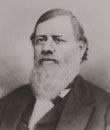
Historical · U.S. House · Connecticut · District 2
Julius Hotchkiss
Former U.S. Representative · Connecticut District 2 · 1867–1869 · Democratic
Julius Hotchkiss represented Connecticut's District 2 in the United States House of Representatives (1867–1869) for the Democratic party. The page below collects sourced biographical facts, term history, committee roles, and provenance for Hotchkiss.
Bioguide ID: H000809
Key facts
- Full name
- Julius Hotchkiss
- State
- Connecticut
- District
- District 2
- Party
- Democratic
- House service
- 1867–1869
- First House term
- 1867
- Status
- Left office
- Current term ends
- —
- Born
- 1810
- Bioguide ID
- H000809
- Committee assignments
- —
- Dataset version
- 1.20260606
Biographical narrative
1,010 words · sourced from the Wikipedia REST extract
Julius Hotchkiss was a notable figure in 19th-century American politics, serving as a U.S. Representative from Connecticut. A member of the Democratic Party, he held office during a transformative period in U.S. history, marked by the aftermath of the Civil War and the ongoing evolution of American governance. His political career was complemented by a background in business and local governance, which provided him with a unique perspective on the needs and challenges of his constituents. Hotchkiss's tenure in the House of Representatives was characterized by his commitment to public service and his involvement in local affairs, reflecting the values and priorities of his time.
Early life and career
Julius Hotchkiss was born on July 11, 1810, in Waterbury, Connecticut, to Woodward and Polly (Castle) Hotchkiss, who were farmers in the nearby town of Prospect. Growing up in a rural environment, Hotchkiss was exposed to the values of hard work and community service from an early age. At the age of seventeen, he began his professional journey as a teacher in the Prospect schools, indicating an early commitment to education and community involvement. This experience likely shaped his understanding of the importance of education in fostering civic responsibility and informed his later political career.
Following his initial foray into education, Hotchkiss transitioned to business, moving to Waterbury, where he established a store and a factory. His factory specialized in the production of cotton webbing and suspenders, which were essential items during that era. This entrepreneurial venture not only contributed to the local economy but also positioned him as a prominent figure in the community. His business acumen and local engagement laid the groundwork for his future political aspirations.
In 1832, Hotchkiss married Melissa Perkins, a resident of Oxford, Connecticut. Together, they had five children, and the family was known to be members of The New Church, reflecting their commitment to their faith and community values. The upbringing of his children and his involvement in local religious and social institutions likely influenced his perspectives on governance and public service.
House tenure
Hotchkiss's political career began to take shape in the early 1850s when he was nominated by both major political parties to serve as the first mayor of Waterbury following its incorporation in 1853. This unique bipartisan support underscored his popularity and the respect he garnered within the community. Initially affiliated with the Whig Party, Hotchkiss shifted his political allegiance to the Democratic Party as the Whigs began to dissolve, aligning himself with the emerging political landscape of the time.
His political experience continued to grow as he served in the Connecticut House of Representatives in 1851 and again in 1858. These roles provided him with valuable legislative experience and a deeper understanding of state governance, which would later inform his work at the federal level. His tenure in the state legislature allowed him to address local issues and advocate for the needs of his constituents, further solidifying his reputation as a dedicated public servant.
Hotchkiss was elected as a Democrat to the Fortieth Congress, serving from March 4, 1867, to March 3, 1869. His election to the U.S. House of Representatives came during a critical period in American history, as the nation was grappling with the consequences of the Civil War and the challenges of Reconstruction. Although specific details regarding his legislative actions during this time are not provided, his role as a representative would have involved addressing pressing national issues, including civil rights, economic recovery, and the reintegration of Southern states into the Union.
During his single term in Congress, Hotchkiss would have participated in debates and discussions that shaped the future of the nation. The political climate of the late 1860s was marked by significant changes, and as a member of the House, he would have been involved in the legislative processes that sought to address the needs of a diverse and divided populace.
After concluding his term in the House, Hotchkiss continued his public service by being elected as the 55th Lieutenant Governor of Connecticut in 1870. This position further exemplified his commitment to serving the people of Connecticut and his ongoing involvement in state politics. His election to this office indicated that he remained a respected figure within the Democratic Party and the broader political community.
Legislative focus and committees
While specific details regarding Julius Hotchkiss's legislative focus and committee assignments during his time in the House of Representatives are not documented, it is important to contextualize his role within the broader legislative framework of the period. The late 1860s were characterized by significant legislative activity aimed at addressing the aftermath of the Civil War and the complexities of Reconstruction. Issues such as civil rights for formerly enslaved individuals, economic recovery, and the reintegration of Southern states into the Union were at the forefront of national discussions.
As a member of the Democratic Party, Hotchkiss would have been part of a political faction that was navigating the challenges of a nation in transition. The Democratic Party during this period was often associated with a more conservative approach to governance, particularly in relation to civil rights and the role of the federal government in state affairs. This context may have influenced his legislative priorities and the issues he chose to advocate for during his time in office.
In addition to his legislative responsibilities, Hotchkiss's background in business and local governance likely provided him with a unique perspective on economic issues and the needs of his constituents. His experience in the manufacturing sector may have informed his views on economic policies, labor, and industry, which were critical topics during the post-war era.
After leaving Congress, Hotchkiss continued to engage in public service and community affairs until his death on December 23, 1878, in Middletown, Connecticut. He was laid to rest in Pine Grove Cemetery, leaving behind a legacy of public service and commitment to his community. His life and career reflect the complexities of American politics during a transformative period, and his contributions to local and state governance remain a part of Connecticut's historical narrative.
Notable legislation
Sponsored and co-sponsored legislation for Julius Hotchkiss is pending operator curation. The biographical narrative above carries the same provenance trail until per-bill rows are written.
Sources
- [1]https://en.wikipedia.org/wiki/Julius_HotchkissWikipedia · retrieved 2026-06-06
Notable quotes
Sourced quotes for Julius Hotchkiss are pending operator curation. Narrative-scope provenance remains attached below.
Sources
- [1]https://en.wikipedia.org/wiki/Julius_HotchkissWikipedia · retrieved 2026-06-06
Key positions
Curated policy positions for Julius Hotchkiss are pending operator review. The biographical narrative above carries the same provenance trail until per-topic positions are written.
Sources
- [1]https://en.wikipedia.org/wiki/Julius_HotchkissWikipedia · retrieved 2026-06-06
Terms served
- 1867–1869U.S. House · Term 1 · Democratic
Sources & provenance
Every attributable claim above carries a per-section [N] marker that resolves to the corresponding URL below. Each entry records the upstream provider, the canonical URL, and the timestamp at which the source was retrieved by the ingest pipeline.
Key facts
- https://bioguide.congress.gov/search/bio/H000809bioguide · retrieved 2026-06-06
- https://www.govtrack.us/congress/members/405657govtrack · retrieved 2026-06-06
Biographical narrative
- https://en.wikipedia.org/wiki/Julius_Hotchkisswikipedia · retrieved 2026-06-06
Find your representative
Every U.S. state elects representatives by district. Browse Connecticut’s delegation, the full former-representative roster, or explore the role and term length.
Related on The Candidate
- Preceded by Samuel WarnerEarlier holder of the Connecticut District 2 House seat · Republican.Open
- Succeeded by Stephen KelloggLater holder of the Connecticut District 2 House seat · Republican.Open
- Barbara KennellyFormer U.S. Representative · Connecticut District 1 · DemocraticOpen
- Charles ChapmanFormer U.S. Representative · Connecticut District 1 · WhigOpen
- Dwight LoomisFormer U.S. Representative · Connecticut District 1 · RepublicanOpen
- Edward FennFormer U.S. Representative · Connecticut District 1 · RepublicanOpen