
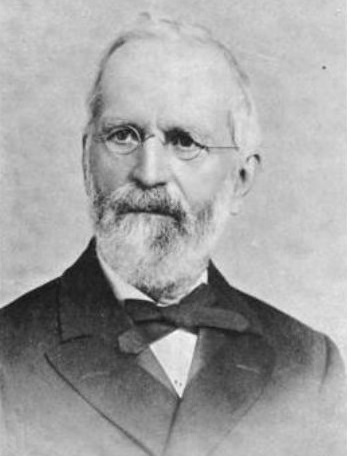
Historical · U.S. House · Connecticut · District 2
Stephen Kellogg
Former U.S. Representative · Connecticut District 2 · 1869–1875 · Republican
Stephen Kellogg represented Connecticut's District 2 in the United States House of Representatives (1869–1875) for the Republican party. The page below collects sourced biographical facts, term history, committee roles, and provenance for Kellogg.
Bioguide ID: K000067
Key facts
- Full name
- Stephen Kellogg
- State
- Connecticut
- District
- District 2
- Party
- Republican
- House service
- 1869–1875
- First House term
- 1869
- Status
- Left office
- Current term ends
- —
- Born
- 1822
- Bioguide ID
- K000067
- Committee assignments
- —
- Dataset version
- 1.20260606
Biographical narrative
863 words · sourced from the Wikipedia REST extract
Stephen Kellogg was an American politician, attorney, military officer, and judge who served as a U.S. Representative for Connecticut's 2nd congressional district. A member of the Republican Party, he held office in the House of Representatives for three terms from 1869 until 1875. Kellogg's career was marked by his involvement in both legal and political spheres, as well as his service during the American Civil War. He was known for his dedication to public service and his contributions to the organization of the Connecticut National Guard.
Early life and career
Stephen Kellogg was born on April 5, 1822, in Shelburne, Massachusetts. He spent his early years working on his father's farm, where he developed a strong work ethic. During the winter months, he attended school and also took on the role of a teacher. In the fall of 1842, Kellogg began his higher education at Amherst College but transferred to Yale College after two terms, where he graduated with the highest honors in 1846. At Yale, he was a member of the prestigious secret society Skull and Bones, which included notable peers such as Henry Baldwin Harrison, who would remain a lifelong friend.
Following his graduation, Kellogg pursued a career in law, enrolling in Yale Law School. He was admitted to the bar in June 1848 and began practicing law in Naugatuck, Connecticut, where he worked until 1854. His legal career took a significant turn when he was elected as judge of probate for the district of Waterbury, a position he held for seven years. In 1854, he was appointed by the state legislature as judge of the New Haven County Court, further solidifying his reputation in the legal community.
Kellogg's political engagement began early in his career. He served as clerk of the Connecticut State Senate in 1851 and was elected as a state senator in 1853. By 1856, he was a member of the Connecticut House of Representatives. His political involvement extended to national politics as he participated as a delegate in the Republican National Conventions of 1860, 1868, and 1876. His ability to navigate the political landscape of Connecticut, traditionally a Democratic stronghold, allowed him to secure three terms in the U.S. Congress, where he focused on the interests of his constituents.
House tenure
Kellogg's tenure in the U.S. House of Representatives began in 1869. During his time in office, he was known for his commitment to the needs of his district and his efforts to advance both public and personal interests. His election to Congress was notable given the political dynamics of Connecticut, particularly in the 2nd congressional district, which had a history of Democratic representation. Kellogg's persistence and political acumen enabled him to achieve significant electoral success in a challenging environment.
Throughout his three terms in the House, Kellogg was involved in various legislative initiatives and discussions that were pertinent to his constituents and the nation at large. His legislative focus often aligned with the broader goals of the Republican Party during the Reconstruction era, as the nation sought to rebuild and address the aftermath of the Civil War. Kellogg's tenure was characterized by his active participation in debates and his advocacy for policies that would benefit the people of Connecticut.
Kellogg's congressional career came to an end on March 3, 1875, when he lost his bid for re-election to James Phelps. Despite this setback, he garnered a significant portion of the vote, reflecting his continued support among constituents. His time in the House was marked by a dedication to public service and a commitment to the principles of the Republican Party.
Legislative focus and committees
During his time in Congress, Stephen Kellogg focused on various legislative issues that were relevant to his constituents and the broader national context. While specific details regarding the bills he sponsored or supported are not provided, it is understood that his legislative work was influenced by the pressing needs of the post-Civil War era. This period was marked by significant social and economic changes, and Kellogg's role as a representative involved addressing these challenges through legislative action.
Kellogg's experience as a lawyer and judge likely informed his approach to legislation, as he would have been well-versed in legal principles and the implications of various policies. His background in law and his understanding of the political landscape would have enabled him to contribute meaningfully to discussions on issues such as civil rights, economic development, and governance.
In addition to his legislative responsibilities, Kellogg was involved in the organizational aspects of the House, participating in committees that aligned with his interests and expertise. His commitment to public service extended beyond his congressional duties, as he remained engaged in political affairs and community issues throughout his life.
After leaving Congress, Kellogg continued to practice law and remained active in public life until shortly before his death on January 27, 1904. His contributions to the legal and political spheres, along with his military service during the Civil War, reflect a life dedicated to the service of his community and country. He was interred at Riverside Cemetery in Waterbury, Connecticut, leaving behind a legacy of public service and commitment to the principles of democracy.
Notable legislation
Sponsored and co-sponsored legislation for Stephen Kellogg is pending operator curation. The biographical narrative above carries the same provenance trail until per-bill rows are written.
Sources
- [1]https://en.wikipedia.org/wiki/Stephen_Kellogg_(politician)Wikipedia · retrieved 2026-06-06
Notable quotes
Sourced quotes for Stephen Kellogg are pending operator curation. Narrative-scope provenance remains attached below.
Sources
- [1]https://en.wikipedia.org/wiki/Stephen_Kellogg_(politician)Wikipedia · retrieved 2026-06-06
Key positions
Curated policy positions for Stephen Kellogg are pending operator review. The biographical narrative above carries the same provenance trail until per-topic positions are written.
Sources
- [1]https://en.wikipedia.org/wiki/Stephen_Kellogg_(politician)Wikipedia · retrieved 2026-06-06
Terms served
- 1869–1871U.S. House · Term 1 · Republican
- 1871–1873U.S. House · Term 2 · Republican
- 1873–1875U.S. House · Term 3 · Republican
Sources & provenance
Every attributable claim above carries a per-section [N] marker that resolves to the corresponding URL below. Each entry records the upstream provider, the canonical URL, and the timestamp at which the source was retrieved by the ingest pipeline.
Key facts
- https://bioguide.congress.gov/search/bio/K000067bioguide · retrieved 2026-06-06
- https://www.govtrack.us/congress/members/406237govtrack · retrieved 2026-06-06
Biographical narrative
- https://en.wikipedia.org/wiki/Stephen_Kellogg_(politician)wikipedia · retrieved 2026-06-06
Find your representative
Every U.S. state elects representatives by district. Browse Connecticut’s delegation, the full former-representative roster, or explore the role and term length.
Related on The Candidate
- Preceded by Julius HotchkissEarlier holder of the Connecticut District 2 House seat · Democratic.Open
- Succeeded by James PhelpsLater holder of the Connecticut District 2 House seat · Democratic.Open
- Barbara KennellyFormer U.S. Representative · Connecticut District 1 · DemocraticOpen
- Charles ChapmanFormer U.S. Representative · Connecticut District 1 · WhigOpen
- Dwight LoomisFormer U.S. Representative · Connecticut District 1 · RepublicanOpen
- Edward FennFormer U.S. Representative · Connecticut District 1 · RepublicanOpen