
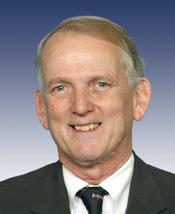
Historical · U.S. House · Connecticut · District 2
Rob Simmons
Former U.S. Representative · Connecticut District 2 · 2001–2007 · Republican
Rob Simmons represented Connecticut's District 2 in the United States House of Representatives (2001–2007) for the Republican party. The page below collects sourced biographical facts, term history, committee roles, and provenance for Simmons.
Bioguide ID: S001152
Key facts
- Full name
- Rob Simmons
- State
- Connecticut
- District
- District 2
- Party
- Republican
- House service
- 2001–2007
- First House term
- 2001
- Status
- Left office
- Current term ends
- —
- Born
- 1943
- Bioguide ID
- S001152
- Committee assignments
- —
- Dataset version
- 1.20260605
Biographical narrative
1,033 words · sourced from the Wikipedia REST extract
Rob Simmons is a former American politician and retired U.S. Army colonel who served as a member of the United States House of Representatives from 2001 to 2007. He represented Connecticut's 2nd congressional district as a Republican. During his tenure in Congress, Simmons was involved in various legislative efforts, particularly in areas related to national defense and intelligence. After leaving Congress, he continued to engage in public service and local governance.
Early life and career
Rob Simmons was born on February 11, 1943, in New York City. He pursued higher education at Haverford College, where he graduated in 1965. Following his graduation, Simmons enlisted in the United States Army, beginning a military career that would span several decades. He served on active duty from 1965 to 1969, during which time he graduated from the Infantry Officer Candidate School in 1967 and became a commissioned officer. His military service included a deployment to Vietnam, where he served for 19 months and earned two Bronze Star Medals for his actions.
After his active duty, Simmons transitioned to the United States Army Reserve, where he served as a Military Intelligence Officer until his retirement in 2003 at the rank of colonel. During his time in the reserves, he led the 434th Military Intelligence Detachment (Strategic), which was affiliated with Yale University. Under his command, this unit was recognized as the best small unit in the U.S. Army Reserve in 1996 by the Reserve Officers Association. Simmons also contributed to military intelligence through his authorship of the "Open Source Intelligence Guide for the Military Intelligence Officer."
In addition to his military career, Simmons joined the Central Intelligence Agency (CIA) in 1969, where he worked as an Operations Officer for a decade, including five years of overseas assignments in East Asia. His work involved significant responsibilities, including managing the Phu Yen Province Interrogation Center during the Vietnam War. He was awarded the CIA's Agency Seal Medal in 1985 for his contributions to the agency. Simmons furthered his education by earning a Master of Public Administration from Harvard's John F. Kennedy School of Government in 1979.
Simmons began his political career as a staff member for Senator John Chafee of Rhode Island and later served as the Staff Director for the United States Senate Select Committee on Intelligence under Senator Barry Goldwater. He also held academic positions as a professor of political science at Yale College and the University of Connecticut. In 1991, he entered state politics by winning a seat in the Connecticut House of Representatives, representing the 43rd district.
House tenure
Rob Simmons was elected to the United States House of Representatives in 2000, marking the beginning of his congressional career. He won his seat by defeating ten-term Democratic incumbent Sam Gejdenson in a closely contested election. Simmons's victory was notable as it occurred in a district that was considered a Democratic stronghold. He took office in January 2001 and served three terms until January 2007.
During his time in Congress, Simmons was a member of the House Armed Services Committee, where he focused on issues related to national defense, particularly concerning the Electric Boat submarine shipyard in Groton and the Naval Submarine Base New London, both significant to Connecticut's economy and defense infrastructure. In 2005, he played a crucial role in advocating for the Groton submarine base when it was targeted for closure by the Base Realignment and Closure Commission (BRAC). Simmons successfully led efforts to remove the base from the closure list, which was a significant achievement for his constituents.
Simmons also served on the House Homeland Security Committee, where he chaired the Subcommittee on Intelligence, Information Sharing, and Terrorism Risk Assessment. His work in this role focused on enhancing intelligence-sharing capabilities among federal, state, and local authorities. He was a proponent of Open Source Intelligence (OSINT) and contributed to the legal definition of OSINT in the 2006 National Defense Authorization Act, which mandated the establishment of an OSINT program within the Department of Defense. Additionally, he advocated for the creation of an open source intelligence unit at the Department of Homeland Security.
Throughout his congressional career, Simmons faced various electoral challenges. In 2002, he successfully defended his seat against Democrat Joe Courtney, winning by a margin of 54% to 46%. He repeated this success in 2004, defeating Jim Sullivan, another Democratic challenger, with a similar margin. However, in the 2006 election, Simmons's fortunes changed. He faced Courtney again, and the race was highly competitive, ultimately resulting in a narrow defeat for Simmons by just 83 votes after a recount.
Legislative focus and committees
During his tenure in the House of Representatives, Rob Simmons's legislative focus was primarily on national security, defense, and intelligence issues. His role on the House Armed Services Committee allowed him to advocate for the interests of Connecticut's defense industry, particularly the submarine construction and maintenance sectors, which are vital to the state's economy. Simmons's efforts to save the Groton submarine base exemplified his commitment to protecting local jobs and ensuring the continued operation of critical military facilities.
As chairman of the Subcommittee on Intelligence, Information Sharing, and Terrorism Risk Assessment within the House Homeland Security Committee, Simmons emphasized the importance of effective communication and collaboration among various levels of government in matters of national security. His advocacy for improved intelligence-sharing practices reflected a broader concern for enhancing the nation's ability to respond to threats and safeguard public safety.
Simmons's contributions to the legislative framework surrounding open source intelligence were significant. By helping to define OSINT in federal law, he aimed to facilitate the integration of publicly available information into intelligence operations, thereby enhancing the capabilities of U.S. intelligence agencies. His work in this area underscored the evolving nature of intelligence in the digital age and the necessity for government agencies to adapt to new information sources.
After leaving Congress in 2007, Simmons continued to engage in public service. He was elected First Selectman in Stonington, Connecticut, in 2015, a position he held until he chose not to seek reelection in 2019. Throughout his career, Simmons has demonstrated a commitment to public service, both in military and civilian capacities, reflecting a long-standing dedication to his community and country.
Notable legislation
Sponsored and co-sponsored legislation for Rob Simmons is pending operator curation. The biographical narrative above carries the same provenance trail until per-bill rows are written.
Sources
- [1]https://en.wikipedia.org/wiki/Rob_SimmonsWikipedia · retrieved 2026-06-05
Notable quotes
Sourced quotes for Rob Simmons are pending operator curation. Narrative-scope provenance remains attached below.
Sources
- [1]https://en.wikipedia.org/wiki/Rob_SimmonsWikipedia · retrieved 2026-06-05
Key positions
Curated policy positions for Rob Simmons are pending operator review. The biographical narrative above carries the same provenance trail until per-topic positions are written.
Sources
- [1]https://en.wikipedia.org/wiki/Rob_SimmonsWikipedia · retrieved 2026-06-05
Terms served
- 2001–2003U.S. House · Term 1 · Republican
- 2003–2005U.S. House · Term 2 · Republican
- 2005–2007U.S. House · Term 3 · Republican
Sources & provenance
Every attributable claim above carries a per-section [N] marker that resolves to the corresponding URL below. Each entry records the upstream provider, the canonical URL, and the timestamp at which the source was retrieved by the ingest pipeline.
Key facts
- https://bioguide.congress.gov/search/bio/S001152bioguide · retrieved 2026-06-05
- http://www.house.gov/simmonshouse.gov · retrieved 2026-06-05
Biographical narrative
- https://en.wikipedia.org/wiki/Rob_Simmonswikipedia · retrieved 2026-06-05
Find your representative
Every U.S. state elects representatives by district. Browse Connecticut’s delegation, the full former-representative roster, or explore the role and term length.
Related on The Candidate
- Preceded by Sam GejdensonEarlier holder of the Connecticut District 2 House seat · Democratic.Open
- Barbara KennellyFormer U.S. Representative · Connecticut District 1 · DemocraticOpen
- Charles ChapmanFormer U.S. Representative · Connecticut District 1 · WhigOpen
- Dwight LoomisFormer U.S. Representative · Connecticut District 1 · RepublicanOpen
- Edward FennFormer U.S. Representative · Connecticut District 1 · RepublicanOpen
- Republican PartyFederal candidates and office holders on the Republican line.Open