
Historical · U.S. House · Connecticut · District 2
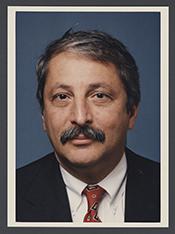
Sam Gejdenson
Former U.S. Representative · Connecticut District 2 · 1981–2001 · Democratic
Sam Gejdenson represented Connecticut's District 2 in the United States House of Representatives (1981–2001) for the Democratic party. The page below collects sourced biographical facts, term history, committee roles, and provenance for Gejdenson.
Bioguide ID: G000120
Key facts
- Full name
- Sam Gejdenson
- State
- Connecticut
- District
- District 2
- Party
- Democratic
- House service
- 1981–2001
- First House term
- 1981
- Status
- Left office
- Current term ends
- —
- Born
- 1948
- Bioguide ID
- G000120
- Committee assignments
- —
- Dataset version
- 1.20260605
Biographical narrative
988 words · sourced from the Wikipedia REST extract
Samuel Gejdenson is a former United States Representative who served Connecticut's 2nd congressional district as a member of the Democratic Party. His congressional career spanned two decades, beginning in 1981 and concluding in 2001. Gejdenson's tenure in the House of Representatives was marked by a focus on international trade, oversight of various federal agencies, and a commitment to addressing issues such as human trafficking.
Early life and career
Samuel Gejdenson was born on May 20, 1948, in a displaced persons camp located in Eschwege, which was part of Allied-occupied Germany. His family background is diverse; he is the son of a Belarusian father and a Lithuanian mother. Following World War II, Gejdenson's family immigrated to the United States, where they settled on a dairy farm in Bozrah, Connecticut, near the city of Norwich. Growing up in this rural environment, he developed a strong work ethic and a sense of community.
Gejdenson pursued higher education initially at Mitchell College, where he studied for two years before transferring to the University of Connecticut, where he completed his degree. After finishing his education, he entered the workforce, taking a position with the FIA Company from 1970 to 1973. His early career experiences laid the groundwork for his later involvement in public service.
In 1974, Gejdenson began his political career by winning election to the Connecticut House of Representatives as a Democrat. He served two terms in this capacity, during which he gained valuable experience in governance and policy-making. Following his tenure in the state legislature, he took on the role of president at the Montessori School in Norwich, Connecticut, further demonstrating his commitment to education and community service.
House tenure
Gejdenson's ascent to the U.S. House of Representatives began with his election in November 1980. He represented Connecticut's 2nd congressional district, a position he held for ten consecutive terms until his departure from Congress in January 2001. Throughout his time in office, Gejdenson faced significant electoral challenges, often winning by narrow margins. His campaigns were characterized by close races, with only a few instances where he secured more than 60 percent of the vote.
During his congressional tenure, Gejdenson was involved in various committees and subcommittees that shaped his legislative focus. He served as Chairman of the Subcommittee on Oversight and Investigations of the House Interior Committee, which is now known as the House Resources Committee. In this role, he conducted oversight of critical federal agencies, including the Nuclear Regulatory Commission and the Bureau of Indian Affairs. His work in this capacity highlighted his commitment to accountability and transparency in government operations.
In 1989, Gejdenson transitioned to the Chairmanship of the Subcommittee on International Economic Policy and Trade within the House Foreign Affairs Committee, which is now referred to as the International Relations Committee. His leadership in this subcommittee was marked by efforts to promote American exports and streamline export controls, particularly for high-tech industries. Gejdenson's focus on international trade reflected a broader commitment to enhancing the economic interests of his constituents and the nation.
As he progressed in his congressional career, Gejdenson became the ranking Democratic member of the full International Relations Committee in 1999. In this influential role, he played a significant part in crafting legislation aimed at combating international human trafficking and authorizing various activities of the State Department. His legislative efforts in these areas underscored his dedication to addressing pressing global issues and advocating for human rights.
Despite his long tenure and contributions, Gejdenson faced electoral challenges that tested his political resilience. In 1992, he narrowly secured 50 percent of the vote against state Senator Edward Munster. The rematch in 1994 was particularly contentious, with Gejdenson winning by a mere 21 votes, a result that was contested but ultimately upheld. The close nature of these races illustrated the competitive political landscape of his district.
Legislative focus and committees
Throughout his time in Congress, Gejdenson's legislative focus encompassed a range of issues, with a particular emphasis on international economic policy, trade, and oversight of federal agencies. His role as Chairman of the Subcommittee on Oversight and Investigations allowed him to address critical issues related to government accountability, while his leadership in the Subcommittee on International Economic Policy and Trade positioned him as a key advocate for American businesses and exports.
Gejdenson's commitment to human rights and international issues was evident in his work on legislation aimed at combating human trafficking. His efforts in this area contributed to raising awareness and addressing a significant global challenge. As the ranking Democratic member of the International Relations Committee, he was involved in shaping policies that aligned with his values and the interests of his constituents.
Despite his legislative achievements, Gejdenson's political career faced challenges that culminated in his defeat in the 2000 election. His loss to state Representative Rob Simmons was unexpected and attributed to several factors, including his public stance on international issues and allegations regarding his residency in the district. The political climate at the time, including the broader context of the Democratic Party's struggles in the House, also played a role in his electoral outcome.
After leaving Congress, Gejdenson continued to engage in public service and international trade. He established his own company, Sam Gejdenson International, and became involved in various civic organizations. His endorsement of Joe Courtney in the 2006 election for the seat he once held demonstrated his ongoing interest in the political landscape of Connecticut. Additionally, he served on the board of directors of the National Democratic Institute and was appointed as a Commissioner on the United States Commission on International Religious Freedom from 2012 to 2014.
Gejdenson's career reflects a dedication to public service and a commitment to addressing both local and global issues through legislative action and civic engagement. His experiences in the U.S. House of Representatives and subsequent endeavors illustrate the complexities of political life and the impact of individual representatives on their constituents and the broader national discourse.
Notable legislation
Sponsored and co-sponsored legislation for Sam Gejdenson is pending operator curation. The biographical narrative above carries the same provenance trail until per-bill rows are written.
Sources
- [1]https://en.wikipedia.org/wiki/Sam_GejdensonWikipedia · retrieved 2026-06-05
Notable quotes
Sourced quotes for Sam Gejdenson are pending operator curation. Narrative-scope provenance remains attached below.
Sources
- [1]https://en.wikipedia.org/wiki/Sam_GejdensonWikipedia · retrieved 2026-06-05
Key positions
Curated policy positions for Sam Gejdenson are pending operator review. The biographical narrative above carries the same provenance trail until per-topic positions are written.
Sources
- [1]https://en.wikipedia.org/wiki/Sam_GejdensonWikipedia · retrieved 2026-06-05
Terms served
- 1981–1983U.S. House · Term 1 · Democratic
- 1983–1985U.S. House · Term 2 · Democratic
- 1985–1987U.S. House · Term 3 · Democratic
- 1987–1989U.S. House · Term 4 · Democratic
- 1989–1991U.S. House · Term 5 · Democratic
- 1991–1993U.S. House · Term 6 · Democratic
- 1993–1995U.S. House · Term 7 · Democratic
- 1995–1997U.S. House · Term 8 · Democratic
- 1997–1999U.S. House · Term 9 · Democratic
- 1999–2001U.S. House · Term 10 · Democratic
Sources & provenance
Every attributable claim above carries a per-section [N] marker that resolves to the corresponding URL below. Each entry records the upstream provider, the canonical URL, and the timestamp at which the source was retrieved by the ingest pipeline.
Key facts
- https://bioguide.congress.gov/search/bio/G000120bioguide · retrieved 2026-06-05
- https://www.govtrack.us/congress/members/400585govtrack · retrieved 2026-06-05
Biographical narrative
- https://en.wikipedia.org/wiki/Sam_Gejdensonwikipedia · retrieved 2026-06-05
Find your representative
Every U.S. state elects representatives by district. Browse Connecticut’s delegation, the full former-representative roster, or explore the role and term length.
Related on The Candidate
- Preceded by Robert SteeleEarlier holder of the Connecticut District 2 House seat · Republican.Open
- Succeeded by Rob SimmonsLater holder of the Connecticut District 2 House seat · Republican.Open
- Barbara KennellyFormer U.S. Representative · Connecticut District 1 · DemocraticOpen
- Charles ChapmanFormer U.S. Representative · Connecticut District 1 · WhigOpen
- Dwight LoomisFormer U.S. Representative · Connecticut District 1 · RepublicanOpen
- Edward FennFormer U.S. Representative · Connecticut District 1 · RepublicanOpen