
Historical · U.S. House · Connecticut · District 2
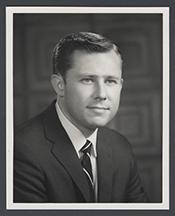
Robert Steele
Former U.S. Representative · Connecticut District 2 · 1969–1975 · Republican
Robert Steele represented Connecticut's District 2 in the United States House of Representatives (1969–1975) for the Republican party. The page below collects sourced biographical facts, term history, committee roles, and provenance for Steele.
Bioguide ID: S000836
Key facts
- Full name
- Robert Steele
- State
- Connecticut
- District
- District 2
- Party
- Republican
- House service
- 1969–1975
- First House term
- 1969
- Status
- Left office
- Current term ends
- —
- Born
- 1938
- Bioguide ID
- S000836
- Committee assignments
- —
- Dataset version
- 1.20260605
Biographical narrative
946 words · sourced from the Wikipedia REST extract
Robert H. Steele is a retired American politician and author who served as a U.S. Representative for Connecticut's 2nd congressional district from 1970 to 1975. A member of the Republican Party, Steele's political career was marked by his moderate-to-liberal stance on various issues, including his opposition to the Vietnam War. His tenure in the House of Representatives began with a special election to fill a vacancy and included a notable re-election campaign. After leaving Congress, he pursued a gubernatorial candidacy and authored a book addressing the impacts of gambling in New England.
Early life and career
Robert Hampton Steele was born on November 3, 1938, in Hartford, Connecticut. He grew up in a family that had a significant presence in the local media landscape; his father, known as Bob Steele, was a prominent radio host who led the state's top-rated morning show on WTIC-AM for over fifty years. This background likely influenced Steele's early exposure to public discourse and communication.
Steele attended public schools in Wethersfield, Connecticut, where he completed his primary and secondary education. He then pursued higher education at Amherst College in Massachusetts, where he earned a Bachelor of Arts degree in 1960. Following his undergraduate studies, he continued his education at Columbia University, obtaining a master's degree in 1963. His academic pursuits laid a foundation for his later career, equipping him with the skills necessary for both public service and analysis.
After completing his education, Steele began a career in public service. He spent five years as a Soviet expert with the Central Intelligence Agency (CIA), working in Washington, D.C., and Mexico. This experience provided him with insights into international relations and intelligence, which would later inform his political perspectives. Following his tenure at the CIA, Steele transitioned to the private sector, serving as a securities analyst for the Travelers Insurance Company from 1968 until he entered politics in 1970.
House tenure
Steele's political career in the U.S. House of Representatives began in 1970 when he was elected to represent Connecticut's 2nd congressional district. His election came through a special election held to fill a vacancy created by the death of Democratic Representative William L. St. Onge. Notably, Steele was elected in a district where Democrats held a numerical advantage over Republicans, highlighting his ability to appeal to a diverse electorate.
During his time in Congress, Steele served in the Ninety-first and Ninety-second Congresses. His initial election was followed by a successful re-election campaign to the Ninety-third Congress, where he won by a substantial margin of 68,000 votes. Throughout his congressional tenure, Steele developed a reputation as a moderate-to-liberal Republican, which was somewhat atypical for members of his party during that era. His legislative record included a notable opposition to the Vietnam War, reflecting the sentiments of many constituents who were increasingly critical of U.S. involvement in the conflict.
Steele's approach to governance was characterized by a willingness to engage with issues that resonated with a broad spectrum of voters. His moderate stance allowed him to navigate the complexities of partisan politics, and he often sought to find common ground on contentious issues. This approach was particularly important during a time when the nation was experiencing significant political and social upheaval.
In 1974, Steele chose not to seek re-election to the Ninety-fourth Congress. Instead, he set his sights on a gubernatorial campaign in Connecticut. His decision to run for governor came in the wake of the Watergate scandal, which had shaken public trust in government officials. In his campaign, Steele emphasized the need for campaign reform and committed to limiting political contributions to a maximum of $100. Despite his efforts, Steele's gubernatorial bid was unsuccessful, marking the end of his direct involvement in elected office.
Legislative focus and committees
During his time in the House of Representatives, Robert Steele was involved in various legislative initiatives and served on several committees. His moderate-to-liberal stance allowed him to engage with a range of issues, particularly those related to social justice, civil rights, and government accountability. Steele's opposition to the Vietnam War was a defining aspect of his legislative focus, as he sought to advocate for peace and a reevaluation of U.S. foreign policy.
In addition to his work on foreign policy, Steele was known for his expertise in anti-gambling issues. His concerns about the impacts of gambling on communities were rooted in his belief that it could lead to social and economic challenges. This focus culminated in his later work as an author, where he explored the consequences of gambling in his book, "The Curse: Big-Time Gambling's Seduction of a Small New England Town," published in 2012. In this work, Steele examined the complexities of gambling's influence on local communities, reflecting his ongoing commitment to addressing issues that affect the well-being of citizens.
Steele's time in Congress was marked by a commitment to public service and a desire to represent the interests of his constituents. His legislative record and public statements often reflected a concern for the social fabric of his district and the nation as a whole. While he faced challenges during his political career, including the complexities of campaigning in a predominantly Democratic district, Steele's ability to connect with voters and articulate his positions contributed to his electoral successes.
After leaving Congress, Steele continued to engage with public issues through his writing and advocacy. His experiences in both the intelligence community and the private sector informed his perspectives on governance and public policy. Robert H. Steele's career reflects a blend of public service, political engagement, and a commitment to addressing the pressing issues of his time, leaving a legacy that continues to resonate in discussions about governance and civic responsibility.
Notable legislation
Sponsored and co-sponsored legislation for Robert Steele is pending operator curation. The biographical narrative above carries the same provenance trail until per-bill rows are written.
Sources
- [1]https://en.wikipedia.org/wiki/Robert_H._SteeleWikipedia · retrieved 2026-06-05
Notable quotes
Sourced quotes for Robert Steele are pending operator curation. Narrative-scope provenance remains attached below.
Sources
- [1]https://en.wikipedia.org/wiki/Robert_H._SteeleWikipedia · retrieved 2026-06-05
Key positions
Curated policy positions for Robert Steele are pending operator review. The biographical narrative above carries the same provenance trail until per-topic positions are written.
Sources
- [1]https://en.wikipedia.org/wiki/Robert_H._SteeleWikipedia · retrieved 2026-06-05
Terms served
- 1969–1971U.S. House · Term 1 · Republican
- 1971–1973U.S. House · Term 2 · Republican
- 1973–1975U.S. House · Term 3 · Republican
Sources & provenance
Every attributable claim above carries a per-section [N] marker that resolves to the corresponding URL below. Each entry records the upstream provider, the canonical URL, and the timestamp at which the source was retrieved by the ingest pipeline.
Key facts
- https://bioguide.congress.gov/search/bio/S000836bioguide · retrieved 2026-06-05
- https://www.govtrack.us/congress/members/410300govtrack · retrieved 2026-06-05
Biographical narrative
- https://en.wikipedia.org/wiki/Robert_H._Steelewikipedia · retrieved 2026-06-05
Find your representative
Every U.S. state elects representatives by district. Browse Connecticut’s delegation, the full former-representative roster, or explore the role and term length.
Related on The Candidate
- Preceded by Horace Seely-Brown Jr.Earlier holder of the Connecticut District 2 House seat · Republican.Open
- Succeeded by Sam GejdensonLater holder of the Connecticut District 2 House seat · Democratic.Open
- Barbara KennellyFormer U.S. Representative · Connecticut District 1 · DemocraticOpen
- Charles ChapmanFormer U.S. Representative · Connecticut District 1 · WhigOpen
- Dwight LoomisFormer U.S. Representative · Connecticut District 1 · RepublicanOpen
- Edward FennFormer U.S. Representative · Connecticut District 1 · RepublicanOpen