
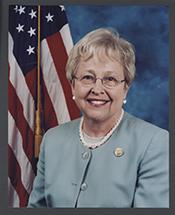
Historical · U.S. House · Connecticut · District 5
Nancy Johnson
Former U.S. Representative · Connecticut District 5 · 1983–2007 · Republican
Nancy Johnson represented Connecticut's District 5 in the United States House of Representatives (1983–2007) for the Republican party. The page below collects sourced biographical facts, term history, committee roles, and provenance for Johnson.
Bioguide ID: J000163
Key facts
- Full name
- Nancy Johnson
- State
- Connecticut
- District
- District 5
- Party
- Republican
- House service
- 1983–2007
- First House term
- 1983
- Status
- Left office
- Current term ends
- —
- Born
- 1935
- Bioguide ID
- J000163
- Committee assignments
- —
- Dataset version
- 1.20260605
Biographical narrative
867 words · sourced from the Wikipedia REST extract
Nancy L. Johnson is a former American politician and lobbyist who served as a Republican member of the United States House of Representatives from Connecticut. Her congressional career spanned from 1983 until 2007, during which she represented the 6th congressional district and later the 5th congressional district following a reapportionment. Johnson's tenure in the House was marked by her moderate Republican stance, her involvement in various legislative issues, and her active participation in community service prior to her political career.
Early life and career
Nancy L. Johnson was born on January 5, 1935, in Chicago, Illinois. She completed her secondary education at the University of Chicago Laboratory School, graduating in 1953. Johnson then pursued higher education at Radcliffe College of Harvard University, where she earned her degree in 1957. Following her undergraduate studies, she attended the Courtauld Institute of Art in London during 1957 and 1958.
After her education, Johnson relocated to New Britain, Connecticut, where she became actively involved in local community service. She volunteered in schools and social service agencies, reflecting her commitment to public service and community engagement. Her political career began in the Connecticut Senate, where she served from 1977 until 1983. This experience laid the groundwork for her subsequent election to the U.S. House of Representatives.
House tenure
Johnson was first elected to the U.S. House of Representatives in 1982, securing her position with 52 percent of the vote against Democratic state senator William E. Curry Jr. She succeeded Democrat Anthony "Toby" Moffett, who had vacated the seat to run for the U.S. Senate. Johnson's initial election marked the beginning of a lengthy congressional career that would span 12 terms.
Throughout her time in the House, Johnson faced various electoral challenges. In 1996, she encountered her closest race, narrowly defeating Democrat Charlotte Koskoff with a margin of 50 to 49 percent. Johnson attributed the reduced vote percentage in this election to her involvement with the House ethics panel, which limited her ability to campaign effectively in her district. However, she rebounded in subsequent elections, winning 59 percent of the vote against Koskoff in 1998 and 63 percent against Paul Valenti in 2000.
The 2002 redistricting process resulted in Johnson's New Britain-based district being merged with the Waterbury-based 5th District, previously represented by Democrat James H. Maloney. Despite the challenges posed by the new district's demographics, Johnson won the general election against Maloney with 54 percent of the vote. In 2004, she successfully defeated Democrat Theresa Gerratana, receiving 60 percent of the vote.
Johnson's final campaign in 2006 was marked by significant challenges. She faced Democrat Chris Murphy, a state senator, in a highly competitive race. In the lead-up to the election, Johnson was targeted by negative advertisements from a political action committee, which alleged connections to controversial figures in Washington. Despite having a substantial fundraising advantage, Johnson ultimately lost the election to Murphy by a notable margin, marking the end of her congressional career.
Legislative focus and committees
During her tenure in the House of Representatives, Nancy Johnson was known for her moderate Republican ideology. She often described herself as "an independent voice in Washington," and her voting record reflected a blend of moderate and conservative positions. Nonpartisan assessments rated her near the ideological midpoint in the House, while conservative organizations classified her as a moderate conservative.
Johnson was actively involved in various legislative issues, particularly in the areas of health care and education. She garnered support from organizations such as the National Education Association, reflecting her commitment to educational initiatives. Johnson's legislative record included support for Republican policies on health care and the Iraq War, while she opposed certain aspects of the Bush administration's energy agenda, including oil drilling in the Arctic National Wildlife Refuge.
Her voting history included notable instances of crossing party lines. In 1998, she was one of the few members of the Connecticut delegation to vote for two of the four articles of impeachment against President Bill Clinton. Additionally, in 2003, she voted with House Democrats against the Partial-Birth Abortion Ban Act, which passed with a significant majority. In 2006, Johnson attracted attention for voting against a Republican budget reconciliation bill that narrowly passed the House, aligning herself with a group of moderate Republicans who sided with Democrats on the issue.
Throughout her congressional career, Johnson was a member of several socially moderate Republican organizations, including The Wish List and Republicans for Choice. Her legislative focus reflected a balance between supporting mainstream Republican initiatives and advocating for moderate social policies.
Following her departure from Congress in 2007, Johnson transitioned to a lobbying career, joining Baker, Donelson, Bearman, Caldwell & Berkowitz, PC in Washington, D.C. Her experience in the House and her established network within political circles positioned her well for this new role in advocacy and lobbying.
In summary, Nancy L. Johnson's career as a U.S. Representative was characterized by her moderate Republican stance, her commitment to community service, and her active participation in legislative matters. Her tenure in the House spanned over two decades, during which she navigated various electoral challenges and contributed to significant policy discussions. After leaving Congress, she continued to engage in public service through her work as a lobbyist.
Notable legislation
Sponsored and co-sponsored legislation for Nancy Johnson is pending operator curation. The biographical narrative above carries the same provenance trail until per-bill rows are written.
Sources
- [1]https://en.wikipedia.org/wiki/Nancy_JohnsonWikipedia · retrieved 2026-06-05
Notable quotes
Sourced quotes for Nancy Johnson are pending operator curation. Narrative-scope provenance remains attached below.
Sources
- [1]https://en.wikipedia.org/wiki/Nancy_JohnsonWikipedia · retrieved 2026-06-05
Key positions
Curated policy positions for Nancy Johnson are pending operator review. The biographical narrative above carries the same provenance trail until per-topic positions are written.
Sources
- [1]https://en.wikipedia.org/wiki/Nancy_JohnsonWikipedia · retrieved 2026-06-05
Terms served
- 1983–1985U.S. House · Term 1 · Republican
- 1985–1987U.S. House · Term 2 · Republican
- 1987–1989U.S. House · Term 3 · Republican
- 1989–1991U.S. House · Term 4 · Republican
- 1991–1993U.S. House · Term 5 · Republican
- 1993–1995U.S. House · Term 6 · Republican
- 1995–1997U.S. House · Term 7 · Republican
- 1997–1999U.S. House · Term 8 · Republican
- 1999–2001U.S. House · Term 9 · Republican
- 2001–2003U.S. House · Term 10 · Republican
- 2003–2005U.S. House · Term 11 · Republican
- 2005–2007U.S. House · Term 12 · Republican
Sources & provenance
Every attributable claim above carries a per-section [N] marker that resolves to the corresponding URL below. Each entry records the upstream provider, the canonical URL, and the timestamp at which the source was retrieved by the ingest pipeline.
Key facts
- https://bioguide.congress.gov/search/bio/J000163bioguide · retrieved 2026-06-05
- http://www.house.gov/nancyjohnsonhouse.gov · retrieved 2026-06-05
Biographical narrative
- https://en.wikipedia.org/wiki/Nancy_Johnsonwikipedia · retrieved 2026-06-05
Find your representative
Every U.S. state elects representatives by district. Browse Connecticut’s delegation, the full former-representative roster, or explore the role and term length.
Related on The Candidate
- Preceded by Ronald SarasinEarlier holder of the Connecticut District 5 House seat · Republican.Open
- Succeeded by Elizabeth EstyLater holder of the Connecticut District 5 House seat · Democratic.Open
- Barbara KennellyFormer U.S. Representative · Connecticut District 1 · DemocraticOpen
- Charles ChapmanFormer U.S. Representative · Connecticut District 1 · WhigOpen
- Dwight LoomisFormer U.S. Representative · Connecticut District 1 · RepublicanOpen
- Edward FennFormer U.S. Representative · Connecticut District 1 · RepublicanOpen