
Historical · U.S. House · Connecticut · District 6
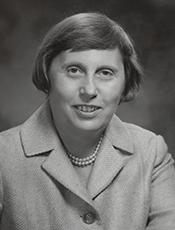
Ella Grasso
Former U.S. Representative · Connecticut District 6 · 1971–1975 · Democratic
Ella Grasso represented Connecticut's District 6 in the United States House of Representatives (1971–1975) for the Democratic party. The page below collects sourced biographical facts, term history, committee roles, and provenance for Grasso.
Bioguide ID: G000387
Key facts
- Full name
- Ella Grasso
- State
- Connecticut
- District
- District 6
- Party
- Democratic
- House service
- 1971–1975
- First House term
- 1971
- Status
- Left office
- Current term ends
- —
- Born
- 1919
- Bioguide ID
- G000387
- Committee assignments
- —
- Dataset version
- 1.20260605
Biographical narrative
989 words · sourced from the Wikipedia REST extract
Ella T. Grasso was a prominent American politician and member of the Democratic Party who served as a U.S. Representative for Connecticut's 6th congressional district from 1971 to 1975. Following her tenure in the House, she made history as the first woman elected governor of Connecticut and the fourth woman to serve as governor in any U.S. state. Grasso's political career was marked by her commitment to public service and her pioneering role for women in politics, culminating in her election as governor in 1974. She resigned from the governorship in 1980 due to health issues related to ovarian cancer.
Early life and career
Ella Rosa Giovianna Oliva Tambussi was born on May 10, 1919, in Windsor Locks, Connecticut, to Italian immigrant parents, Maria Oliva and James Giacomo Tambussi. Growing up in a working-class family, Grasso was influenced by her parents' experiences as immigrants, which shaped her understanding of the challenges faced by many in her community. She learned to speak fluent Italian, which would later aid her in connecting with constituents of similar backgrounds. Grasso attended the Chaffee School in Windsor, where she excelled academically and was recognized in her yearbook as likely to become mayor, although she often felt out of place in her affluent school environment.
Grasso pursued higher education at Mount Holyoke College in South Hadley, Massachusetts, where she studied sociology and economics. She earned her Bachelor of Arts degree in 1940 and continued her studies, obtaining a master's degree from the same institution in 1942. Following her graduation, she began her professional career as a researcher for the War Manpower Commission in Washington, D.C., where she eventually rose to the position of assistant director of research before leaving in 1946.
In 1942, Grasso married Thomas Grasso, a school principal, and together they had two children, Susanne and James. The couple also ventured into business, owning a movie theater in Old Lyme, Connecticut, where Ella Grasso worked during the summer months, selling tickets at the box office. Throughout her political career, she maintained a strong connection to her family, commuting home to Connecticut from Washington, D.C., on weekends while serving in Congress.
Grasso's political involvement began in earnest in 1942 when she joined the League of Women Voters. She became a speechwriter for the Connecticut Democratic Party in 1943. Initially a member of the Republican Party, she switched her allegiance to the Democrats in 1951 to support Governor Chester Bowles. This shift marked the beginning of her long-standing relationship with the Democratic Party and influential figures within it, including John Moran Bailey, who recognized her potential to connect with voters, particularly women and Italian Americans.
House tenure
Grasso's political career took a significant turn in 1952 when she was elected to the Connecticut House of Representatives, serving until 1957. During her time in the state legislature, she made history by becoming the first woman elected as Floor Leader of the House in 1955. In this role, she worked on various initiatives, including efforts to streamline government by eliminating counties as a level of administration in Connecticut.
In 1958, Grasso was elected Secretary of the State of Connecticut, a position she held until 1971. During her tenure, she played a crucial role in shaping the state's political landscape, including being a key architect of the state's 1960 Constitution. Grasso was known for her commitment to the responsibilities of her office, choosing not to attend a national convention for the National Association of Secretaries of State in 1961, which she deemed of little value to her state.
Her leadership extended to significant legal developments, particularly following the Supreme Court's ruling in Baker v. Carr, which opened the door for federal courts to address state legislative apportionment. Grasso was elected as a delegate to a constitutional convention convened to address these issues, where she served as the Democratic floor leader among her peers.
In the years leading up to her congressional career, Grasso was active in the Democratic Party at both state and national levels, serving on various committees and participating in the drafting of party platforms. Her experience and connections positioned her well for a run for the U.S. House of Representatives.
In 1970, Grasso announced her candidacy for the Democratic nomination for Connecticut's 6th congressional district, which became available when incumbent Congressman Thomas Meskill opted to run for governor. After a competitive primary, she faced Republican candidate Richard Kilborn in the general election, ultimately winning by a narrow margin.
Legislative focus and committees
During her two terms in the U.S. House of Representatives, which began in 1971 and concluded in 1975, Grasso focused on several key issues, particularly those related to veterans and education. She served on the House Committees on Veterans' Affairs and Education and Labor, where she contributed to discussions and legislation that aimed to improve the lives of veterans and enhance educational opportunities for all Americans.
Grasso's legislative work was characterized by her advocacy for policies that supported working families and addressed the needs of her constituents in Connecticut. Her background in sociology and economics informed her approach to legislation, as she sought to create policies that would foster economic growth and social equity.
In December 1971, Grasso was part of a group of House members who communicated directly with President Nixon, reflecting her active engagement in national issues and her willingness to advocate for her constituents on a broader stage. Her tenure in the House was marked by her commitment to public service and her efforts to represent the interests of her district effectively.
After serving two terms in Congress, Grasso transitioned to a more prominent role in state politics, ultimately becoming the first woman elected governor of Connecticut in 1974. Her election marked a significant milestone in the history of women's political representation in the United States. Grasso's legacy as a trailblazer for women in politics continued to influence future generations of female leaders in Connecticut and beyond.
Notable legislation
Sponsored and co-sponsored legislation for Ella Grasso is pending operator curation. The biographical narrative above carries the same provenance trail until per-bill rows are written.
Sources
- [1]https://en.wikipedia.org/wiki/Ella_GrassoWikipedia · retrieved 2026-06-05
Notable quotes
Sourced quotes for Ella Grasso are pending operator curation. Narrative-scope provenance remains attached below.
Sources
- [1]https://en.wikipedia.org/wiki/Ella_GrassoWikipedia · retrieved 2026-06-05
Key positions
Curated policy positions for Ella Grasso are pending operator review. The biographical narrative above carries the same provenance trail until per-topic positions are written.
Sources
- [1]https://en.wikipedia.org/wiki/Ella_GrassoWikipedia · retrieved 2026-06-05
Terms served
- 1971–1973U.S. House · Term 1 · Democratic
- 1973–1975U.S. House · Term 2 · Democratic
Sources & provenance
Every attributable claim above carries a per-section [N] marker that resolves to the corresponding URL below. Each entry records the upstream provider, the canonical URL, and the timestamp at which the source was retrieved by the ingest pipeline.
Key facts
- https://bioguide.congress.gov/search/bio/G000387bioguide · retrieved 2026-06-05
- https://www.govtrack.us/congress/members/404737govtrack · retrieved 2026-06-05
Biographical narrative
- https://en.wikipedia.org/wiki/Ella_Grassowikipedia · retrieved 2026-06-05
Find your representative
Every U.S. state elects representatives by district. Browse Connecticut’s delegation, the full former-representative roster, or explore the role and term length.
Related on The Candidate
- Preceded by Thomas MeskillEarlier holder of the Connecticut District 6 House seat · Republican.Open
- Succeeded by Toby Moffett Jr.Later holder of the Connecticut District 6 House seat · Democratic.Open
- Barbara KennellyFormer U.S. Representative · Connecticut District 1 · DemocraticOpen
- Charles ChapmanFormer U.S. Representative · Connecticut District 1 · WhigOpen
- Dwight LoomisFormer U.S. Representative · Connecticut District 1 · RepublicanOpen
- Edward FennFormer U.S. Representative · Connecticut District 1 · RepublicanOpen