
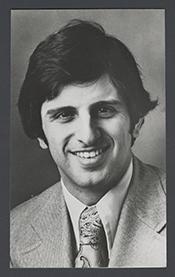
Historical · U.S. House · Connecticut · District 6
Toby Moffett Jr.
Former U.S. Representative · Connecticut District 6 · 1975–1983 · Democratic
Toby Moffett Jr. represented Connecticut's District 6 in the United States House of Representatives (1975–1983) for the Democratic party. The page below collects sourced biographical facts, term history, committee roles, and provenance for Jr..
Bioguide ID: M000839
Key facts
- Full name
- Toby Moffett Jr.
- State
- Connecticut
- District
- District 6
- Party
- Democratic
- House service
- 1975–1983
- First House term
- 1975
- Status
- Left office
- Current term ends
- —
- Born
- 1944
- Bioguide ID
- M000839
- Committee assignments
- —
- Dataset version
- 1.20260605
Biographical narrative
851 words · sourced from the Wikipedia REST extract
Toby Moffett is a former American politician who served as a Democratic member of the United States House of Representatives, representing Connecticut's 6th congressional district from 1975 until 1983. Known for his advocacy on environmental issues and his alignment with labor unions, Moffett's congressional career was marked by his active involvement in various legislative matters and his opposition to the oil industry. After leaving Congress, he transitioned into a career in media and consulting, while also engaging in lobbying efforts.
Early life and career
Toby Moffett was born on August 18, 1944, in Holyoke, Massachusetts, to Lebanese immigrant parents. He spent his early years in Suffield, Connecticut, where he attended local schools, including Suffield Elementary School and Suffield High School. Moffett pursued higher education at Syracuse University, earning a Bachelor of Arts degree in 1966. His academic journey included a year of study in Florence, Italy, from 1963 to 1964, which contributed to his global perspective. He later obtained a Master of Arts degree from Boston College in 1968.
Moffett's early career was rooted in public service and activism. He worked as the Director of the Office of Students and Youth in the Office of Education within the Department of Health, Education, and Welfare from 1969 to 1970. However, he resigned from this position in protest against the Vietnam War, reflecting his commitment to social and political causes. His activism continued in Connecticut, where he became a prominent figure in the environmental movement. He was closely associated with consumer advocate Ralph Nader and played a significant role in founding the Connecticut Citizen Action Group, which focused on various social and environmental issues.
In 1974, Moffett leveraged his activism and community engagement to successfully run for the U.S. House of Representatives. He won the seat for Connecticut's 6th congressional district, which had been vacated by Ella T. Grasso when she ran for governor. This victory marked the beginning of Moffett's four terms in Congress, during which he established himself as a leading voice on environmental matters and a proponent of labor rights.
House tenure
Moffett's tenure in the U.S. House of Representatives began in 1975 and continued until January 3, 1983. Throughout his time in office, he was recognized for his liberal stance on various issues, particularly those related to environmental protection and energy policy. He was a vocal opponent of the oil industry and actively supported legislation aimed at promoting renewable energy sources and environmental conservation.
One notable incident during Moffett's congressional career occurred on April 10, 1975, when he walked out of the House chamber during President Gerald Ford's State of the World speech, which included a request for military aid to Vietnam. This act underscored his commitment to his principles and his opposition to the ongoing conflict.
Moffett's legislative focus extended beyond environmental issues; he was also closely aligned with labor unions, advocating for workers' rights and fair labor practices. His leadership was evident in his role as chairman of the House Subcommittee on Energy, Environment, and Natural Resources, where he worked on policies that aimed to balance economic growth with environmental sustainability.
In 1982, Moffett sought to expand his political influence by challenging incumbent U.S. Senator Lowell Weicker. Despite a favorable national climate for Democrats, Moffett was defeated in a closely contested election. Following this loss, he attempted to regain political office in subsequent years but faced challenges in securing nominations and winning elections.
Legislative focus and committees
During his time in Congress, Toby Moffett was deeply engaged in legislative initiatives that reflected his commitment to environmental issues and social justice. His chairmanship of the House Subcommittee on Energy, Environment, and Natural Resources allowed him to influence key policies related to energy production, environmental regulation, and conservation efforts. Moffett's advocacy for renewable energy sources and his opposition to fossil fuel dependency were central themes of his legislative agenda.
Moffett was known for his coalition-building skills, which he utilized to advance environmental legislation and to align with various advocacy groups, including labor unions. His efforts contributed to a broader dialogue on the importance of sustainable practices and the need for comprehensive energy policies that addressed both economic and environmental concerns.
In addition to his environmental focus, Moffett's legislative work encompassed a range of social issues. He was an advocate for consumer rights and worked to promote policies that protected the interests of everyday Americans. His alignment with labor unions further emphasized his commitment to ensuring fair wages and working conditions for all workers.
After leaving Congress in 1983, Moffett's career took several turns, including roles in media and consulting. He worked as a news anchor and investigative journalist, and he became a syndicated columnist. His political involvement continued through various lobbying efforts, where he represented both for-profit and nonprofit entities, including renewable energy developers and foreign governments.
Moffett's political journey reflects a commitment to public service and advocacy for environmental and social issues. His legacy in Congress is marked by his efforts to promote sustainable practices and protect the rights of workers, as well as his active engagement in the political landscape of Connecticut and beyond.
Notable legislation
Sponsored and co-sponsored legislation for Toby Moffett Jr. is pending operator curation. The biographical narrative above carries the same provenance trail until per-bill rows are written.
Sources
- [1]https://en.wikipedia.org/wiki/Toby_MoffettWikipedia · retrieved 2026-06-05
Notable quotes
Sourced quotes for Toby Moffett Jr. are pending operator curation. Narrative-scope provenance remains attached below.
Sources
- [1]https://en.wikipedia.org/wiki/Toby_MoffettWikipedia · retrieved 2026-06-05
Key positions
Curated policy positions for Toby Moffett Jr. are pending operator review. The biographical narrative above carries the same provenance trail until per-topic positions are written.
Sources
- [1]https://en.wikipedia.org/wiki/Toby_MoffettWikipedia · retrieved 2026-06-05
Terms served
- 1975–1977U.S. House · Term 1 · Democratic
- 1977–1979U.S. House · Term 2 · Democratic
- 1979–1981U.S. House · Term 3 · Democratic
- 1981–1983U.S. House · Term 4 · Democratic
Sources & provenance
Every attributable claim above carries a per-section [N] marker that resolves to the corresponding URL below. Each entry records the upstream provider, the canonical URL, and the timestamp at which the source was retrieved by the ingest pipeline.
Key facts
- https://bioguide.congress.gov/search/bio/M000839bioguide · retrieved 2026-06-05
- https://www.govtrack.us/congress/members/407813govtrack · retrieved 2026-06-05
Biographical narrative
- https://en.wikipedia.org/wiki/Toby_Moffettwikipedia · retrieved 2026-06-05
Find your representative
Every U.S. state elects representatives by district. Browse Connecticut’s delegation, the full former-representative roster, or explore the role and term length.
Related on The Candidate
- Preceded by Ella GrassoEarlier holder of the Connecticut District 6 House seat · Democratic.Open
- Barbara KennellyFormer U.S. Representative · Connecticut District 1 · DemocraticOpen
- Charles ChapmanFormer U.S. Representative · Connecticut District 1 · WhigOpen
- Dwight LoomisFormer U.S. Representative · Connecticut District 1 · RepublicanOpen
- Edward FennFormer U.S. Representative · Connecticut District 1 · RepublicanOpen
- Democratic PartyFederal candidates and office holders on the Democratic line.Open