
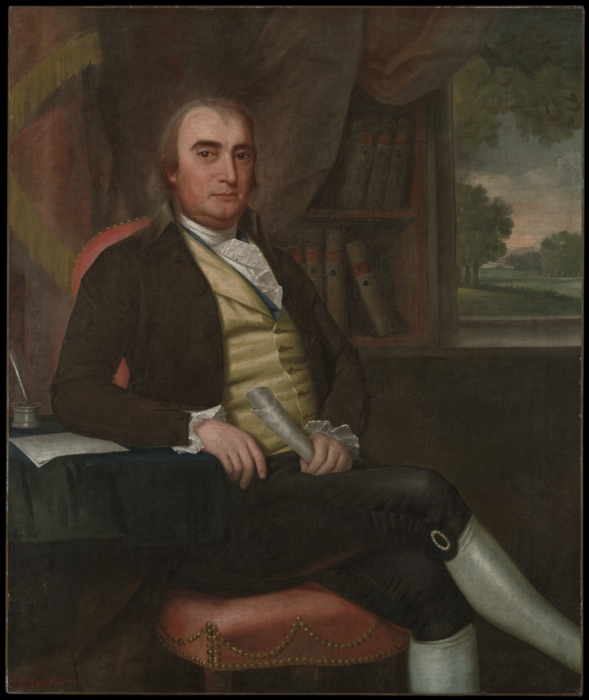
Historical · U.S. House · Connecticut · At-Large
John Davenport
Former U.S. Representative · Connecticut At-Large · 1799–1817 · Federalist
John Davenport represented Connecticut's At-Large in the United States House of Representatives (1799–1817) for the Federalist party. The page below collects sourced biographical facts, term history, committee roles, and provenance for Davenport.
Bioguide ID: D000075
Key facts
- Full name
- John Davenport
- State
- Connecticut
- District
- At-Large
- Party
- Federalist
- House service
- 1799–1817
- First House term
- 1799
- Status
- Left office
- Current term ends
- —
- Born
- 1752
- Bioguide ID
- D000075
- Committee assignments
- —
- Dataset version
- 1.20260606
Biographical narrative
945 words · sourced from the Wikipedia REST extract
John Davenport was a prominent American politician who served as a U.S. Representative from Connecticut. A member of the Federalist Party, he held office for nearly two decades, representing the at-large district of Connecticut in the House of Representatives. Davenport's political career spanned nine terms from 1799 until 1817, during which he played a significant role in early American legislative processes. His contributions to the government were informed by his extensive background in law, education, and military service during the Revolutionary War.
Early life and career
John Davenport was born on January 16, 1752, in Stamford, which was then part of the Connecticut Colony. His early education culminated in his graduation from Yale College in 1770, a prestigious institution that would later produce many influential figures in American history. Following his graduation, Davenport engaged in teaching at Yale for a brief period in 1773 and 1774, demonstrating an early commitment to education and intellectual pursuits.
In addition to his teaching career, Davenport studied law and was admitted to the bar in 1773, allowing him to practice law in Stamford. His legal background would later inform his legislative work, as he navigated the complexities of governance and lawmaking. Davenport's career was also marked by his service in the Continental Army during the Revolutionary War, where he served in the commissary department. His military service began in earnest in 1777, when he attained the rank of major. This experience not only contributed to his leadership skills but also deepened his understanding of the challenges facing the new nation.
Davenport's political career began in earnest when he was elected to the Connecticut House of Representatives, where he served from 1776 to 1796. His long tenure in the state legislature provided him with valuable experience in governance and public service, laying the groundwork for his future role in the U.S. Congress. Throughout his time in the state legislature, he was involved in various legislative initiatives and gained a reputation as a dedicated public servant.
House tenure
Davenport's entry into the U.S. House of Representatives came in 1799 when he was elected as a member of the Federalist Party. He served in the House for a total of nine terms, with his congressional service spanning from March 4, 1799, until March 3, 1817. His long tenure in the House made him one of the more experienced legislators of his time, allowing him to influence key legislative decisions during a formative period in American history.
During his time in Congress, Davenport was involved in various legislative activities and served on important committees. Notably, he held the position of chairman of the Committee on Revisal and Unfinished Business during the Seventh Congress, a role that underscored his leadership within the legislative body. This committee was responsible for addressing pending legislation and ensuring that important matters were brought to the floor for discussion and resolution.
Davenport's political career coincided with significant events in American history, including the early years of the Republic and the challenges of nation-building. His work in Congress contributed to the shaping of federal policies and the establishment of the legislative framework that would govern the nation. As a Federalist, he aligned with a party that advocated for a strong central government and supported policies that promoted economic growth and stability.
Despite his lengthy and impactful career, Davenport chose not to seek reelection in 1816. His decision to step away from public office marked the end of a significant chapter in his life, as he transitioned from active politics to other pursuits. Following his departure from Congress, he returned to Stamford, where he continued to be involved in community affairs until his death.
Legislative focus and committees
Throughout his congressional career, John Davenport's legislative focus was shaped by the priorities of the Federalist Party and the needs of his constituents in Connecticut. As a member of the House, he engaged in discussions and debates on a wide range of issues, including economic policies, national defense, and the development of federal infrastructure. His legal background likely informed his approach to legislation, as he sought to create laws that were both effective and just.
Davenport's role as chairman of the Committee on Revisal and Unfinished Business during the Seventh Congress highlighted his involvement in the legislative process. This committee played a crucial role in reviewing pending legislation and ensuring that important issues were addressed in a timely manner. Through this position, Davenport contributed to the efficient functioning of the House and helped facilitate the passage of significant bills.
As a Federalist, Davenport supported policies that aimed to strengthen the federal government and promote economic development. The Federalist Party was known for advocating a strong central government, and Davenport's legislative efforts reflected these principles. His work in Congress contributed to the establishment of a stable economic framework and the promotion of commerce, which were essential for the young nation's growth.
Davenport's contributions to the House of Representatives were significant, as he participated in the early formation of American legislative practices and policies. His experience in both state and federal government provided him with a unique perspective on the challenges facing the nation, and he worked diligently to address these issues during his time in office.
After concluding his congressional career, Davenport continued to reside in Stamford, where he remained active in local affairs. He passed away on November 28, 1830, leaving behind a legacy of public service and commitment to the principles of governance. His burial took place in North Field Cemetery, now known as Franklin Street Cemetery, marking the final resting place of a figure who played a notable role in the early years of the United States Congress.
Notable legislation
Sponsored and co-sponsored legislation for John Davenport is pending operator curation. The biographical narrative above carries the same provenance trail until per-bill rows are written.
Sources
- [1]https://en.wikipedia.org/wiki/John_Davenport_(Connecticut_politician)Wikipedia · retrieved 2026-06-06
Notable quotes
Sourced quotes for John Davenport are pending operator curation. Narrative-scope provenance remains attached below.
Sources
- [1]https://en.wikipedia.org/wiki/John_Davenport_(Connecticut_politician)Wikipedia · retrieved 2026-06-06
Key positions
Curated policy positions for John Davenport are pending operator review. The biographical narrative above carries the same provenance trail until per-topic positions are written.
Sources
- [1]https://en.wikipedia.org/wiki/John_Davenport_(Connecticut_politician)Wikipedia · retrieved 2026-06-06
Terms served
- 1799–1801U.S. House · Term 1 · Federalist
- 1801–1803U.S. House · Term 2 · Federalist
- 1803–1805U.S. House · Term 3 · Federalist
- 1805–1807U.S. House · Term 4 · Federalist
- 1807–1809U.S. House · Term 5 · Federalist
- 1809–1811U.S. House · Term 6 · Federalist
- 1811–1813U.S. House · Term 7 · Federalist
- 1813–1815U.S. House · Term 8 · Federalist
- 1815–1817U.S. House · Term 9 · Federalist
Sources & provenance
Every attributable claim above carries a per-section [N] marker that resolves to the corresponding URL below. Each entry records the upstream provider, the canonical URL, and the timestamp at which the source was retrieved by the ingest pipeline.
Key facts
- https://bioguide.congress.gov/search/bio/D000075bioguide · retrieved 2026-06-06
- https://www.govtrack.us/congress/members/403213govtrack · retrieved 2026-06-06
Biographical narrative
- https://en.wikipedia.org/wiki/John_Davenport_(Connecticut_politician)wikipedia · retrieved 2026-06-06
Find your representative
Every U.S. state elects representatives by district. Browse Connecticut’s delegation, the full former-representative roster, or explore the role and term length.
Related on The Candidate
- Preceded by James DavenportEarlier holder of the Connecticut At-Large House seat · Federalist.Open
- Succeeded by Nathaniel TerryLater holder of the Connecticut At-Large House seat · Federalist.Open
- Barbara KennellyFormer U.S. Representative · Connecticut District 1 · DemocraticOpen
- Charles ChapmanFormer U.S. Representative · Connecticut District 1 · WhigOpen
- Dwight LoomisFormer U.S. Representative · Connecticut District 1 · RepublicanOpen
- Edward FennFormer U.S. Representative · Connecticut District 1 · RepublicanOpen