
Historical · U.S. House · Connecticut · At-Large
Nathaniel Terry
Former U.S. Representative · Connecticut At-Large · 1817–1819 · Federalist
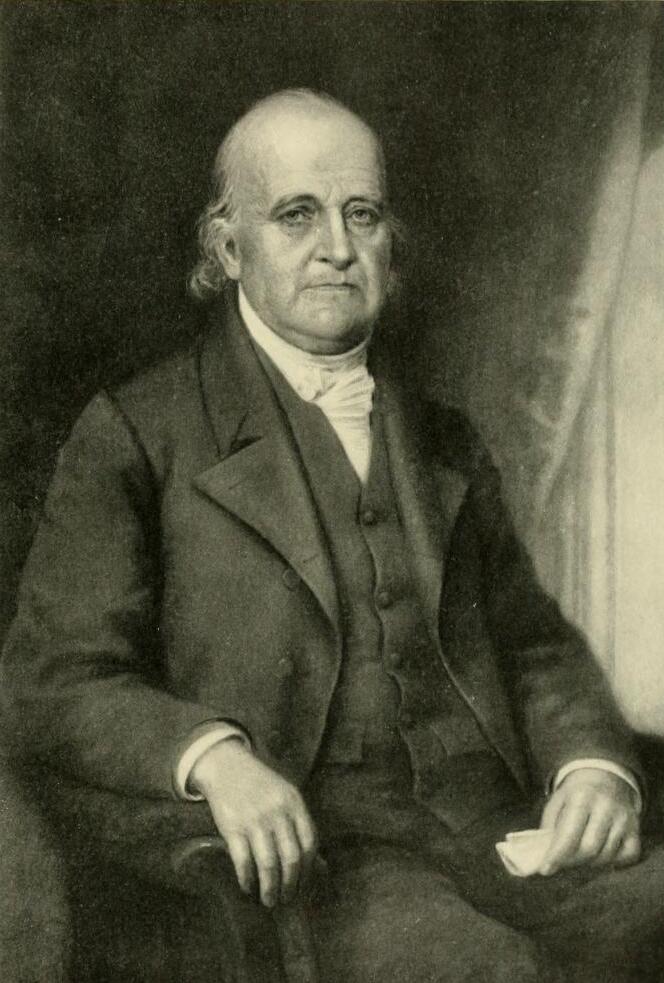
Nathaniel Terry represented Connecticut's At-Large in the United States House of Representatives (1817–1819) for the Federalist party. The page below collects sourced biographical facts, term history, committee roles, and provenance for Terry.
Bioguide ID: T000135
Key facts
- Full name
- Nathaniel Terry
- State
- Connecticut
- District
- At-Large
- Party
- Federalist
- House service
- 1817–1819
- First House term
- 1817
- Status
- Left office
- Current term ends
- —
- Born
- 1768
- Bioguide ID
- T000135
- Committee assignments
- —
- Dataset version
- 1.20260606
Biographical narrative
863 words · sourced from the Wikipedia REST extract
Nathaniel Terry was an American politician, lawyer, and judge who served as a U.S. Representative for Connecticut's at-large congressional district from 1817 to 1819. A member of the Federalist Party, Terry's political career included various roles in state and local government, as well as significant contributions to the legal and civic landscape of Hartford, Connecticut. His tenure in the U.S. House of Representatives was part of a broader public service that spanned several decades, during which he held positions in both the state legislature and local government.
Early life and career
Nathaniel Terry was born on January 30, 1768, in Enfield, Connecticut, to Nathaniel Terry Sr. and Abiah Dwight Terry. He received his early education at common schools before attending Dartmouth College. He later graduated from Yale College in 1786, where he pursued studies in law. After completing his education, Terry was admitted to the bar in 1790 and began practicing law in Enfield.
In 1796, Terry relocated to Hartford, Connecticut, where he became actively involved in both legal and civic affairs. His military service included a notable role as the commander of the Governor's Foot Guard, a position he held from 1802 to 1813. In addition to his military duties, Terry served as a judge of the Hartford County Court from 1807 until his resignation in 1809. His legal expertise and community involvement paved the way for a successful political career.
Terry's political journey began in earnest when he was elected to the Connecticut House of Representatives, where he served from 1804 to 1815. His time in the state legislature allowed him to gain valuable experience in governance and public policy, further establishing his reputation as a dedicated public servant. Following his tenure in the state legislature, Terry continued to engage in civic matters, including participation in the Connecticut state constitutional convention in 1818.
House tenure
Terry's congressional career commenced when he was elected as a U.S. Representative for Connecticut's at-large district, serving in the 15th United States Congress from March 4, 1817, to March 3, 1819. As a member of the Federalist Party, he represented a political faction that was influential during the early years of the United States, advocating for a strong central government and commercial interests. His term in the House of Representatives was characterized by the political dynamics of the time, which included debates over issues such as national infrastructure, economic policy, and foreign relations.
During his time in Congress, Terry participated in discussions and decisions that shaped the legislative framework of the nation. Although specific details about his voting record and legislative initiatives are not documented, his role as a representative contributed to the broader political discourse of the era. After completing his single term in the House, Terry returned to Connecticut, where he continued his involvement in public service and local governance.
Legislative focus and committees
While specific details regarding Nathaniel Terry's legislative focus and committee assignments during his time in the U.S. House of Representatives are not available, it is known that he was part of a significant period in American history marked by the post-War of 1812 era. This period was characterized by a growing sense of national identity and the expansion of infrastructure, including roads and canals, which were critical for economic development.
In addition to his congressional service, Terry held several prominent positions in Hartford's civic and financial institutions. He served as president of the Hartford Fire Insurance Company from 1810 to 1835, a role that underscored his commitment to the economic stability and safety of the community. Furthermore, he was president of the Hartford Bank from 1819 to 1828, indicating his influence in the financial sector during a time of economic growth and development in the region.
Terry's later political career included serving as the fourth mayor of Hartford from November 22, 1824, to March 28, 1831. His tenure as mayor was marked by efforts to improve the city and address the needs of its residents. Although he transitioned to the Whig Party during this period, his earlier affiliations with the Federalist Party reflect the evolving political landscape of the time.
In addition to his political and legal endeavors, Terry's military background continued to play a role in his life, as he served as a general in the Connecticut State Militia. This dual commitment to both civic duty and military service exemplified the values of leadership and public service that were prominent in his life.
Nathaniel Terry married Catharine Wadsworth in Hartford on March 14, 1798, and together they had eight children. His family life was an integral part of his identity, and he remained active in his community until his death on June 14, 1844, in New Haven, Connecticut. He was laid to rest in Old North (Spring Grove) Cemetery in Hartford, leaving behind a legacy of public service and dedication to the community.
In summary, Nathaniel Terry's life and career reflect a commitment to public service through various roles in government, law, and civic leadership. His contributions to Connecticut's political landscape and his involvement in local governance highlight the impact of his work on the community and the nation during a formative period in American history.
Notable legislation
Sponsored and co-sponsored legislation for Nathaniel Terry is pending operator curation. The biographical narrative above carries the same provenance trail until per-bill rows are written.
Sources
- [1]https://en.wikipedia.org/wiki/Nathaniel_TerryWikipedia · retrieved 2026-06-06
Notable quotes
Sourced quotes for Nathaniel Terry are pending operator curation. Narrative-scope provenance remains attached below.
Sources
- [1]https://en.wikipedia.org/wiki/Nathaniel_TerryWikipedia · retrieved 2026-06-06
Key positions
Curated policy positions for Nathaniel Terry are pending operator review. The biographical narrative above carries the same provenance trail until per-topic positions are written.
Sources
- [1]https://en.wikipedia.org/wiki/Nathaniel_TerryWikipedia · retrieved 2026-06-06
Terms served
- 1817–1819U.S. House · Term 1 · Federalist
Sources & provenance
Every attributable claim above carries a per-section [N] marker that resolves to the corresponding URL below. Each entry records the upstream provider, the canonical URL, and the timestamp at which the source was retrieved by the ingest pipeline.
Key facts
- https://bioguide.congress.gov/search/bio/T000135bioguide · retrieved 2026-06-06
- https://www.govtrack.us/congress/members/410717govtrack · retrieved 2026-06-06
Biographical narrative
- https://en.wikipedia.org/wiki/Nathaniel_Terrywikipedia · retrieved 2026-06-06
Find your representative
Every U.S. state elects representatives by district. Browse Connecticut’s delegation, the full former-representative roster, or explore the role and term length.
Related on The Candidate
- Preceded by Benjamin TallmadgeEarlier holder of the Connecticut At-Large House seat · Federalist.Open
- Succeeded by Elisha PhelpsLater holder of the Connecticut At-Large House seat · Adams.Open
- Barbara KennellyFormer U.S. Representative · Connecticut District 1 · DemocraticOpen
- Charles ChapmanFormer U.S. Representative · Connecticut District 1 · WhigOpen
- Dwight LoomisFormer U.S. Representative · Connecticut District 1 · RepublicanOpen
- Edward FennFormer U.S. Representative · Connecticut District 1 · RepublicanOpen