
Historical · U.S. House · Delaware · At-Large
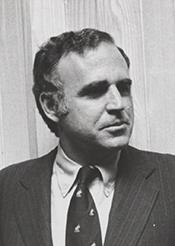
Thomas Evans Jr.
Former U.S. Representative · Delaware At-Large · 1977–1983 · Republican
Thomas Evans Jr. represented Delaware's At-Large in the United States House of Representatives (1977–1983) for the Republican party. The page below collects sourced biographical facts, term history, committee roles, and provenance for Jr..
Bioguide ID: E000258
Key facts
- Full name
- Thomas Evans Jr.
- State
- Delaware
- District
- At-Large
- Party
- Republican
- House service
- 1977–1983
- First House term
- 1977
- Status
- Left office
- Current term ends
- —
- Born
- 1931
- Bioguide ID
- E000258
- Committee assignments
- —
- Dataset version
- 1.20260605
Biographical narrative
1,009 words · sourced from the Wikipedia REST extract
Thomas B. Evans Jr. is a former American politician and lawyer who served as a U.S. Representative for Delaware's at-large congressional district. A member of the Republican Party, Evans held office from January 3, 1977, until January 3, 1983, completing three terms in the House of Representatives. His tenure coincided with the administrations of Presidents Jimmy Carter and Ronald Reagan, during which he participated in significant legislative efforts, particularly concerning environmental issues.
Early life and career
Born on November 5, 1931, in Nashville, Tennessee, Thomas B. Evans Jr. spent his early years in Old Hickory, Tennessee, and Seaford, Delaware. He attended public schools in these areas, laying the foundation for his future academic pursuits. In 1947, he graduated from Woodberry Forest School, an all-boys preparatory school located in Orange, Virginia. Following high school, Evans enrolled at the University of Virginia, where he pursued a degree in law. He graduated in 1953 and was actively involved in campus life, becoming a member of the Delta Phi fraternity. He continued his legal education at the University of Virginia School of Law, earning his law degree in 1956.
After being admitted to the Virginia Bar in the same year, Evans began his professional career in Wilmington, Delaware, where he engaged in the insurance and mortgage brokerage business from 1957 until 1968. His early career also included military service; he served in the Delaware National Guard from 1956 to 1960. In 1955, he worked as a clerk for the Chief Justice of the Delaware Supreme Court, gaining valuable insights into the judicial system.
Evans's career trajectory continued to evolve when he took on the role of director of the Delaware State Development Department from 1969 to 1970. This position allowed him to engage with economic development initiatives in the state. His political involvement deepened when he became co-chairman and chief operating officer of the Republican National Committee from 1971 to 1973, a role that placed him at the center of national party politics during a transformative period in American history.
In addition to his political roles, Evans was a member of the law firm Manatt, Phelps & Phillips in Washington, D.C. His professional interests extended to environmental advocacy, as he later served as Chairman of the Florida Coalition for Preservation, a non-profit organization dedicated to promoting responsible growth and protecting coastal barrier islands. Evans's commitment to environmental issues has continued into his later years, as he is also a member of the ReFormers Caucus of Issue One, an organization focused on political reform.
House tenure
Evans's political career reached a significant milestone when he was elected to the United States House of Representatives in 1976. He successfully defeated the Democratic incumbent Samuel L. Shipley, marking the beginning of his first term in Congress. Over the course of his political career, Evans was re-elected two additional times, defeating Democratic challengers Gary E. Hindes in 1978 and Robert L. Maxwell in 1980. Throughout his three terms in office, Evans served in the Republican minority during the 95th, 96th, and 97th Congresses.
During his time in Congress, Evans developed a close relationship with prominent Republican figures, including U.S. Senator Bob Dole and President Ronald Reagan. These connections were significant as they provided him with opportunities to influence legislation and advocate for policies aligned with his party's platform. His tenure in the House was characterized by active participation in various legislative initiatives, particularly those related to financial services and infrastructure.
Evans served on the United States House Committee on Financial Services, where he contributed to discussions and decisions regarding banking, insurance, and securities. Additionally, he was a member of the United States House Committee on Transportation and Infrastructure, which oversees a wide range of issues related to transportation systems and public infrastructure projects. His involvement in these committees allowed him to address critical issues affecting his constituents and the nation at large.
Despite his legislative efforts, Evans's career was not without controversy. He became embroiled in a scandal involving lobbyist Paula Parkinson, which raised allegations of inappropriate conduct. Although the United States Department of Justice investigated the claims, they ultimately found no evidence of criminal wrongdoing. This incident, while not leading to formal charges, did impact his public image and political standing.
Evans's congressional career came to an end when he was defeated in his bid for a fourth term in 1982. His tenure lasted from January 3, 1977, until January 3, 1983, during which he navigated the complexities of national politics and contributed to various legislative efforts.
Legislative focus and committees
Throughout his time in the House of Representatives, Evans demonstrated a strong commitment to environmental issues, which became a hallmark of his legislative focus. He co-authored significant pieces of legislation, including the Coastal Barrier Resources Act, aimed at protecting coastal ecosystems from development and preserving natural resources. This act was part of a broader movement during the late 20th century to address environmental concerns and promote conservation efforts.
In addition to the Coastal Barrier Resources Act, Evans was involved in the Alaska Wilderness Preservation Act, which sought to safeguard the unique wilderness areas of Alaska from industrial development. His advocacy for environmental protection reflected a growing awareness of ecological issues during his time in office and contributed to the ongoing national dialogue about conservation.
Evans also co-authored the Evans-Tsongas Act, which addressed various environmental and economic concerns, further illustrating his dedication to these issues. His efforts in environmental legislation were recognized in 2016 when he received a Conservation Leadership Award from the National Wildlife Federation, acknowledging his contributions to conservation and environmental advocacy.
In summary, Thomas B. Evans Jr. served as a U.S. Representative for Delaware from 1977 to 1983, during which he was actively involved in key legislative efforts, particularly in the areas of financial services, transportation, and environmental protection. His career was marked by significant relationships within the Republican Party and a commitment to addressing pressing national issues. After leaving Congress, he continued to engage in political and environmental advocacy, reflecting his enduring interest in public service and community development.
Notable legislation
Sponsored and co-sponsored legislation for Thomas Evans Jr. is pending operator curation. The biographical narrative above carries the same provenance trail until per-bill rows are written.
Sources
- [1]https://en.wikipedia.org/wiki/Thomas_B._Evans_Jr.Wikipedia · retrieved 2026-06-05
Notable quotes
Sourced quotes for Thomas Evans Jr. are pending operator curation. Narrative-scope provenance remains attached below.
Sources
- [1]https://en.wikipedia.org/wiki/Thomas_B._Evans_Jr.Wikipedia · retrieved 2026-06-05
Key positions
Curated policy positions for Thomas Evans Jr. are pending operator review. The biographical narrative above carries the same provenance trail until per-topic positions are written.
Sources
- [1]https://en.wikipedia.org/wiki/Thomas_B._Evans_Jr.Wikipedia · retrieved 2026-06-05
Terms served
- 1977–1979U.S. House · Term 1 · Republican
- 1979–1981U.S. House · Term 2 · Republican
- 1981–1983U.S. House · Term 3 · Republican
Sources & provenance
Every attributable claim above carries a per-section [N] marker that resolves to the corresponding URL below. Each entry records the upstream provider, the canonical URL, and the timestamp at which the source was retrieved by the ingest pipeline.
Key facts
- https://bioguide.congress.gov/search/bio/E000258bioguide · retrieved 2026-06-05
- https://www.govtrack.us/congress/members/403939govtrack · retrieved 2026-06-05
Biographical narrative
- https://en.wikipedia.org/wiki/Thomas_B._Evans_Jr.wikipedia · retrieved 2026-06-05
Find your representative
Every U.S. state elects representatives by district. Browse Delaware’s delegation, the full former-representative roster, or explore the role and term length.
Related on The Candidate
- Preceded by Pierre Du PontEarlier holder of the Delaware At-Large House seat · Republican.Open
- Succeeded by Michael CastleLater holder of the Delaware At-Large House seat · Republican.Open
- Albert PolkFormer U.S. Representative · Delaware At-Large · DemocraticOpen
- Benjamin BiggsFormer U.S. Representative · Delaware At-Large · DemocraticOpen
- Caleb LaytonFormer U.S. Representative · Delaware At-Large · RepublicanOpen
- Charles LoreFormer U.S. Representative · Delaware At-Large · DemocraticOpen