
Historical · U.S. House · Georgia · District 1
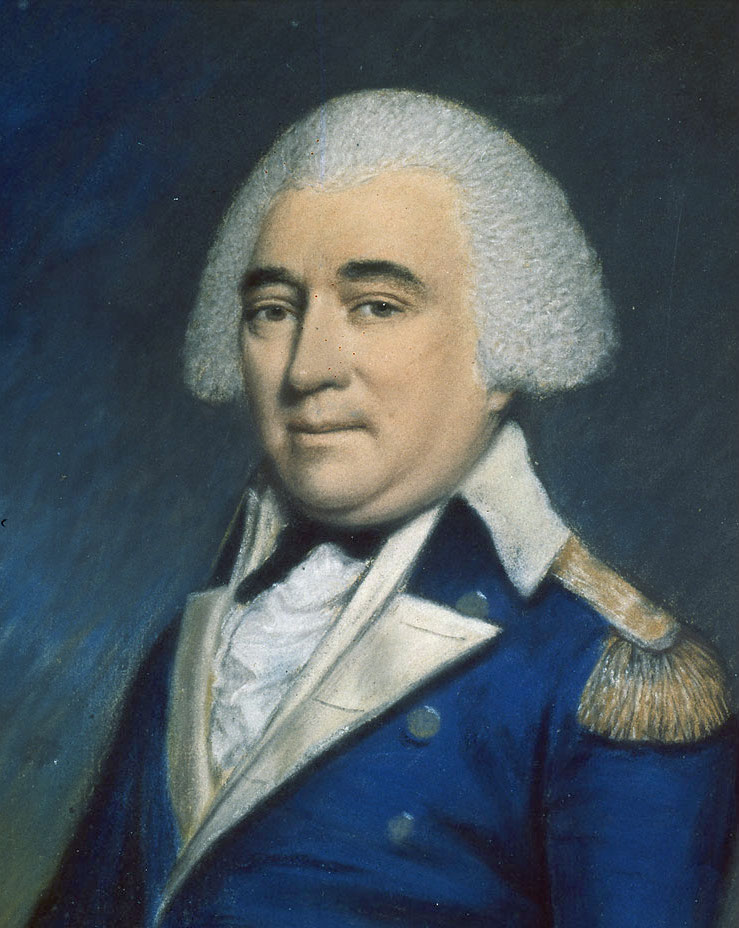
Anthony Wayne
Former U.S. Representative · Georgia District 1 · 1791–1793
Anthony Wayne represented Georgia's District 1 in the United States House of Representatives (1791–1793). The page below collects sourced biographical facts, term history, committee roles, and provenance for Wayne.
Bioguide ID: W000216
Key facts
- Full name
- Anthony Wayne
- State
- Georgia
- District
- District 1
- Party
- —
- House service
- 1791–1793
- First House term
- 1791
- Status
- Left office
- Current term ends
- —
- Born
- 1745
- Bioguide ID
- W000216
- Committee assignments
- —
- Dataset version
- 1.20260606
Biographical narrative
841 words · sourced from the Wikipedia REST extract
Anthony Wayne was a prominent American soldier, statesman, and Founding Father, who served as a U.S. Representative for Georgia's 1st congressional district. His political career was brief, spanning from 1791 until 1793, but he is best known for his military exploits during the American Revolutionary War and his later role in the Northwest Indian War. Born in 1745, Wayne's life was marked by significant contributions to the early formation of the United States, both on the battlefield and in public service.
Early life and career
Anthony Wayne was born on January 1, 1745, in Chester County, Pennsylvania, on his family's 500-acre estate known as Waynesborough. He was the son of Isaac Wayne, an Irish immigrant, and Elizabeth Iddings Wayne, and he grew up in a family that belonged to the landed gentry. Wayne was one of four children and was raised in a Protestant Anglo-Irish household. His grandfather had fought in the Battle of the Boyne, which likely influenced Wayne's early interest in military matters.
During his childhood, Wayne often clashed with his father's expectations for him to pursue farming. Inspired by his father's military service during the French and Indian War, Wayne developed a fascination with military stories and battles. His education included time at a private academy in Philadelphia, where he learned surveying, and he later attended the College of Philadelphia for two years. In 1765, he was sent by Benjamin Franklin to Nova Scotia, where he worked as a surveyor and helped establish a settlement.
In 1763, Wayne married Mary Penrose, with whom he had two children: a daughter named Margretta and a son named Isaac. Throughout his life, Wayne had several romantic relationships, which ultimately led to estrangement from his wife. After returning to Pennsylvania, he worked in his father's tannery while continuing his surveying career. As tensions with Britain escalated, Wayne became politically active, serving as chairman of the Chester County Committee of Safety and later being elected to the Pennsylvania Provincial Assembly.
House tenure
Wayne's political career in the U.S. House of Representatives began in 1791 when he was elected to represent Georgia's 1st congressional district. His tenure in Congress was relatively short, concluding in 1793. During this period, Wayne was involved in the early legislative processes of the United States, contributing to discussions and decisions that would shape the new nation. However, specific details regarding his legislative activities during this time are limited, and he is primarily remembered for his military service rather than his congressional contributions.
Wayne's military background and leadership experience likely informed his approach to governance, as he had already established a reputation as a capable leader during the Revolutionary War. His time in Congress coincided with a formative period in American history, as the nation was still grappling with the implications of independence and the establishment of a functioning government.
Legislative focus and committees
While specific legislative initiatives or committee assignments during Wayne's time in the House are not well-documented, his military background and experience in public service suggest that he may have been involved in discussions related to national defense and the organization of the military. Given the context of the early 1790s, issues surrounding the fledgling United States Army and relations with Native American tribes would have been significant topics of concern.
Wayne's military career was marked by notable achievements, including his leadership during the American Revolutionary War and his subsequent role in the Northwest Indian War. After his congressional term, he was recalled from civilian life by President George Washington to command U.S. forces in the conflict against Native American tribes in the Northwest Territory. This appointment underscored Wayne's reputation as a military leader and his importance in shaping U.S. policy in the region.
In the years following his congressional service, Wayne oversaw a significant reorganization of the United States Army and led successful military campaigns against the Northwestern Confederacy, an alliance of several Native American tribes. His victory at the Battle of Fallen Timbers in 1794 was a pivotal moment in the conflict, leading to the Treaty of Greenville, which established peace and defined territorial boundaries in the region.
Wayne's legacy is complex, as it includes both his contributions to the founding of the United States and his involvement in actions that have been criticized in contemporary discussions, particularly regarding his ownership of slaves and his role in the displacement of Native American populations during the Northwest Indian War. Despite these controversies, Wayne remains a significant figure in American history, representing the dual nature of the nation's early leaders—military heroes who also navigated the moral and ethical challenges of their time.
In summary, Anthony Wayne's life and career reflect the multifaceted nature of early American leadership. From his military exploits to his brief tenure in Congress, Wayne's contributions to the United States are notable, and his actions continue to be studied and debated in the context of American history. His experiences encapsulate the challenges and complexities faced by the nation as it sought to define itself in the aftermath of the Revolutionary War.
Notable legislation
Sponsored and co-sponsored legislation for Anthony Wayne is pending operator curation. The biographical narrative above carries the same provenance trail until per-bill rows are written.
Sources
- [1]https://en.wikipedia.org/wiki/Anthony_WayneWikipedia · retrieved 2026-06-06
Notable quotes
Sourced quotes for Anthony Wayne are pending operator curation. Narrative-scope provenance remains attached below.
Sources
- [1]https://en.wikipedia.org/wiki/Anthony_WayneWikipedia · retrieved 2026-06-06
Key positions
Curated policy positions for Anthony Wayne are pending operator review. The biographical narrative above carries the same provenance trail until per-topic positions are written.
Sources
- [1]https://en.wikipedia.org/wiki/Anthony_WayneWikipedia · retrieved 2026-06-06
Terms served
- 1791–1793U.S. House · Term 1
Sources & provenance
Every attributable claim above carries a per-section [N] marker that resolves to the corresponding URL below. Each entry records the upstream provider, the canonical URL, and the timestamp at which the source was retrieved by the ingest pipeline.
Key facts
- https://bioguide.congress.gov/search/bio/W000216bioguide · retrieved 2026-06-06
- https://www.govtrack.us/congress/members/411384govtrack · retrieved 2026-06-06
Biographical narrative
- https://en.wikipedia.org/wiki/Anthony_Waynewikipedia · retrieved 2026-06-06
Find your representative
Every U.S. state elects representatives by district. Browse Georgia’s delegation, the full former-representative roster, or explore the role and term length.
Related on The Candidate
- Succeeded by Edward TattnallLater holder of the Georgia District 1 House seat · Jackson.Open
- Andrew SloanFormer U.S. Representative · Georgia District 1 · RepublicanOpen
- Archibald MacIntyreFormer U.S. Representative · Georgia District 1 · DemocraticOpen
- Bo GinnFormer U.S. Representative · Georgia District 1 · DemocraticOpen
- Charles EdwardsFormer U.S. Representative · Georgia District 1 · DemocraticOpen
- Representatives from GeorgiaEvery former U.S. Representative who has represented Georgia.Open