
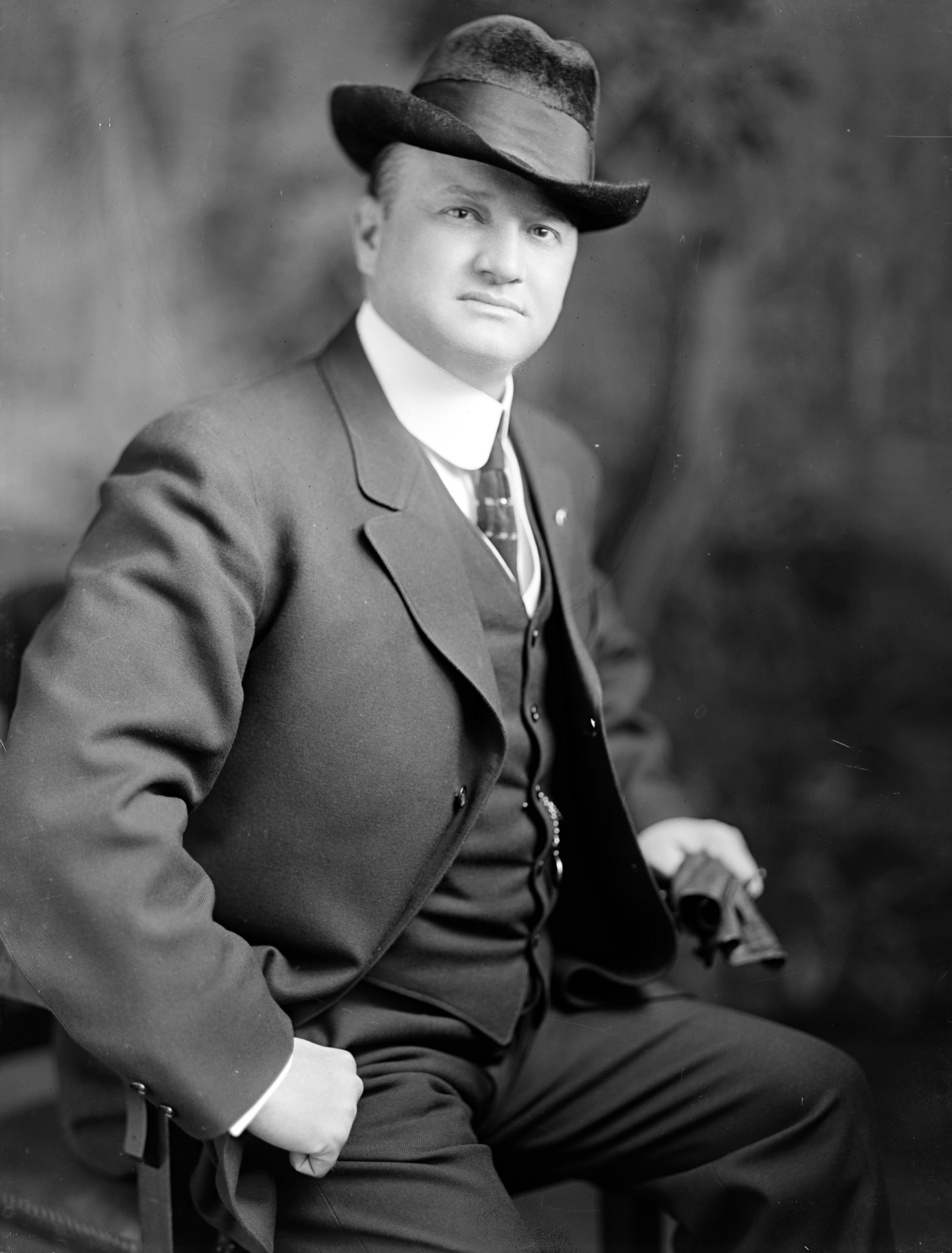
Historical · U.S. House · Georgia · District 1
Charles Edwards
Former U.S. Representative · Georgia District 1 · 1907–1933 · Democratic
Charles Edwards represented Georgia's District 1 in the United States House of Representatives (1907–1933) for the Democratic party. The page below collects sourced biographical facts, term history, committee roles, and provenance for Edwards.
Bioguide ID: E000062
Key facts
- Full name
- Charles Edwards
- State
- Georgia
- District
- District 1
- Party
- Democratic
- House service
- 1907–1933
- First House term
- 1907
- Status
- Left office
- Current term ends
- —
- Born
- 1878
- Bioguide ID
- E000062
- Committee assignments
- —
- Dataset version
- 1.20260606
Biographical narrative
965 words · sourced from the Wikipedia REST extract
Charles Edwards was an American lawyer and politician who served as a U.S. Representative for Georgia's 1st congressional district. A member of the Democratic Party, he had a lengthy career in the House of Representatives, spanning from 1907 to 1931, with a total of eight terms in office. Edwards's political career was marked by his involvement in various local and state organizations, as well as his contributions to legislative matters during his time in Congress. He was born on July 2, 1878, in Daisy, Georgia, and passed away on July 13, 1931, in Atlanta, Georgia, while still serving in office.
Early life and career
Charles Edwards was born in Daisy, Georgia, a small community that reflects the rural character of much of the state during his early years. He pursued his education at the Gordon Institute in Barnesville, Georgia, and later attended Florida State College in Lake City, which is now recognized as the University of Florida. His academic journey continued at the University of Georgia School of Law, where he earned a Bachelor of Laws (LL.B.) degree in 1898. During his time at the university, he became an active member of the Phi Kappa Literary Society, which was known for fostering debate and literary skills among its members.
After gaining admission to the Georgia state bar, Edwards began his legal career in Reidsville, Georgia. In 1900, he relocated to Savannah, a significant urban center in Georgia, where he continued to practice law. His commitment to civic duty was evident during this period, as he joined the Savannah Volunteer Guards, Company B, Coast Artillery. His military service included rising to the rank of sergeant in 1902 and 1903, and later serving as a second lieutenant in the Oglethorpe Light Infantry of the First Georgia Regiment of Infantry from 1903 to 1904. This military experience likely contributed to his leadership skills and public service ethos, which would define his later political career.
House tenure
Edwards's political career began in earnest in 1906 when he was elected to the 60th United States Congress as a member of the Democratic Party. His election marked the beginning of a significant tenure in the House of Representatives, where he served five consecutive terms until he chose not to seek re-election in 1916. During these early years, Edwards was part of a Congress that dealt with a variety of pressing national issues, including the progressive reforms of the early 20th century, which aimed to address social and economic inequalities.
After his initial congressional service, Edwards returned to Savannah, where he resumed his law practice. He remained active in local affairs and held several leadership positions. Notably, he served as the president of the Savannah Board of Trade in 1919 and 1920, a role that allowed him to influence economic development in the region. Additionally, he was a trustee of Southern Methodist College in McRae, Georgia, and served on the Savannah Harbor Commission from 1920 until 1924. His involvement in these organizations demonstrated his commitment to both education and infrastructure development in Georgia.
Edwards's return to Congress came during the 69th Congress, when he was re-elected to serve another three terms. This second stint in office lasted until his death in 1931. His return to the House was marked by a continued focus on the needs of his constituents and the challenges facing the nation during the Great Depression. Edwards's legislative activities during this time reflected the complexities of a rapidly changing America, as he navigated the political landscape that included economic recovery efforts and social welfare initiatives.
Legislative focus and committees
Throughout his congressional career, Charles Edwards was involved in various legislative initiatives and committee assignments that shaped his contributions to national policy. While specific details about the bills he sponsored or the committees he served on are not provided, it is known that members of Congress during this period often focused on issues such as economic reform, infrastructure development, and social welfare. Given his background in law and his active participation in local governance, it is likely that Edwards engaged in discussions and legislative efforts related to these areas.
His role as a member of the House of Representatives allowed him to advocate for the interests of his constituents in Georgia's 1st congressional district. This district, encompassing coastal areas and urban centers, faced unique challenges and opportunities, particularly in terms of trade, agriculture, and maritime activities. Edwards's legal expertise and local experience would have informed his approach to addressing these issues in Congress.
Edwards's commitment to public service extended beyond his legislative duties. He was involved in various civic organizations and initiatives that aimed to improve the quality of life for residents in his district. His leadership roles in local organizations, such as the Savannah Board of Trade, indicate a focus on economic development and community engagement. These experiences likely enriched his understanding of the needs and aspirations of his constituents, which he sought to represent in Congress.
Tragically, Edwards's life and career were cut short when he died from a heart attack in Atlanta, Georgia, on July 13, 1931, while still in office. His passing marked the end of a significant chapter in Georgia's political history, as he had served his state and nation for over two decades. He was laid to rest in Savannah's Bonaventure Cemetery, a site known for its historical significance and beautiful landscapes.
In summary, Charles Edwards's life was characterized by a dedication to public service, legal practice, and community involvement. His tenure in the U.S. House of Representatives reflected the complexities of early 20th-century America, as he navigated the challenges of his time while advocating for the needs of his constituents in Georgia. His legacy is remembered as part of the broader narrative of American political history during a transformative period.
Notable legislation
Sponsored and co-sponsored legislation for Charles Edwards is pending operator curation. The biographical narrative above carries the same provenance trail until per-bill rows are written.
Sources
- [1]https://en.wikipedia.org/wiki/Charles_G._EdwardsWikipedia · retrieved 2026-06-06
Notable quotes
Sourced quotes for Charles Edwards are pending operator curation. Narrative-scope provenance remains attached below.
Sources
- [1]https://en.wikipedia.org/wiki/Charles_G._EdwardsWikipedia · retrieved 2026-06-06
Key positions
Curated policy positions for Charles Edwards are pending operator review. The biographical narrative above carries the same provenance trail until per-topic positions are written.
Sources
- [1]https://en.wikipedia.org/wiki/Charles_G._EdwardsWikipedia · retrieved 2026-06-06
Terms served
- 1907–1909U.S. House · Term 1 · Democratic
- 1909–1911U.S. House · Term 2 · Democratic
- 1911–1913U.S. House · Term 3 · Democratic
- 1913–1915U.S. House · Term 4 · Democratic
- 1915–1917U.S. House · Term 5 · Democratic
- 1925–1927U.S. House · Term 6 · Democratic
- 1927–1929U.S. House · Term 7 · Democratic
- 1929–1931U.S. House · Term 8 · Democratic
- 1931–1933U.S. House · Term 9 · Democratic
Sources & provenance
Every attributable claim above carries a per-section [N] marker that resolves to the corresponding URL below. Each entry records the upstream provider, the canonical URL, and the timestamp at which the source was retrieved by the ingest pipeline.
Key facts
- https://bioguide.congress.gov/search/bio/E000062bioguide · retrieved 2026-06-06
- https://www.govtrack.us/congress/members/403757govtrack · retrieved 2026-06-06
Biographical narrative
- https://en.wikipedia.org/wiki/Charles_G._Edwardswikipedia · retrieved 2026-06-06
Find your representative
Every U.S. state elects representatives by district. Browse Georgia’s delegation, the full former-representative roster, or explore the role and term length.
Related on The Candidate
- Preceded by Rufus LesterEarlier holder of the Georgia District 1 House seat · Democratic.Open
- Succeeded by Hugh PetersonLater holder of the Georgia District 1 House seat · Democratic.Open
- Andrew SloanFormer U.S. Representative · Georgia District 1 · RepublicanOpen
- Anthony WayneFormer U.S. Representative · Georgia District 1Open
- Archibald MacIntyreFormer U.S. Representative · Georgia District 1 · DemocraticOpen
- Bo GinnFormer U.S. Representative · Georgia District 1 · DemocraticOpen