
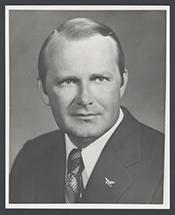
Historical · U.S. House · Georgia · District 1
Bo Ginn
Former U.S. Representative · Georgia District 1 · 1973–1983 · Democratic
Bo Ginn represented Georgia's District 1 in the United States House of Representatives (1973–1983) for the Democratic party. The page below collects sourced biographical facts, term history, committee roles, and provenance for Ginn.
Bioguide ID: G000226
Key facts
- Full name
- Bo Ginn
- State
- Georgia
- District
- District 1
- Party
- Democratic
- House service
- 1973–1983
- First House term
- 1973
- Status
- Left office
- Current term ends
- —
- Born
- 1934
- Bioguide ID
- G000226
- Committee assignments
- —
- Dataset version
- 1.20260605
Biographical narrative
933 words · sourced from the Wikipedia REST extract
Ronald Bryan "Bo" Ginn was an American politician who served as a U.S. Representative for Georgia's 1st congressional district from 1973 until 1983. A member of the Democratic Party, Ginn was known for his significant contributions to military construction, environmental preservation, and educational funding during his tenure in Congress. His political career followed a challenging personal journey marked by overcoming polio in his youth, which ultimately inspired his commitment to public service.
Early life and career
Bo Ginn was born on May 31, 1934, in Morgan, Georgia. He pursued higher education at Abraham Baldwin Agricultural College in Tifton, Georgia, from 1951 to 1953, before transferring to Georgia Southern College in Statesboro, where he earned his degree in 1956. During his youth, Ginn was recognized as a talented baseball player. However, his life took a significant turn when he contracted polio as a teenager, which left him with severe physical limitations and the prognosis that he would never walk again. Through a combination of surgery and extensive rehabilitation at the Warm Springs Foundation, along with his determination, Ginn was able to regain mobility, an experience that profoundly influenced his later commitment to public service.
Ginn's political career began in Washington, D.C., where he worked as an administrative assistant to U.S. Congressman G. Elliott Hagan and later to U.S. Senator Herman E. Talmadge. After gaining experience in these roles, he returned to Georgia in 1971 to explore opportunities in business and consider a run for Congress. In 1972, he successfully campaigned against Hagan to secure the Democratic nomination and was elected to represent Georgia's 1st congressional district in the 93rd United States Congress.
House tenure
Ginn served five consecutive terms in the U.S. House of Representatives, beginning in 1973 and concluding in 1983. His district encompassed a diverse area that included twenty counties in the southeastern part of Georgia, extending along the state's coastline. Throughout his tenure, Ginn became a prominent figure in Congress, particularly as a senior member of the House Committee on Appropriations. He held the position of chairman of the Military Construction Subcommittee, which oversaw military base construction projects both domestically and internationally.
One of Ginn's notable achievements was his advocacy for the military facilities in his district. He played a crucial role in preventing the near-closure of Fort Stewart and Hunter Army Airfield in the early 1970s. His efforts contributed to a significant construction program at these facilities, which later became the home base for the 3rd Infantry Division. Ginn was also instrumental in the establishment of the Kings Bay Naval Submarine Base in Camden County, further solidifying his influence in military matters.
In addition to his focus on military infrastructure, Ginn was a strong proponent of economic development initiatives in Georgia. He supported projects that brought jobs to the state, including the Lockheed C-5A aircraft program. His commitment to environmental issues was evident in his authorship of legislation that led to the protected wilderness designation for several important natural areas, including the Okefenokee National Wildlife Refuge and various national wildlife refuges along the Georgia coast.
Ginn's decision to leave Congress in 1982 was motivated by his desire to run for governor of Georgia, succeeding George Busbee, who was stepping down after two terms. In the Democratic primary, he faced Joe Frank Harris, who campaigned on a conservative platform. Despite his efforts, Ginn lost the primary election to Harris, who subsequently won the general election and served two terms as governor. Following his departure from politics, Ginn founded a lobbying firm, Ginn & Eddington, in Washington, D.C., and later relocated to Augusta, Georgia, to be closer to his family.
Legislative focus and committees
During his time in the House of Representatives, Bo Ginn's legislative focus encompassed a range of issues, with a particular emphasis on military construction, environmental preservation, and education. As a member of the House Committee on Appropriations, he was involved in the allocation of federal funds for various projects, which allowed him to advocate effectively for the needs of his constituents and the state of Georgia.
Ginn's leadership of the Military Construction Subcommittee was particularly significant, as it gave him the authority to influence the development of military infrastructure across the country. His successful efforts to secure funding for Fort Stewart and Hunter Army Airfield not only benefited the military but also had a positive impact on the local economy by creating jobs and supporting the community.
In addition to his military-related initiatives, Ginn was a strong advocate for environmental conservation. His work in this area included the successful passage of legislation that designated protected wilderness areas, reflecting his commitment to preserving Georgia's natural resources for future generations. This focus on environmental issues positioned him as an early leader in the movement for conservation within the state.
Ginn also prioritized education during his congressional career. He was a staunch supporter of increased funding for educational institutions, particularly Georgia Southern University. His efforts contributed to the university's elevation to a full university status and helped secure significant financial contributions for infrastructure projects, including the construction of the university's first football stadium.
After leaving Congress, Ginn continued to be recognized for his contributions to public service. In 1988, the Millen National Fish Hatchery at Magnolia Springs State Park was named in his honor, acknowledging his commitment to environmental and community initiatives. Despite his passing on January 6, 2005, Ginn's legacy in public service, military advocacy, and environmental preservation continues to be remembered in Georgia and beyond. He is survived by three children and seven grandchildren, reflecting the family values that were an integral part of his life.
Notable legislation
Sponsored and co-sponsored legislation for Bo Ginn is pending operator curation. The biographical narrative above carries the same provenance trail until per-bill rows are written.
Sources
- [1]https://en.wikipedia.org/wiki/Bo_GinnWikipedia · retrieved 2026-06-05
Notable quotes
Sourced quotes for Bo Ginn are pending operator curation. Narrative-scope provenance remains attached below.
Sources
- [1]https://en.wikipedia.org/wiki/Bo_GinnWikipedia · retrieved 2026-06-05
Key positions
Curated policy positions for Bo Ginn are pending operator review. The biographical narrative above carries the same provenance trail until per-topic positions are written.
Sources
- [1]https://en.wikipedia.org/wiki/Bo_GinnWikipedia · retrieved 2026-06-05
Terms served
- 1973–1975U.S. House · Term 1 · Democratic
- 1975–1977U.S. House · Term 2 · Democratic
- 1977–1979U.S. House · Term 3 · Democratic
- 1979–1981U.S. House · Term 4 · Democratic
- 1981–1983U.S. House · Term 5 · Democratic
Sources & provenance
Every attributable claim above carries a per-section [N] marker that resolves to the corresponding URL below. Each entry records the upstream provider, the canonical URL, and the timestamp at which the source was retrieved by the ingest pipeline.
Key facts
- https://bioguide.congress.gov/search/bio/G000226bioguide · retrieved 2026-06-05
- https://www.govtrack.us/congress/members/404588govtrack · retrieved 2026-06-05
Biographical narrative
- https://en.wikipedia.org/wiki/Bo_Ginnwikipedia · retrieved 2026-06-05
Find your representative
Every U.S. state elects representatives by district. Browse Georgia’s delegation, the full former-representative roster, or explore the role and term length.
Related on The Candidate
- Preceded by George HaganEarlier holder of the Georgia District 1 House seat · Democratic.Open
- Succeeded by Robert ThomasLater holder of the Georgia District 1 House seat · Democratic.Open
- Andrew SloanFormer U.S. Representative · Georgia District 1 · RepublicanOpen
- Anthony WayneFormer U.S. Representative · Georgia District 1Open
- Archibald MacIntyreFormer U.S. Representative · Georgia District 1 · DemocraticOpen
- Charles EdwardsFormer U.S. Representative · Georgia District 1 · DemocraticOpen