
Historical · U.S. House · Georgia · District 1
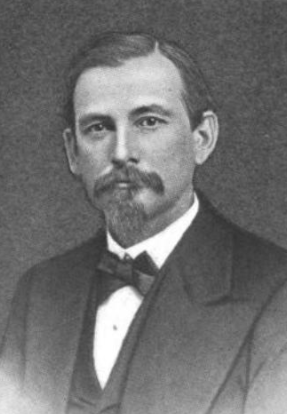
George Black
Former U.S. Representative · Georgia District 1 · 1881–1883 · Democratic
George Black represented Georgia's District 1 in the United States House of Representatives (1881–1883) for the Democratic party. The page below collects sourced biographical facts, term history, committee roles, and provenance for Black.
Bioguide ID: B000497
Key facts
- Full name
- George Black
- State
- Georgia
- District
- District 1
- Party
- Democratic
- House service
- 1881–1883
- First House term
- 1881
- Status
- Left office
- Current term ends
- —
- Born
- 1835
- Bioguide ID
- B000497
- Committee assignments
- —
- Dataset version
- 1.20260606
Biographical narrative
952 words · sourced from the Wikipedia REST extract
George Robison Black was an American politician and lawyer who served as a U.S. Representative for Georgia's 1st congressional district during the 47th Congress. A member of the Democratic Party, Black's political career was marked by his involvement in various capacities within the state of Georgia, including his participation in the state legislature and his service in the Confederate Army during the Civil War. His life spanned a period of significant change in the United States, and his actions reflected the complexities of his time, particularly in the context of the post-Civil War South. Black was born on March 24, 1835, and passed away on November 3, 1886.
Early life and career
George Robison Black was born into a family that owned a plantation near Jacksonboro, Georgia. His upbringing in a slave-owning household was indicative of the social and economic structures prevalent in the Southern United States during the early 19th century. He was the son of Edward Junius Black and Augusta George Anna Kirkland Black. His early education took place at the University of Georgia in Athens and the University of South Carolina in Columbia, where he pursued studies that would later enable him to practice law.
After completing his education, Black was admitted to the bar in 1857, marking the beginning of his legal career in Savannah, Georgia. His legal practice would later inform his political career, as many politicians of the era had backgrounds in law. The onset of the American Civil War in 1861 brought significant changes to Black's life. He enlisted in the Confederate States Army, where he served as a first lieutenant in the Phoenix Riflemen. His military service progressed, and he eventually attained the rank of lieutenant colonel in the Sixty-third Georgia Regiment. This experience in the military would have shaped his perspectives on leadership and governance.
Following the conclusion of the Civil War, Black returned to Georgia and became actively involved in the state's political landscape. He participated in the Georgia constitutional convention of 1865, a crucial event that aimed to redefine the state's governance in the wake of the war. His engagement in this convention reflected his commitment to shaping the future of Georgia during a time of reconstruction and societal change. In addition to his role in the convention, Black was a delegate to the 1872 Democratic National Convention, further solidifying his involvement in the political processes of his party.
From 1875 to 1877, Black served as a state senator in Georgia, where he contributed to legislative discussions and decisions that would impact the state. His political career also included a role as the vice president of the Georgia State Agricultural Society, an organization that played a significant role in promoting agricultural interests in the state. This involvement highlighted Black's connection to the agricultural community, which was a vital sector of Georgia's economy during this period.
House tenure
George Black's tenure in the U.S. House of Representatives began when he was elected as a Democrat to represent Georgia's 1st congressional district in the 47th Congress. His election to the House marked a significant milestone in his political career, as it provided him with a platform to influence national legislation and represent the interests of his constituents at the federal level. Black's congressional term commenced in 1881, a time when the United States was experiencing various transformations, including industrialization and shifts in social dynamics.
During his time in the House, Black was part of a legislative body that was grappling with the consequences of the Civil War and the ongoing process of Reconstruction. The political climate was characterized by debates over civil rights, economic policies, and the integration of formerly Confederate states back into the Union. Black's role as a congressman would have involved navigating these complex issues while advocating for the needs of his district.
Despite his efforts in the House, Black's congressional career was relatively brief. He faced challenges in securing re-election and ultimately lost his bid for a second term in 1882. This outcome reflected the competitive nature of politics during this era, as well as the shifting allegiances and priorities of voters in the post-war South. Black's single term in the House concluded on March 3, 1883, marking the end of his formal legislative career at the federal level.
Legislative focus and committees
While specific details regarding the legislation Black supported or the committees on which he served are not extensively documented, it is important to contextualize his role within the broader legislative environment of the time. As a member of the Democratic Party, Black would have aligned with the party's positions, which often included advocating for states' rights and opposing certain federal interventions in local affairs. His background as a lawyer and his experience in state politics likely informed his legislative priorities and approach to governance.
The 47th Congress, during which Black served, was marked by significant discussions around economic policies, including tariffs and infrastructure development, as well as social issues stemming from the Reconstruction era. Black's participation in these debates would have been influenced by his experiences in the state legislature and his understanding of the needs of his constituents in Georgia.
After his congressional tenure, Black returned to Georgia, where he continued to be involved in local affairs until his death in 1886. He passed away in Sylvania, Georgia, and was laid to rest in Sylvania Cemetery. His legacy, while not extensively chronicled in the annals of history, reflects the complexities of a Southern politician navigating the turbulent waters of post-Civil War America. His wife, Nellie Peters Black, became known for her social activism, suggesting that the Black family remained engaged in public life and community issues even after George's political career concluded.
Notable legislation
Sponsored and co-sponsored legislation for George Black is pending operator curation. The biographical narrative above carries the same provenance trail until per-bill rows are written.
Sources
- [1]https://en.wikipedia.org/wiki/George_Robison_BlackWikipedia · retrieved 2026-06-06
Notable quotes
Sourced quotes for George Black are pending operator curation. Narrative-scope provenance remains attached below.
Sources
- [1]https://en.wikipedia.org/wiki/George_Robison_BlackWikipedia · retrieved 2026-06-06
Key positions
Curated policy positions for George Black are pending operator review. The biographical narrative above carries the same provenance trail until per-topic positions are written.
Sources
- [1]https://en.wikipedia.org/wiki/George_Robison_BlackWikipedia · retrieved 2026-06-06
Terms served
- 1881–1883U.S. House · Term 1 · Democratic
Sources & provenance
Every attributable claim above carries a per-section [N] marker that resolves to the corresponding URL below. Each entry records the upstream provider, the canonical URL, and the timestamp at which the source was retrieved by the ingest pipeline.
Key facts
- https://bioguide.congress.gov/search/bio/B000497bioguide · retrieved 2026-06-06
- https://www.govtrack.us/congress/members/401477govtrack · retrieved 2026-06-06
Biographical narrative
- https://en.wikipedia.org/wiki/George_Robison_Blackwikipedia · retrieved 2026-06-06
Find your representative
Every U.S. state elects representatives by district. Browse Georgia’s delegation, the full former-representative roster, or explore the role and term length.
Related on The Candidate
- Preceded by Julian HartridgeEarlier holder of the Georgia District 1 House seat · Democratic.Open
- Succeeded by Rufus LesterLater holder of the Georgia District 1 House seat · Democratic.Open
- Andrew SloanFormer U.S. Representative · Georgia District 1 · RepublicanOpen
- Anthony WayneFormer U.S. Representative · Georgia District 1Open
- Archibald MacIntyreFormer U.S. Representative · Georgia District 1 · DemocraticOpen
- Bo GinnFormer U.S. Representative · Georgia District 1 · DemocraticOpen