
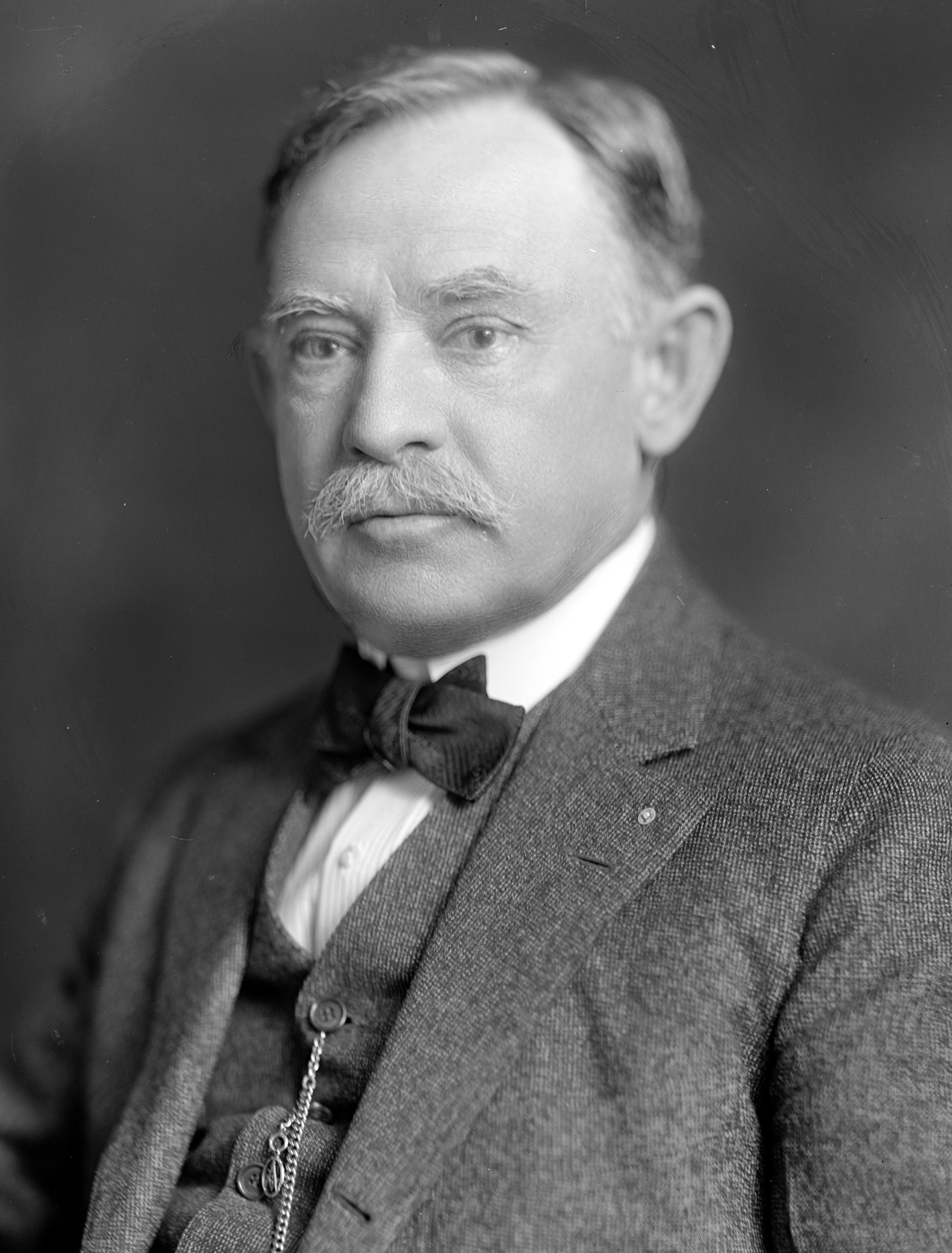
Historical · U.S. House · Georgia · District 10
Charles Brand
Former U.S. Representative · Georgia District 10 · 1917–1935 · Democratic
Charles Brand represented Georgia's District 10 in the United States House of Representatives (1917–1935) for the Democratic party. The page below collects sourced biographical facts, term history, committee roles, and provenance for Brand.
Bioguide ID: B000767
Key facts
- Full name
- Charles Brand
- State
- Georgia
- District
- District 10
- Party
- Democratic
- House service
- 1917–1935
- First House term
- 1917
- Status
- Left office
- Current term ends
- —
- Born
- 1861
- Bioguide ID
- B000767
- Committee assignments
- —
- Dataset version
- 1.20260606
Biographical narrative
836 words · sourced from the Wikipedia REST extract
Charles Brand was an American politician, businessman, and jurist who served as a U.S. Representative from Georgia. A member of the Democratic Party, he represented Georgia's 10th congressional district until the end of his last term in January 1935. Over the course of his political career, Brand was known for his extensive service in the U.S. House of Representatives, having completed nine terms in total. His career was marked by significant involvement in both state and federal politics, as well as contributions to the legal and banking sectors in Georgia.
Early life and career
Charles Hillyer Brand was born on April 20, 1861, in Loganville, Georgia. He pursued higher education at the University of Georgia in Athens, where he graduated in 1881. Following his graduation, Brand was admitted to the Georgia state bar in 1882, marking the beginning of his legal career. He quickly became involved in public service, entering the political arena as a member of the Georgia Senate in 1894. During his time in the Senate, he served as president pro tempore, a position that underscored his leadership capabilities.
In addition to his legislative work, Brand was active in the banking industry. He held significant roles, including president and director of the Brand Banking Company in Lawrenceville, Georgia. His influence extended to other financial institutions, where he served as a director for the Georgia National Bank and the American State Bank in Athens. Brand's legal career also included a notable tenure as the solicitor general for the western district of Georgia from 1896 to 1904. In 1906, he was appointed as a judge of the state superior court, succeeding Richard B. Russell, Sr. Brand held this judicial position until 1917, during which time he gained a reputation for his legal acumen.
Brand's judicial career was not without controversy. In 1911, he was involved in incidents that drew significant public attention and criticism. A mob lynched two Black men in Walton County after Brand refused to allow state guardsmen to intervene. This incident, along with a prior lynching in Lawrenceville where he similarly declined to request military assistance, highlighted the racial tensions and challenges of the era.
House tenure
In 1917, Charles Brand transitioned from state-level politics to the federal arena when he was elected as a Democratic representative for Georgia's 8th congressional district in the 65th United States Congress. His election marked the beginning of a lengthy congressional career, during which he was re-elected for seven consecutive terms in the 8th district. Brand's tenure in the House of Representatives was characterized by his commitment to the Democratic Party and his engagement with various legislative issues pertinent to his constituents.
Following the congressional apportionment in 1932, Brand successfully ran for an eighth term in the newly redrawn 10th congressional district of Georgia. This shift reflected both the changing demographics of the state and Brand's adaptability as a politician. Throughout his time in Congress, he participated in numerous debates and discussions, contributing to the legislative process and representing the interests of his district.
Brand's congressional career came to an end when he passed away on May 17, 1933, while still in office. His death occurred in Athens, Georgia, and he was subsequently laid to rest in Shadow Lawn Cemetery in Lawrenceville. His long service in the House of Representatives is noted for its duration and the impact he had on his constituents during a transformative period in American history.
Legislative focus and committees
During his time in the U.S. House of Representatives, Charles Brand was involved in various legislative initiatives and committee assignments that reflected the priorities of his constituents and the broader Democratic agenda of the time. While specific details regarding the bills he sponsored or the committees he served on are not provided, it is common for members of Congress to engage with issues such as economic development, social welfare, and infrastructure, especially during the early 20th century, which was marked by significant changes in American society.
Brand's background in law and banking likely influenced his legislative interests, as he may have focused on issues related to finance, legal reforms, and economic policies that would benefit his district. His extensive experience in state politics and the judiciary would have also informed his approach to governance and policy-making in Congress.
As a member of the Democratic Party during a time of significant national challenges, including the Great Depression, Brand would have been part of broader discussions regarding economic recovery and social programs aimed at assisting those affected by economic hardship. His role in the House would have involved collaboration with other lawmakers to address these pressing issues, reflecting the collective efforts of Congress to respond to the needs of the American people.
In summary, Charles Brand's legislative focus and committee work would have been shaped by his legal expertise, banking experience, and the socio-economic context of his time in office. His contributions to the U.S. House of Representatives are part of a larger narrative of American political history during a pivotal era.
Notable legislation
Sponsored and co-sponsored legislation for Charles Brand is pending operator curation. The biographical narrative above carries the same provenance trail until per-bill rows are written.
Sources
- [1]https://en.wikipedia.org/wiki/Charles_H._BrandWikipedia · retrieved 2026-06-06
Notable quotes
Sourced quotes for Charles Brand are pending operator curation. Narrative-scope provenance remains attached below.
Sources
- [1]https://en.wikipedia.org/wiki/Charles_H._BrandWikipedia · retrieved 2026-06-06
Key positions
Curated policy positions for Charles Brand are pending operator review. The biographical narrative above carries the same provenance trail until per-topic positions are written.
Sources
- [1]https://en.wikipedia.org/wiki/Charles_H._BrandWikipedia · retrieved 2026-06-06
Terms served
- 1917–1919U.S. House · Term 1 · Democratic
- 1919–1921U.S. House · Term 2 · Democratic
- 1921–1923U.S. House · Term 3 · Democratic
- 1923–1925U.S. House · Term 4 · Democratic
- 1925–1927U.S. House · Term 5 · Democratic
- 1927–1929U.S. House · Term 6 · Democratic
- 1929–1931U.S. House · Term 7 · Democratic
- 1931–1933U.S. House · Term 8 · Democratic
- 1933–1935U.S. House · Term 9 · Democratic
Sources & provenance
Every attributable claim above carries a per-section [N] marker that resolves to the corresponding URL below. Each entry records the upstream provider, the canonical URL, and the timestamp at which the source was retrieved by the ingest pipeline.
Key facts
- https://bioguide.congress.gov/search/bio/B000767bioguide · retrieved 2026-06-06
- https://www.govtrack.us/congress/members/401726govtrack · retrieved 2026-06-06
Biographical narrative
- https://en.wikipedia.org/wiki/Charles_H._Brandwikipedia · retrieved 2026-06-06
Find your representative
Every U.S. state elects representatives by district. Browse Georgia’s delegation, the full former-representative roster, or explore the role and term length.
Related on The Candidate
- Preceded by William FlemingEarlier holder of the Georgia District 10 House seat · Democratic.Open
- Succeeded by Robert Stephens Jr.Later holder of the Georgia District 10 House seat · Democratic.Open
- Andrew SloanFormer U.S. Representative · Georgia District 1 · RepublicanOpen
- Anthony WayneFormer U.S. Representative · Georgia District 1Open
- Archibald MacIntyreFormer U.S. Representative · Georgia District 1 · DemocraticOpen
- Bo GinnFormer U.S. Representative · Georgia District 1 · DemocraticOpen