
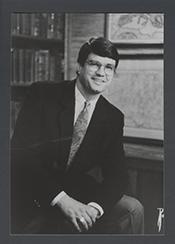
Historical · U.S. House · Georgia · District 10
Don Johnson Jr.
Former U.S. Representative · Georgia District 10 · 1993–1995 · Democratic
Don Johnson Jr. represented Georgia's District 10 in the United States House of Representatives (1993–1995) for the Democratic party. The page below collects sourced biographical facts, term history, committee roles, and provenance for Jr..
Bioguide ID: J000120
Key facts
- Full name
- Don Johnson Jr.
- State
- Georgia
- District
- District 10
- Party
- Democratic
- House service
- 1993–1995
- First House term
- 1993
- Status
- Left office
- Current term ends
- —
- Born
- 1948
- Bioguide ID
- J000120
- Committee assignments
- —
- Dataset version
- 1.20260605
Biographical narrative
1,013 words · sourced from the Wikipedia REST extract
Clete Donald Johnson Jr., commonly known as Don Johnson, is a former American politician, lawyer, and academic who served as a U.S. Representative for Georgia's 10th congressional district from 1993 to 1995. A member of the Democratic Party, Johnson succeeded long-serving incumbent Doug Barnard and focused on issues related to national security and international economic policy during his time in office. Following his congressional tenure, he held various roles in public service and academia, including a significant position as an ambassador in the Office of the United States Trade Representative.
Early life and career
Don Johnson was born on January 30, 1948, in Atlanta, Georgia, and grew up in Royston, a small town where he has spent much of his life. He pursued higher education at the University of Georgia in Athens, where he earned a Bachelor of Arts degree in 1970. Following his undergraduate studies, Johnson attended the University of Georgia School of Law, obtaining his Juris Doctor (J.D.) in 1973. While in law school, he contributed to the Georgia Journal of International and Comparative Law as articles editor, demonstrating an early interest in legal scholarship and international issues.
After completing his law degree, Johnson began his career in public service by working on the trade staff of the U.S. House Ways and Means Committee. His commitment to public service continued with his enlistment in the United States Air Force Judge Advocate General's Corps (JAG Corps), where he served from 1973 to 1977. During his military service, he was stationed at various bases, including Vandenberg Air Force Base in California, Incirlik Air Base in Turkey, and Lowry Air Force Base in Colorado. Johnson achieved the rank of Captain and was recognized for his work as a military prosecutor, receiving the Air Force Commendation Medal before his honorable discharge.
Following his military service, Johnson transitioned to a career in law, practicing international banking law at the Continental Illinois National Bank in Chicago and later as an associate at Powell, Goldstein, Frazer & Murphy LLP in Atlanta. In 1982, he returned to Royston to practice law with his father, who had previously served as the Solicitor General of Georgia. His political career began in earnest when he was elected to the Georgia State Senate in 1987, filling the unexpired term of the late Senator Parks Brown. Representing the 47th District, which included several counties in northeast Georgia, Johnson held significant leadership roles, including chairman of the Appropriations Committee and vice-chairman of the Judiciary Committee. He was also involved in various other committees, contributing to legislation that aimed to reform the state budget process, improve ethical standards for public officials, and enhance rural telecommunications.
House tenure
In 1992, Johnson successfully ran for the U.S. House of Representatives, representing Georgia's 10th congressional district. His election marked a transition from state to federal politics, as he succeeded Doug Barnard, who had held the seat for 16 years. During his time in Congress, which lasted from 1993 until 1995, Johnson served on the House Armed Services Committee and the House Committee on Science, Space and Technology. His legislative focus included national security and international economic policy, reflecting his background and interests.
Johnson's tenure in the House was marked by his participation in significant legislative discussions and initiatives. He was appointed to Speaker Tom Foley's Working Group on Policy, indicating his involvement in shaping broader Democratic strategies and policies. Additionally, he represented the United States as a delegate to the North Atlantic Assembly, NATO's legislative advisory body, and took part in monitoring Russia's first parliamentary elections in December 1993. This experience underscored his engagement with international affairs and his commitment to fostering democratic processes abroad.
Despite his efforts and contributions, Johnson faced challenges in the political landscape of the mid-1990s. In the 1994 election, he sought re-election but was defeated by Republican candidate Charlie Norwood. The election was characterized by a significant Republican wave, and Johnson's loss was notable for its margin, marking one of the largest defeats for a Democratic incumbent during that period. His association with President Bill Clinton, particularly regarding support for Clinton's controversial 1993 budget plan, was seen as a factor in his electoral defeat.
Legislative focus and committees
During his time in the U.S. House of Representatives, Johnson's legislative focus was primarily on national security and international economic policy. His role on the House Armed Services Committee allowed him to engage with issues related to military readiness, defense appropriations, and the overall security posture of the United States. Additionally, his work on the House Committee on Science, Space and Technology involved discussions on technological advancements and their implications for national and international policy.
Johnson's involvement in international trade matters became particularly prominent after his congressional tenure. In 1998, he was appointed by President Bill Clinton to serve as an ambassador at the Office of the United States Trade Representative. In this capacity, he acted as the chief textile negotiator and principal adviser on textile and apparel trade matters. His work included significant negotiations such as the U.S.-China World Trade Organization Accession Agreement and the U.S.-Cambodia Textile Agreement, which was notable for incorporating labor provisions linked to trade benefits.
Throughout his career, Johnson has maintained a commitment to public service and legal scholarship. After his time in the Office of the United States Trade Representative, he held positions in various law firms and served as vice-chairman of a government relations firm. He later returned to academia, joining the Dean Rusk Center for International Law & Policy at the University of Georgia School of Law, where he contributed to the education of future legal professionals until his retirement in 2015.
Johnson's official papers and documents are preserved at the Richard B. Russell Library for Political Research and Studies at the University of Georgia, reflecting his contributions to both state and national politics. He continues to reside on his family cattle farm in Royston, Georgia, where he lives with his wife, Suzanne Spratlin Johnson. Together, they have three children and two grandchildren, marking a personal life that remains connected to his roots in Georgia.
Notable legislation
Sponsored and co-sponsored legislation for Don Johnson Jr. is pending operator curation. The biographical narrative above carries the same provenance trail until per-bill rows are written.
Sources
- [1]https://en.wikipedia.org/wiki/Don_Johnson_Jr.Wikipedia · retrieved 2026-06-05
Notable quotes
Sourced quotes for Don Johnson Jr. are pending operator curation. Narrative-scope provenance remains attached below.
Sources
- [1]https://en.wikipedia.org/wiki/Don_Johnson_Jr.Wikipedia · retrieved 2026-06-05
Key positions
Curated policy positions for Don Johnson Jr. are pending operator review. The biographical narrative above carries the same provenance trail until per-topic positions are written.
Sources
- [1]https://en.wikipedia.org/wiki/Don_Johnson_Jr.Wikipedia · retrieved 2026-06-05
Terms served
- 1993–1995U.S. House · Term 1 · Democratic
Sources & provenance
Every attributable claim above carries a per-section [N] marker that resolves to the corresponding URL below. Each entry records the upstream provider, the canonical URL, and the timestamp at which the source was retrieved by the ingest pipeline.
Key facts
- https://bioguide.congress.gov/search/bio/J000120bioguide · retrieved 2026-06-05
- https://www.govtrack.us/congress/members/406024govtrack · retrieved 2026-06-05
Biographical narrative
- https://en.wikipedia.org/wiki/Don_Johnson_Jr.wikipedia · retrieved 2026-06-05
Find your representative
Every U.S. state elects representatives by district. Browse Georgia’s delegation, the full former-representative roster, or explore the role and term length.
Related on The Candidate
- Preceded by Druie Barnard Jr.Earlier holder of the Georgia District 10 House seat · Democratic.Open
- Succeeded by Charlie Norwood Jr.Later holder of the Georgia District 10 House seat · Republican.Open
- Andrew SloanFormer U.S. Representative · Georgia District 1 · RepublicanOpen
- Anthony WayneFormer U.S. Representative · Georgia District 1Open
- Archibald MacIntyreFormer U.S. Representative · Georgia District 1 · DemocraticOpen
- Bo GinnFormer U.S. Representative · Georgia District 1 · DemocraticOpen