
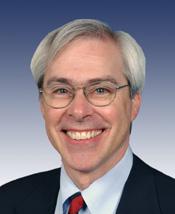
Historical · U.S. House · Georgia · District 12
John Barrow
Former U.S. Representative · Georgia District 12 · 2005–2015 · Democratic
John Barrow represented Georgia's District 12 in the United States House of Representatives (2005–2015) for the Democratic party. The page below collects sourced biographical facts, term history, committee roles, and provenance for Barrow.
Bioguide ID: B001252
Key facts
- Full name
- John Barrow
- State
- Georgia
- District
- District 12
- Party
- Democratic
- House service
- 2005–2015
- First House term
- 2005
- Status
- Left office
- Current term ends
- —
- Born
- 1955
- Bioguide ID
- B001252
- Committee assignments
- —
- Dataset version
- 1.20260605
Biographical narrative
908 words · sourced from the Wikipedia REST extract
John Barrow is a former U.S. Representative who served Georgia's 12th congressional district from 2005 until 2015. A member of the Democratic Party, Barrow's political career was marked by his ability to navigate a challenging electoral landscape, particularly as his district became increasingly Republican over the years. He is known for his persistence in seeking re-election amidst significant political changes, including redistricting efforts aimed at diminishing his electoral prospects. After his tenure in Congress, Barrow continued his political involvement, running for various offices, including a bid for Georgia Secretary of State in 2018 and a campaign for a seat on the Supreme Court of Georgia in 2024.
Early life and career
John Jenkins Barrow was born on October 31, 1955, in Athens, Georgia. He is the son of Judge James Barrow and Phyllis Jenkins Barrow, both of whom served as military officers during World War II. Barrow's family has a long-standing connection to the Athens area, and he is related to notable figures in Georgia's history, including being a great-great-nephew of David Crenshaw Barrow Jr., after whom Barrow County is named. His lineage also ties him to Wilson Lumpkin, a 19th-century governor of Georgia.
Barrow pursued his education at the University of Georgia, where he earned a degree in political science in 1976. During his time at the university, he was an active member of the Demosthenian Literary Society. He later attended Harvard Law School, graduating with a Juris Doctor degree in 1979. Following his education, Barrow entered private legal practice, where he worked until he transitioned into public office.
In addition to his professional career, Barrow is married to Angèle Hawkins, a resident of Atlanta, and they have five children together: Charlie, Manette, Alex, James, and Ruth. Barrow is a practicing Baptist, reflecting his personal beliefs and values.
Barrow's political career began at the local level. In 1990, he was elected to the newly formed Athens-Clarke County Commission, which resulted from the consolidation of the city and county governments. He represented the fourth district and successfully won re-election in subsequent elections held in 1992, 1996, and 2000. His experience in local governance laid the groundwork for his later congressional career.
House tenure
John Barrow was elected to the U.S. House of Representatives in 2004, beginning his first term in January 2005. He served a total of five terms in Congress, navigating a challenging political environment characterized by significant shifts in voter demographics and party alignment within his district. Barrow's tenure was marked by a series of contentious re-election campaigns, particularly as Republican lawmakers undertook redistricting efforts that aimed to alter the boundaries of his constituency to favor Republican candidates. These changes forced Barrow to relocate multiple times to remain within the district he represented.
Despite the challenges posed by these redistricting efforts, Barrow managed to secure re-election through a combination of strategic campaigning and a focus on local issues. His ability to connect with constituents and address their concerns contributed to his electoral resilience in a district that was increasingly leaning Republican. However, in 2014, Barrow faced a particularly competitive race against Republican candidate Rick Allen. This election was closely watched and ultimately resulted in Barrow's defeat, marking the end of his congressional career when he left office on January 3, 2015.
Legislative focus and committees
During his time in the House of Representatives, John Barrow was active in sponsoring a variety of legislation, focusing primarily on health care, education, and small business support. Over the course of his congressional career, he sponsored 59 bills, reflecting his commitment to addressing the needs of his constituents and the broader public.
In the 109th Congress, Barrow introduced H.R. 2073, a bill aimed at providing tax credits to small businesses that offered health insurance to their employees. This initiative was later incorporated into the Patient Protection and Affordable Care Act, highlighting Barrow's involvement in significant health care reform efforts. He also introduced legislation related to child care, requiring centers to disclose their liability insurance status, which many states adopted in various forms.
Throughout the 110th Congress, Barrow continued to focus on health care and education. He sponsored bills aimed at enhancing Medicare services for rural hospitals and increasing the HOPE Scholarship tax credit for students. His advocacy for small businesses was evident in his introduction of a program designed to facilitate health insurance coverage for employees.
Barrow's legislative efforts in the 111th Congress included initiatives to establish minimum education standards for medical professionals and to create grant programs for technical schools, further underscoring his commitment to education and public health.
In the 112th Congress, Barrow introduced legislation aimed at increasing accountability in government contracts and providing tax credits to businesses that raised employee wages above inflation. His legislative agenda consistently reflected a focus on economic development, health care access, and educational opportunities.
Throughout his tenure, Barrow served on various committees, contributing to discussions and decisions that shaped national policy in areas relevant to his constituents. His legislative work and committee involvement were characterized by a pragmatic approach, seeking to balance the needs of his district with broader national interests.
In summary, John Barrow's career as a U.S. Representative was defined by his ability to navigate a complex political landscape, his commitment to legislative initiatives that addressed critical issues, and his engagement with constituents throughout his time in office. After leaving Congress, Barrow remained active in Georgia politics, continuing to influence public policy and governance in the state.
Notable legislation
Sponsored and co-sponsored legislation for John Barrow is pending operator curation. The biographical narrative above carries the same provenance trail until per-bill rows are written.
Sources
- [1]https://en.wikipedia.org/wiki/John_Barrow_(American_politician)Wikipedia · retrieved 2026-06-05
Notable quotes
Sourced quotes for John Barrow are pending operator curation. Narrative-scope provenance remains attached below.
Sources
- [1]https://en.wikipedia.org/wiki/John_Barrow_(American_politician)Wikipedia · retrieved 2026-06-05
Key positions
Curated policy positions for John Barrow are pending operator review. The biographical narrative above carries the same provenance trail until per-topic positions are written.
Sources
- [1]https://en.wikipedia.org/wiki/John_Barrow_(American_politician)Wikipedia · retrieved 2026-06-05
Terms served
- 2005–2007U.S. House · Term 1 · Democratic
- 2007–2009U.S. House · Term 2 · Democratic
- 2009–2011U.S. House · Term 3 · Democratic
- 2011–2013U.S. House · Term 4 · Democratic
- 2013–2015U.S. House · Term 5 · Democratic
Sources & provenance
Every attributable claim above carries a per-section [N] marker that resolves to the corresponding URL below. Each entry records the upstream provider, the canonical URL, and the timestamp at which the source was retrieved by the ingest pipeline.
Key facts
- https://bioguide.congress.gov/search/bio/B001252bioguide · retrieved 2026-06-05
- http://barrow.house.govhouse.gov · retrieved 2026-06-05
Biographical narrative
- https://en.wikipedia.org/wiki/John_Barrow_(American_politician)wikipedia · retrieved 2026-06-05
Find your representative
Every U.S. state elects representatives by district. Browse Georgia’s delegation, the full former-representative roster, or explore the role and term length.
Related on The Candidate
- Preceded by Max BurnsEarlier holder of the Georgia District 12 House seat · Republican.Open
- Andrew SloanFormer U.S. Representative · Georgia District 1 · RepublicanOpen
- Anthony WayneFormer U.S. Representative · Georgia District 1Open
- Archibald MacIntyreFormer U.S. Representative · Georgia District 1 · DemocraticOpen
- Bo GinnFormer U.S. Representative · Georgia District 1 · DemocraticOpen
- Democratic PartyFederal candidates and office holders on the Democratic line.Open