
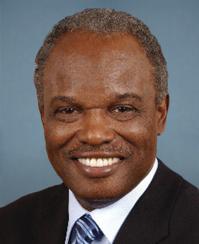
Historical · U.S. House · Georgia · District 13
David Scott
Former U.S. Representative · Georgia District 13 · 2003–2026 · Democratic
David Scott represented Georgia's District 13 in the United States House of Representatives (2003–2026) for the Democratic party. The page below collects sourced biographical facts, term history, committee roles, and provenance for Scott.
Bioguide ID: S001157
Key facts
- Full name
- David Scott
- State
- Georgia
- District
- District 13
- Party
- Democratic
- House service
- 2003–2026
- First House term
- 2003
- Status
- Left office
- Current term ends
- —
- Born
- 1945
- Bioguide ID
- S001157
- Committee assignments
- —
- Dataset version
- 1.20260603
Biographical narrative
949 words · sourced from the Wikipedia REST extract
David Scott was an American politician and businessman who served as the U.S. Representative for Georgia's 13th congressional district from 2003 until his passing in 2026. A member of the Democratic Party, Scott's congressional career spanned over two decades, during which he was involved in various legislative initiatives and held significant committee positions. His district encompassed all of Rockdale County and parts of Clayton, DeKalb, Gwinnett, Henry, and Newton counties. Prior to his tenure in Congress, Scott had a long career in state politics and entrepreneurship, contributing to his extensive experience in governance and public service.
Early life and career
David Scott was born on June 27, 1945, in Aynor, South Carolina. His early upbringing was shaped by his family dynamics, as he was initially raised by his maternal grandparents in South Carolina. Later, he moved to Scranton, Pennsylvania, where he lived with his paternal grandparents before reuniting with his parents in Scarsdale, New York, at the age of 11. When he was 13, the family relocated to Daytona Beach, Florida, where Scott attended Campbell High School.
Scott pursued higher education at Florida A&M University, where he earned a bachelor's degree. He furthered his studies by obtaining a Master of Business Administration from the Wharton School at the University of Pennsylvania. During his time at university, he became a member of the Alpha Phi Alpha fraternity, which is known for its focus on leadership and community service.
In 1978, Scott founded Dayn-Mark Advertising, a business that specialized in placing billboards and other advertising forms in the Atlanta area. The company was named after his two daughters, Dayna and Marcie. His wife, Alfredia, later took over the management of the business. Throughout his career, Scott was also involved in public service, having served in the Georgia House of Representatives from 1975 to 1983 and in the Georgia State Senate from 1983 until 2003. His legislative experience at the state level laid the groundwork for his subsequent election to Congress.
House tenure
David Scott entered the U.S. House of Representatives following a successful campaign in 2002, when Georgia gained an additional congressional district due to the results of the 2000 census. He participated in a competitive five-way Democratic primary, securing the nomination with a majority of the vote. In the general election, he defeated Republican candidate Clay Cox with a significant margin. Scott's initial victory marked the beginning of a lengthy tenure in Congress, during which he was re-elected multiple times, often running unopposed in several election cycles.
Throughout his time in office, Scott represented a district that underwent significant changes due to redistricting. Initially, the 13th congressional district was characterized by a convoluted shape, encompassing parts of nine counties. However, following redistricting efforts after the 2004 and 2010 elections, the district became more compact, with a population center in Clayton, Douglas, and Fulton Counties.
Scott's congressional career was not without controversy. In 2007, he was named one of the 25 most corrupt members of Congress by the political watchdog group Citizens for Responsibility and Ethics in Washington. Despite this designation, he continued to serve in various capacities and maintained a consistent presence in the House.
In March 2026, Scott qualified for the upcoming election, demonstrating his ongoing commitment to serving his constituents. However, he passed away shortly thereafter, marking the end of his 12 terms in the House of Representatives.
Legislative focus and committees
During his tenure in Congress, David Scott was involved in various legislative initiatives and held significant positions on several committees. In the 119th Congress, he served on the Committee on Agriculture, where he was the ranking member from 2023 to 2025. His work on this committee included participation in subcommittees focused on commodity markets, digital assets, rural development, general farm commodities, risk management, and credit. Additionally, he was a member of the Committee on Financial Services, contributing to discussions and decisions regarding capital markets and financial institutions.
Scott's legislative interests extended beyond agriculture and finance. He was a member of several caucuses, including the Black Maternal Health Caucus, the Congressional Equality Caucus, and the Congressional Black Caucus, among others. These affiliations reflected his commitment to addressing issues pertinent to diverse communities and advocating for social equity.
Throughout his career, Scott demonstrated a willingness to engage in bipartisan efforts. He was recognized as one of the more bipartisan members of Congress, ranking as the 18th-most bipartisan member during the 114th Congress. This ranking was based on his ability to attract co-sponsors from the opposite party for his bills and his willingness to co-sponsor legislation proposed by members of the opposing party.
Scott's voting record included support for significant legislation, such as the Affordable Care Act, which he endorsed despite facing opposition from constituents. He also played a role in fiscal policy discussions, initially voting against the first version of the 2008 bailout but later supporting the final version after advocating for provisions to assist homeowners facing foreclosure. His positions on social issues evolved over time, as he initially supported legislation aimed at banning same-sex marriage but later expressed support for marriage equality.
In foreign policy, Scott opposed the nuclear deal with Iran, citing concerns about its implications for U.S. allies. He also took a stance on the Yemeni civil war, being one of a few House Democrats who voted to allow continued U.S. involvement in the conflict.
David Scott's extensive career in public service, marked by his long tenure in the U.S. House of Representatives and his active participation in various legislative committees and caucuses, reflects his commitment to addressing the needs of his constituents and engaging in the broader political discourse. His legacy continues to influence the political landscape in Georgia and beyond.
Notable legislation
Sponsored and co-sponsored legislation for David Scott is pending operator curation. The biographical narrative above carries the same provenance trail until per-bill rows are written.
Sources
- [1]https://en.wikipedia.org/wiki/David_Scott_(Georgia_politician)Wikipedia · retrieved 2026-06-03
Notable quotes
Sourced quotes for David Scott are pending operator curation. Narrative-scope provenance remains attached below.
Sources
- [1]https://en.wikipedia.org/wiki/David_Scott_(Georgia_politician)Wikipedia · retrieved 2026-06-03
Key positions
Curated policy positions for David Scott are pending operator review. The biographical narrative above carries the same provenance trail until per-topic positions are written.
Sources
- [1]https://en.wikipedia.org/wiki/David_Scott_(Georgia_politician)Wikipedia · retrieved 2026-06-03
Terms served
- 2003–2005U.S. House · Term 1 · Democratic
- 2005–2007U.S. House · Term 2 · Democratic
- 2007–2009U.S. House · Term 3 · Democratic
- 2009–2011U.S. House · Term 4 · Democratic
- 2011–2013U.S. House · Term 5 · Democratic
- 2013–2015U.S. House · Term 6 · Democratic
- 2015–2017U.S. House · Term 7 · Democratic
- 2017–2019U.S. House · Term 8 · Democratic
- 2019–2021U.S. House · Term 9 · Democratic
- 2021–2023U.S. House · Term 10 · Democratic
- 2023–2025U.S. House · Term 11 · Democratic
- 2025–2026U.S. House · Term 12 · Democratic
Sources & provenance
Every attributable claim above carries a per-section [N] marker that resolves to the corresponding URL below. Each entry records the upstream provider, the canonical URL, and the timestamp at which the source was retrieved by the ingest pipeline.
Key facts
- https://bioguide.congress.gov/search/bio/S001157bioguide · retrieved 2026-06-03
- https://davidscott.house.govhouse.gov · retrieved 2026-06-03
Biographical narrative
- https://en.wikipedia.org/wiki/David_Scott_(Georgia_politician)wikipedia · retrieved 2026-06-03
Find your representative
Every U.S. state elects representatives by district. Browse Georgia’s delegation, the full former-representative roster, or explore the role and term length.
Related on The Candidate
- Andrew SloanFormer U.S. Representative · Georgia District 1 · RepublicanOpen
- Anthony WayneFormer U.S. Representative · Georgia District 1Open
- Archibald MacIntyreFormer U.S. Representative · Georgia District 1 · DemocraticOpen
- Bo GinnFormer U.S. Representative · Georgia District 1 · DemocraticOpen
- Democratic PartyFederal candidates and office holders on the Democratic line.Open
- Representatives from GeorgiaEvery former U.S. Representative who has represented Georgia.Open