
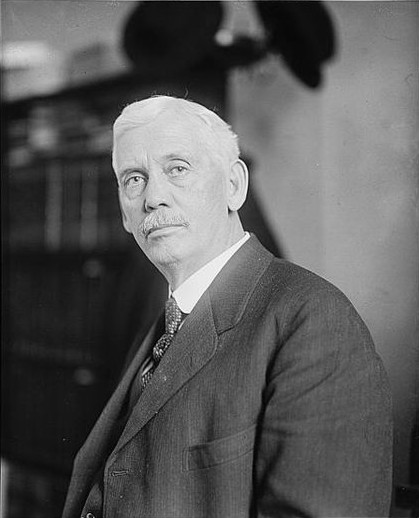
Historical · U.S. House · Georgia · District 2
Frank Park
Former U.S. Representative · Georgia District 2 · 1913–1925 · Democratic
Frank Park represented Georgia's District 2 in the United States House of Representatives (1913–1925) for the Democratic party. The page below collects sourced biographical facts, term history, committee roles, and provenance for Park.
Bioguide ID: P000051
Key facts
- Full name
- Frank Park
- State
- Georgia
- District
- District 2
- Party
- Democratic
- House service
- 1913–1925
- First House term
- 1913
- Status
- Left office
- Current term ends
- —
- Born
- 1864
- Bioguide ID
- P000051
- Committee assignments
- —
- Dataset version
- 1.20260606
Biographical narrative
916 words · sourced from the Wikipedia REST extract
Frank Park was an American politician, educator, lawyer, and jurist who served as a U.S. Representative for Georgia's 2nd congressional district. A member of the Democratic Party, Park's congressional career spanned over a decade, beginning in 1913 and concluding in 1925. He was known for his involvement in various legislative initiatives and his efforts to address issues of political corruption during his time in office.
Early life and career
Frank Park was born on March 3, 1864, in Tuskegee, Alabama, to James Fletcher Park and Emma Augusta Park (née Bailey). His father was an influential figure in education, having founded Park High School, which later became known as the Tuskegee Military Institute for Boys. Additionally, he served as the mayor of LaGrange, Georgia. Frank Park completed his early education in local public schools before pursuing higher education at the University of Georgia in Athens. While at the university, he became a member of the Phi Kappa Literary Society, an organization that fostered debate and literary pursuits among students.
After graduating, Park began his professional career as an educator, teaching from 1882 until 1885. He then transitioned to a role as a railway civil engineer, a position he held until 1889. Following this period, he attended the Atlanta Medical College, where he graduated in 1891. However, his career path shifted once again when he studied law and gained admission to the Georgia state bar in the same year. Park subsequently established a private law practice, marking the beginning of his legal career.
In 1898, Park's judicial career commenced when he became a judge in the county court, a position he maintained until 1903. He then advanced to serve as a judge in the Albany judicial circuit, where he remained until 1908. His commitment to education continued as he served on the board of trustees for the Georgia Agricultural and Mechanical School in Tifton from 1911 to 1915. Throughout these years, Park was actively involved in the Democratic Party, serving as chair of the Democratic executive committee for Worth County from 1891 to 1902 and later as chair of the Democratic congressional committee for Georgia's 2nd congressional district from 1902 to 1904.
House tenure
Frank Park's political career in the U.S. House of Representatives began with a special election in 1913, which he won to fill the vacant seat in Georgia's 2nd congressional district following the death of incumbent Seaborn Roddenbery. Park's victory over fellow Democrat Roscoe Luke was marked by a margin of 5.1 points. After completing the partial term of his predecessor, he was re-elected for four additional full terms, serving in the House until March 3, 1925.
During his tenure, Park resided in Sylvester, Georgia, the county seat of Worth County. His congressional service was characterized by a range of legislative initiatives and a focus on addressing issues he deemed significant. Notably, shortly after taking office, Park introduced legislation aimed at amending the Second Amendment of the U.S. Constitution to allow for regulation of firearms, which he believed was necessary to combat the issue of "pistol toting" that he associated with high homicide rates. Despite his confidence in the support for this measure, it did not gain traction.
In 1914, Park introduced a controversial bill that sought to prohibit African-Americans from being commissioned as military or naval officers. This proposal reflected the racial attitudes prevalent during that era and sparked significant debate.
Park's commitment to fighting political corruption was evident through his actions in the House. In 1914, he introduced a resolution of impeachment against Daniel Thew Wright, an Associate Justice of the Supreme Court of the District of Columbia, citing corruption. Wright resigned before facing impeachment proceedings. The following year, Park leveled accusations against Richard H. Sylvester, the District of Columbia police chief, who was already under scrutiny for his handling of a Women's Suffrage march. Sylvester also chose to resign in light of the allegations against him.
Legislative focus and committees
Throughout his time in Congress, Frank Park was involved in various legislative matters, reflecting his interests and the concerns of his constituents. His early legislative efforts included attempts to amend the Second Amendment and address issues related to military appointments, particularly concerning race. These initiatives highlighted the complex social and political landscape of the early 20th century in the United States.
Park's political career was not without challenges. In the 1916 Democratic primary, he faced a formidable opponent in Edward Eugene Cox, who had succeeded him as judge of the Albany judicial circuit. Cox actively campaigned against Park, even challenging him to a public debate during the July 4 festivities in Thomasville, Georgia. Despite the competition, Park successfully secured his position, demonstrating his continued support among voters in his district.
Over the course of his six terms in the House, Park's legislative focus evolved, but his commitment to addressing corruption and advocating for the interests of his constituents remained consistent. His background as a judge and lawyer informed his approach to governance, as he sought to implement measures that he believed would improve the political landscape.
Frank Park's congressional career came to an end in 1925, concluding a significant chapter in his life dedicated to public service. After leaving office, he continued to be remembered for his contributions to Georgia's political history and the legislative efforts he undertook during his tenure in the U.S. House of Representatives. He passed away on November 20, 1925, leaving behind a legacy shaped by his experiences as an educator, lawyer, judge, and politician.
Notable legislation
Sponsored and co-sponsored legislation for Frank Park is pending operator curation. The biographical narrative above carries the same provenance trail until per-bill rows are written.
Sources
- [1]https://en.wikipedia.org/wiki/Frank_ParkWikipedia · retrieved 2026-06-06
Notable quotes
Sourced quotes for Frank Park are pending operator curation. Narrative-scope provenance remains attached below.
Sources
- [1]https://en.wikipedia.org/wiki/Frank_ParkWikipedia · retrieved 2026-06-06
Key positions
Curated policy positions for Frank Park are pending operator review. The biographical narrative above carries the same provenance trail until per-topic positions are written.
Sources
- [1]https://en.wikipedia.org/wiki/Frank_ParkWikipedia · retrieved 2026-06-06
Terms served
- 1913–1915U.S. House · Term 1 · Democratic
- 1915–1917U.S. House · Term 2 · Democratic
- 1917–1919U.S. House · Term 3 · Democratic
- 1919–1921U.S. House · Term 4 · Democratic
- 1921–1923U.S. House · Term 5 · Democratic
- 1923–1925U.S. House · Term 6 · Democratic
Sources & provenance
Every attributable claim above carries a per-section [N] marker that resolves to the corresponding URL below. Each entry records the upstream provider, the canonical URL, and the timestamp at which the source was retrieved by the ingest pipeline.
Key facts
- https://bioguide.congress.gov/search/bio/P000051bioguide · retrieved 2026-06-06
- https://www.govtrack.us/congress/members/408461govtrack · retrieved 2026-06-06
Biographical narrative
- https://en.wikipedia.org/wiki/Frank_Parkwikipedia · retrieved 2026-06-06
Find your representative
Every U.S. state elects representatives by district. Browse Georgia’s delegation, the full former-representative roster, or explore the role and term length.
Related on The Candidate
- Preceded by James GriggsEarlier holder of the Georgia District 2 House seat · Democratic.Open
- Succeeded by Edward CoxLater holder of the Georgia District 2 House seat · Democratic.Open
- Andrew SloanFormer U.S. Representative · Georgia District 1 · RepublicanOpen
- Anthony WayneFormer U.S. Representative · Georgia District 1Open
- Archibald MacIntyreFormer U.S. Representative · Georgia District 1 · DemocraticOpen
- Bo GinnFormer U.S. Representative · Georgia District 1 · DemocraticOpen