
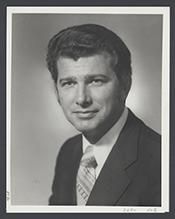
Historical · U.S. House · Georgia · District 2
Marvin Mathis
Former U.S. Representative · Georgia District 2 · 1971–1981 · Democratic
Marvin Mathis represented Georgia's District 2 in the United States House of Representatives (1971–1981) for the Democratic party. The page below collects sourced biographical facts, term history, committee roles, and provenance for Mathis.
Bioguide ID: M000244
Key facts
- Full name
- Marvin Mathis
- State
- Georgia
- District
- District 2
- Party
- Democratic
- House service
- 1971–1981
- First House term
- 1971
- Status
- Left office
- Current term ends
- —
- Born
- 1940
- Bioguide ID
- M000244
- Committee assignments
- —
- Dataset version
- 1.20260605
Biographical narrative
952 words · sourced from the Wikipedia REST extract
Dawson Mathis was an American politician and newsman who served as a U.S. Representative for Georgia's 2nd congressional district from 1971 until 1981. A member of the Democratic Party, Mathis was elected to five consecutive terms in the House of Representatives. His tenure was marked by his commitment to his constituents and his involvement in various legislative matters. After leaving Congress, he continued to engage in public service through lobbying and other endeavors. Mathis's life and career reflect a blend of media experience and political involvement, contributing to his understanding of the issues facing his district and the nation.
Early life and career
Dawson Mathis was born on November 30, 1940, in Nashville, Georgia. He grew up in the area and attended the local public schools, where he began to develop an interest in communication and public affairs. Following his primary education, Mathis pursued higher education at South Georgia College located in Douglas, Georgia. His time at the college provided him with foundational skills that would later serve him in his career in journalism and politics.
From 1964 to 1970, Mathis worked as the news director at WALB-TV in Albany, Georgia. This role allowed him to gain significant experience in media and communication, shaping his understanding of public issues and the political landscape. His background in journalism likely influenced his approach to politics, as he was accustomed to analyzing and reporting on various topics of public interest. This experience would prove valuable during his subsequent political career, as he was able to communicate effectively with the public and navigate the complexities of legislative processes.
Mathis's transition from journalism to politics was a natural progression, as his work in the media had provided him with insights into the needs and concerns of the community he would later represent. His deep roots in Georgia and understanding of local issues positioned him well for a career in public service.
House tenure
Dawson Mathis was first elected to the U.S. House of Representatives in 1970, beginning his first term on January 3, 1971. He was a member of the Democratic Party and represented Georgia's 2nd congressional district. Over the course of his political career, Mathis was elected to five consecutive terms in the House, serving until January 3, 1981. His tenure in Congress was characterized by a commitment to addressing the needs of his constituents and engaging in legislative matters that affected the state of Georgia and the nation as a whole.
During his time in office, Mathis participated in various congressional sessions and was involved in discussions on a wide range of issues. His experience as a news director likely equipped him with the skills necessary to engage in debates and advocate for policies that aligned with the interests of his district. Mathis's legislative work included addressing local concerns, which were often reflective of broader national issues, such as economic development, education, and healthcare.
In 1980, Mathis sought to further his political career by running for the United States Senate. However, he was unsuccessful in securing the nomination. This attempt to transition to a higher office demonstrated his ambition and desire to continue serving the public at a larger scale. Despite this setback, Mathis's five terms in the House of Representatives solidified his reputation as a dedicated public servant.
After concluding his congressional service, Mathis attempted to reclaim his former seat in the House in 1982. He ran in the Democratic primary but was defeated by his successor, Charles Hatcher. This loss marked the end of his direct political career in elected office, but it did not signify the end of his involvement in public affairs.
Legislative focus and committees
Throughout his time in Congress, Dawson Mathis focused on various legislative issues that were pertinent to his constituents in Georgia's 2nd congressional district. While specific details about the bills he sponsored or supported are not provided, it is known that he engaged in discussions and initiatives that aimed to improve the lives of those he represented. His background in media likely informed his understanding of the importance of effective communication and advocacy in the legislative process.
Mathis's work in Congress would have included participation in committees that aligned with his interests and the needs of his district. Committees play a crucial role in shaping legislation, and members often focus on specific areas such as education, agriculture, healthcare, or economic development. While the exact committees Mathis served on are not detailed, it can be inferred that he would have been involved in committees relevant to the economic and social issues affecting his constituents.
In addition to his legislative duties, Mathis's role as a U.S. Representative would have required him to engage with various stakeholders, including local leaders, community organizations, and constituents. This engagement is essential for understanding the challenges faced by the district and for advocating for policies that address those challenges. Mathis's experience in journalism likely enhanced his ability to connect with the public and gather insights that informed his legislative priorities.
After leaving Congress, Mathis transitioned into the private sector as a lobbyist. This role allowed him to continue influencing public policy and advocating for various interests, drawing on his extensive experience in government and media. His work as a lobbyist reflected his ongoing commitment to public service, albeit from a different vantage point.
Dawson Mathis passed away on April 17, 2017, in Tifton, Georgia, at the age of 76. His life and career left a mark on the political landscape of Georgia, and his contributions as a U.S. Representative are remembered as part of the state's legislative history. Through his dedication to public service and his engagement in the political process, Mathis exemplified the role of a committed public servant.
Notable legislation
Sponsored and co-sponsored legislation for Marvin Mathis is pending operator curation. The biographical narrative above carries the same provenance trail until per-bill rows are written.
Sources
- [1]https://en.wikipedia.org/wiki/Dawson_MathisWikipedia · retrieved 2026-06-05
Notable quotes
Sourced quotes for Marvin Mathis are pending operator curation. Narrative-scope provenance remains attached below.
Sources
- [1]https://en.wikipedia.org/wiki/Dawson_MathisWikipedia · retrieved 2026-06-05
Key positions
Curated policy positions for Marvin Mathis are pending operator review. The biographical narrative above carries the same provenance trail until per-topic positions are written.
Sources
- [1]https://en.wikipedia.org/wiki/Dawson_MathisWikipedia · retrieved 2026-06-05
Terms served
- 1971–1973U.S. House · Term 1 · Democratic
- 1973–1975U.S. House · Term 2 · Democratic
- 1975–1977U.S. House · Term 3 · Democratic
- 1977–1979U.S. House · Term 4 · Democratic
- 1979–1981U.S. House · Term 5 · Democratic
Sources & provenance
Every attributable claim above carries a per-section [N] marker that resolves to the corresponding URL below. Each entry records the upstream provider, the canonical URL, and the timestamp at which the source was retrieved by the ingest pipeline.
Key facts
- https://bioguide.congress.gov/search/bio/M000244bioguide · retrieved 2026-06-05
- https://www.govtrack.us/congress/members/407262govtrack · retrieved 2026-06-05
Biographical narrative
- https://en.wikipedia.org/wiki/Dawson_Mathiswikipedia · retrieved 2026-06-05
Find your representative
Every U.S. state elects representatives by district. Browse Georgia’s delegation, the full former-representative roster, or explore the role and term length.
Related on The Candidate
- Preceded by Maston O’Neal Jr.Earlier holder of the Georgia District 2 House seat · Democratic.Open
- Succeeded by Charles HatcherLater holder of the Georgia District 2 House seat · Democratic.Open
- Andrew SloanFormer U.S. Representative · Georgia District 1 · RepublicanOpen
- Anthony WayneFormer U.S. Representative · Georgia District 1Open
- Archibald MacIntyreFormer U.S. Representative · Georgia District 1 · DemocraticOpen
- Bo GinnFormer U.S. Representative · Georgia District 1 · DemocraticOpen