
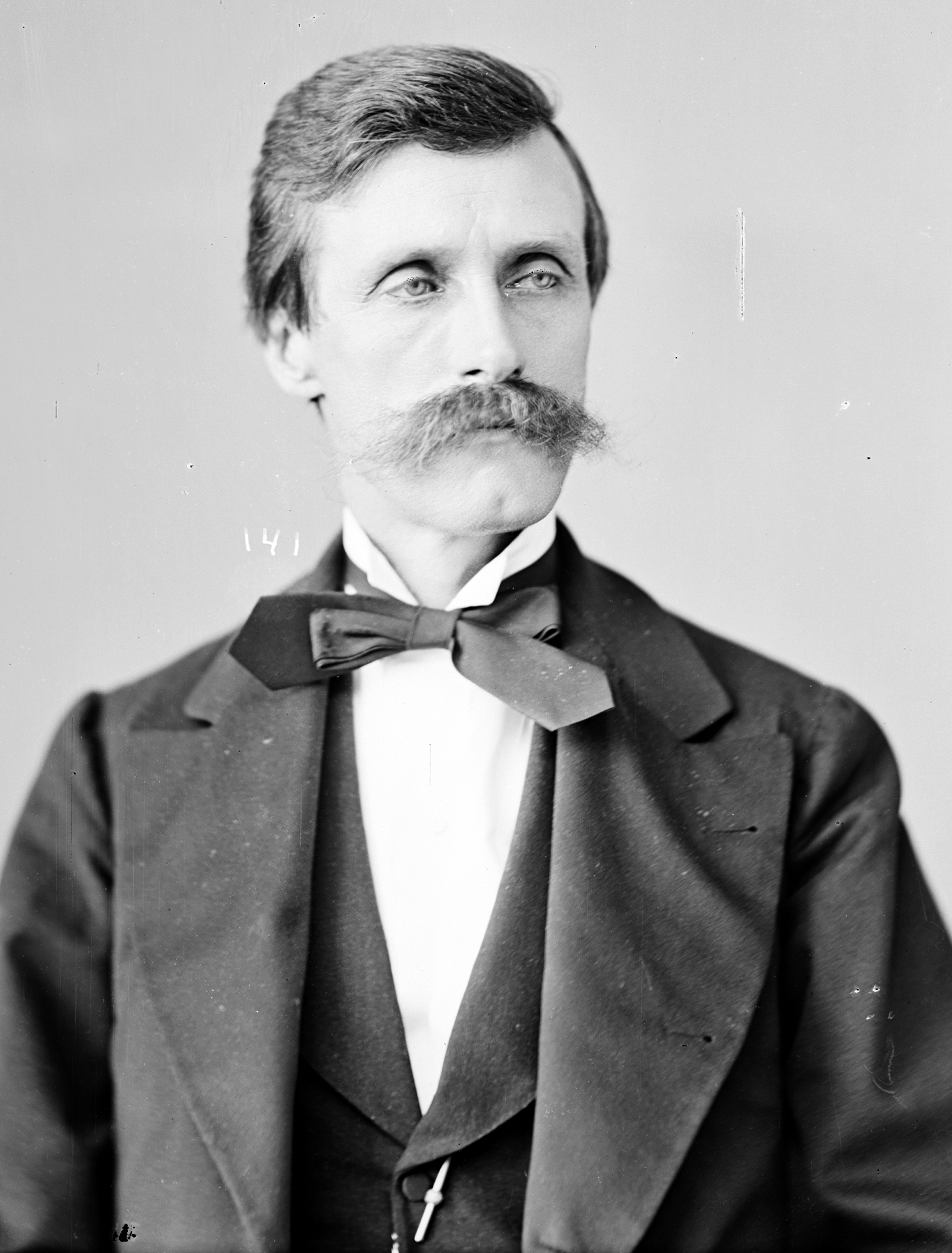
Historical · U.S. House · Georgia · District 2
Richard Whiteley
Former U.S. Representative · Georgia District 2 · 1869–1875 · Republican
Richard Whiteley represented Georgia's District 2 in the United States House of Representatives (1869–1875) for the Republican party. The page below collects sourced biographical facts, term history, committee roles, and provenance for Whiteley.
Bioguide ID: W000408
Key facts
- Full name
- Richard Whiteley
- State
- Georgia
- District
- District 2
- Party
- Republican
- House service
- 1869–1875
- First House term
- 1869
- Status
- Left office
- Current term ends
- —
- Born
- 1830
- Bioguide ID
- W000408
- Committee assignments
- —
- Dataset version
- 1.20260606
Biographical narrative
856 words · sourced from the Wikipedia REST extract
Richard Whiteley was an American lawyer and politician who served as a U.S. Representative for Georgia's 2nd congressional district during the Reconstruction era. A member of the Republican Party, he is noted for being the only Republican to ever hold this congressional seat. His political career spanned three terms in the House of Representatives, and he was involved in significant events during a transformative period in American history. Born in Ireland and later a veteran of the Confederate Army, Whiteley’s life reflects the complexities of American society in the mid-19th century, particularly in the context of the Civil War and Reconstruction.
Early life and career
Richard Whiteley was born on December 22, 1830, in County Kildare, Ireland. In 1836, at the age of six, he immigrated to the United States with his parents, who settled in Georgia. The family’s relocation marked the beginning of Whiteley’s long connection to the southern state. He received private instruction in elementary education, which laid the foundation for his future pursuits. As a young man, he engaged in manufacturing, which provided him with practical experience in business and commerce.
Whiteley’s legal career began after he studied law and was admitted to the bar in 1860. He commenced his legal practice in Bainbridge, Georgia, where he would become a prominent figure in the local community. His legal background would later inform his political career, as he navigated the complexities of governance and legislation during a tumultuous period in American history.
House tenure
Whiteley’s political career began in earnest during the Reconstruction era following the Civil War. Although he initially opposed secession, he joined the Confederate States Army after Georgia’s ordinance of secession was adopted. He served with distinction in the 5th Georgia Infantry and the 2nd Georgia Sharpshooter Battalion, ultimately attaining the rank of major. His military service during the Civil War provided him with leadership experience and a deep understanding of the issues facing the South in the post-war period.
After the war, Whiteley entered the political arena, participating in the State constitutional convention in 1867. His early attempts at securing a congressional seat were met with challenges; he ran unsuccessfully for election to the Fortieth Congress in 1866. However, he persisted in his political ambitions and was eventually elected as a Republican to the Forty-first Congress. This election was significant as it filled a vacancy caused by the House declaring Nelson Tift not entitled to his seat.
Whiteley served in the House from December 22, 1870, to March 3, 1875, during which he was reelected to the Forty-second and Forty-third Congresses. His tenure in Congress was marked by the broader national efforts to rebuild and redefine the United States following the Civil War. Although he faced challenges, including an unsuccessful bid for reelection to the Forty-fourth Congress and a subsequent attempt to secure a seat in the Forty-fifth Congress, his time in office was notable for his representation of a Republican perspective in a predominantly Democratic South.
Legislative focus and committees
During his time in the House of Representatives, Whiteley was involved in various legislative efforts that reflected the priorities of his party and the needs of his constituents. The Reconstruction era was characterized by significant political and social upheaval, and Whiteley’s legislative focus likely included issues pertinent to rebuilding the South, civil rights, and economic development.
As a member of the Republican Party, Whiteley was part of a political movement that sought to address the challenges of integrating formerly enslaved individuals into society and ensuring their rights as citizens. The Republican agenda during this period included efforts to secure civil rights and promote economic opportunities for all citizens, particularly in the South, where the legacy of slavery had profound implications for social and economic structures.
While specific details of Whiteley’s committee assignments and legislative initiatives are not documented in the available records, his role as a Republican representative in a challenging political landscape suggests that he would have been engaged in discussions and decisions that shaped the future of Georgia and the nation. His experience as a lawyer would have informed his contributions to legislative debates, particularly in areas related to law and governance.
After completing his terms in Congress, Whiteley moved to Boulder, Colorado, in 1877, where he resumed his legal practice. His relocation marked a new chapter in his life, away from the political spotlight of Washington, D.C. He continued to contribute to his community through his legal work until his death on September 26, 1890. Whiteley was interred in the Masonic Cemetery in Boulder, leaving behind a legacy as a significant figure in Georgia’s political history during a critical period of American development.
In summary, Richard Whiteley’s life and career encapsulate the complexities of American society in the 19th century, particularly in the context of the Civil War and Reconstruction. His journey from an immigrant in Georgia to a U.S. Representative reflects the opportunities and challenges faced by individuals during this transformative era. As the only Republican to hold the 2nd congressional district seat in Georgia, Whiteley’s contributions to American politics are a testament to the diverse narratives that shaped the nation’s history.
Notable legislation
Sponsored and co-sponsored legislation for Richard Whiteley is pending operator curation. The biographical narrative above carries the same provenance trail until per-bill rows are written.
Sources
- [1]https://en.wikipedia.org/wiki/Richard_H._WhiteleyWikipedia · retrieved 2026-06-06
Notable quotes
Sourced quotes for Richard Whiteley are pending operator curation. Narrative-scope provenance remains attached below.
Sources
- [1]https://en.wikipedia.org/wiki/Richard_H._WhiteleyWikipedia · retrieved 2026-06-06
Key positions
Curated policy positions for Richard Whiteley are pending operator review. The biographical narrative above carries the same provenance trail until per-topic positions are written.
Sources
- [1]https://en.wikipedia.org/wiki/Richard_H._WhiteleyWikipedia · retrieved 2026-06-06
Terms served
- 1869–1871U.S. House · Term 1 · Republican
- 1871–1873U.S. House · Term 2 · Republican
- 1873–1875U.S. House · Term 3 · Republican
Sources & provenance
Every attributable claim above carries a per-section [N] marker that resolves to the corresponding URL below. Each entry records the upstream provider, the canonical URL, and the timestamp at which the source was retrieved by the ingest pipeline.
Key facts
- https://bioguide.congress.gov/search/bio/W000408bioguide · retrieved 2026-06-06
- https://www.govtrack.us/congress/members/411568govtrack · retrieved 2026-06-06
Biographical narrative
- https://en.wikipedia.org/wiki/Richard_H._Whiteleywikipedia · retrieved 2026-06-06
Find your representative
Every U.S. state elects representatives by district. Browse Georgia’s delegation, the full former-representative roster, or explore the role and term length.
Related on The Candidate
- Preceded by Martin CrawfordEarlier holder of the Georgia District 2 House seat · Democratic.Open
- Succeeded by William SmithLater holder of the Georgia District 2 House seat · Democratic.Open
- Andrew SloanFormer U.S. Representative · Georgia District 1 · RepublicanOpen
- Anthony WayneFormer U.S. Representative · Georgia District 1Open
- Archibald MacIntyreFormer U.S. Representative · Georgia District 1 · DemocraticOpen
- Bo GinnFormer U.S. Representative · Georgia District 1 · DemocraticOpen