
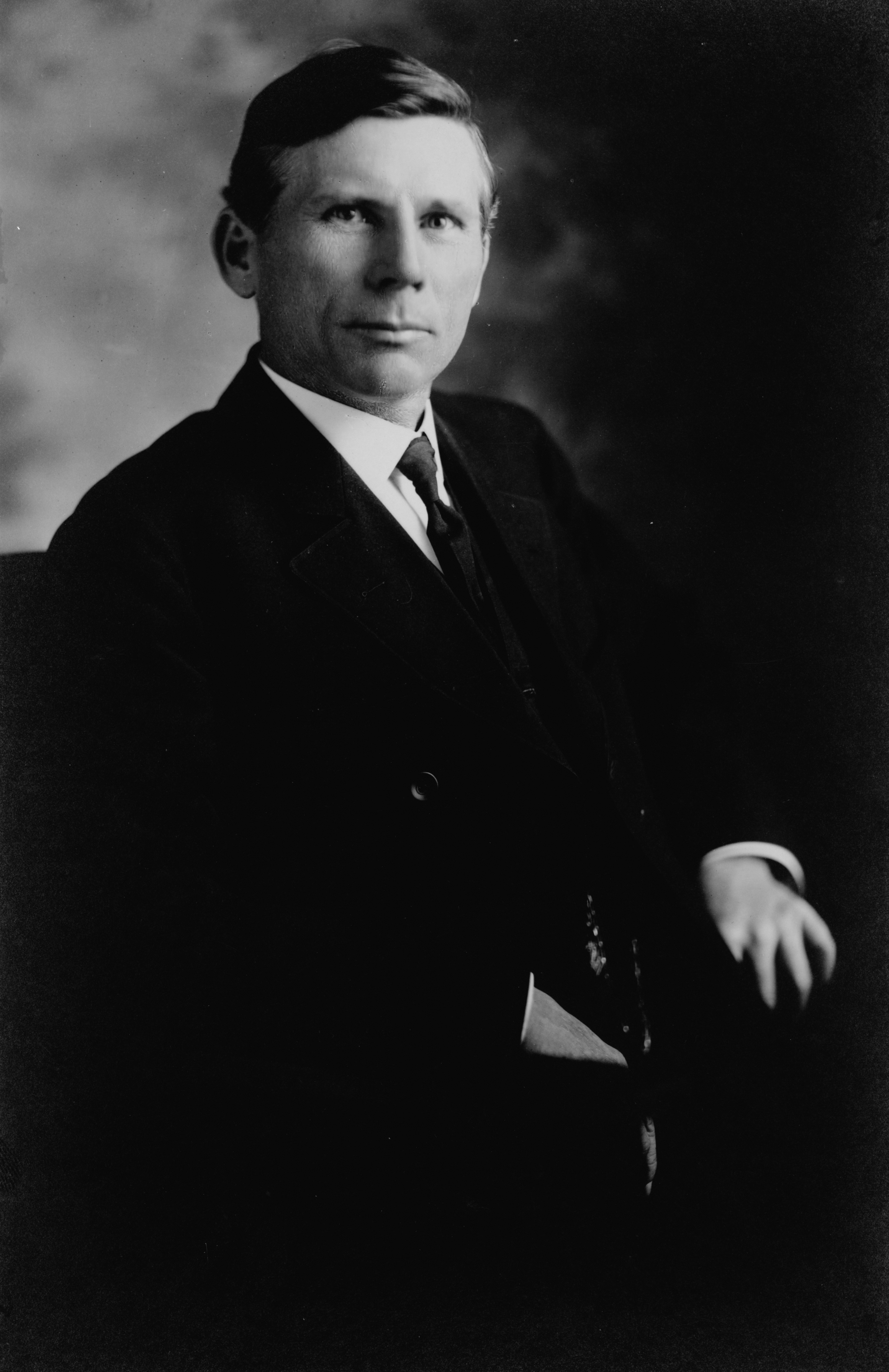
Historical · U.S. House · Georgia · District 2
Seaborn Roddenbery
Former U.S. Representative · Georgia District 2 · 1909–1915 · Democratic
Seaborn Roddenbery represented Georgia's District 2 in the United States House of Representatives (1909–1915) for the Democratic party. The page below collects sourced biographical facts, term history, committee roles, and provenance for Roddenbery.
Bioguide ID: R000370
Key facts
- Full name
- Seaborn Roddenbery
- State
- Georgia
- District
- District 2
- Party
- Democratic
- House service
- 1909–1915
- First House term
- 1909
- Status
- Left office
- Current term ends
- —
- Born
- 1870
- Bioguide ID
- R000370
- Committee assignments
- —
- Dataset version
- 1.20260606
Biographical narrative
871 words · sourced from the Wikipedia REST extract
Seaborn Roddenbery was a Democratic U.S. Representative from Georgia, who served in the House of Representatives from 1909 until his death in 1913. He is noted for his controversial legislative proposals, including an anti-miscegenation amendment to the United States Constitution. Roddenbery's political career was marked by his strong oratory skills and his conservative stance on fiscal matters, particularly regarding veterans' pensions. His tenure in Congress ended prematurely due to his battle with throat cancer, which ultimately led to his death in office.
Early life and career
Seaborn Anderson Roddenbery was born on January 12, 1870, in Decatur County, Georgia. He was the son of Dr. Seaborn Anderson Roddenbery and Martha America Braswell Roddenbery. The Roddenbery family had a diverse background; his grandfather had altered the family name from Roddenbury. Dr. Roddenbery was known for his multifaceted career, initially practicing medicine while also producing sugar cane syrup. As the syrup business flourished, he transitioned from medicine to focus on this enterprise, which eventually evolved into the W.B. Roddenbery Company, located in Cairo, Georgia.
Roddenbery's early education took place in public schools, after which he enrolled at Mercer University. However, financial constraints forced him to leave the university after three years. In 1891, he began his political career by being elected to represent his district in the Georgia House of Representatives. He served two terms before transitioning to an academic role as a professor of Language and Mathematics at South Georgia College in McRae, Georgia.
In 1894, Roddenbery resigned from his teaching position after being admitted to the bar, allowing him to practice law in Georgia. Over the following years, he established a private law practice and became increasingly involved in local politics. His political engagements included serving as the president of the Thomas County Board of Education from 1895 to 1898 and as a judge on the county court from 1897 to 1901. In 1903, he was elected mayor of Thomasville, Georgia, where he served until 1904.
House tenure
Roddenbery's congressional career began in 1910 when he was elected to represent Georgia's 2nd congressional district in the United States House of Representatives. He filled the vacancy left by the death of James M. Griggs and was subsequently re-elected to the 62nd and 63rd Congresses. His time in Congress was characterized by his vocal opposition to various legislative measures and his reputation as a skilled orator. Roddenbery's legislative actions included controversial demands, such as advocating for the dismissal of black employees from the Pension Office, suggesting they be replaced by white veterans of the Spanish-American War.
During his tenure, Roddenbery became known for his conservative fiscal policies. He was particularly critical of what he termed "pension buccaneers," referring to those who sought to expand retirement benefits for certain groups, including Civil War Union veterans. Roddenbery argued against increasing pensions for these veterans, citing the exclusion of many Confederate veterans from federal pensions under the 14th Amendment. His strong stance on this issue contributed to his reputation as a formidable figure in fiscal debates.
Roddenbery's legislative career was cut short by his declining health. He was diagnosed with throat cancer, which forced him to retire from active participation in Congress shortly after the failure of his proposed anti-miscegenation amendment. Despite his illness, he returned to Georgia shortly before his death, expressing hopes of returning to Congress after a period of rest. He passed away on September 25, 1913, while still in office.
Legislative focus and committees
Throughout his time in Congress, Roddenbery was recognized for his parliamentary skills and his ability to navigate complex legislative processes. He was known for employing filibustering tactics when confronted with legislation he opposed, earning a reputation as one of the top parliamentarians in the House of Representatives at the time of his death. His legislative focus included a strong emphasis on social issues, particularly concerning race relations and marriage laws.
Roddenbery's most notable legislative proposal was H.J. Res 368, introduced in January 1913, which sought to amend the Constitution to prohibit interracial marriages. This proposal was motivated in part by the marriage of African American boxer Jack Johnson to a white woman, which Roddenbery viewed as a threat to societal norms. His arguments against miscegenation reflected a broader conservative viewpoint prevalent in certain segments of American society during that period. Roddenbery's views were considered extreme even for his time, and the amendment did not gain sufficient support to pass.
In addition to his focus on social issues, Roddenbery's legislative efforts were marked by his commitment to fiscal conservatism. He consistently opposed measures that he believed would lead to increased government spending, particularly in relation to veterans' benefits. His efforts to combat what he perceived as abuses within the pension system were a significant aspect of his congressional agenda.
Roddenbery's legacy is complex, characterized by his controversial positions on race and social issues, as well as his commitment to fiscal conservatism. Following his death, his influence persisted, as anti-miscegenation bills were introduced in several states, reflecting the ongoing debates surrounding race and marriage in America. His wife, Johnnie Butler Roddenbery, continued to be active in public service after his passing, receiving a federal appointment as postmaster of Thomasville, Georgia, where she served under multiple presidential administrations.
Notable legislation
Sponsored and co-sponsored legislation for Seaborn Roddenbery is pending operator curation. The biographical narrative above carries the same provenance trail until per-bill rows are written.
Sources
- [1]https://en.wikipedia.org/wiki/Seaborn_RoddenberyWikipedia · retrieved 2026-06-06
Notable quotes
Sourced quotes for Seaborn Roddenbery are pending operator curation. Narrative-scope provenance remains attached below.
Sources
- [1]https://en.wikipedia.org/wiki/Seaborn_RoddenberyWikipedia · retrieved 2026-06-06
Key positions
Curated policy positions for Seaborn Roddenbery are pending operator review. The biographical narrative above carries the same provenance trail until per-topic positions are written.
Sources
- [1]https://en.wikipedia.org/wiki/Seaborn_RoddenberyWikipedia · retrieved 2026-06-06
Terms served
- 1909–1911U.S. House · Term 1 · Democratic
- 1911–1913U.S. House · Term 2 · Democratic
- 1913–1915U.S. House · Term 3 · Democratic
Sources & provenance
Every attributable claim above carries a per-section [N] marker that resolves to the corresponding URL below. Each entry records the upstream provider, the canonical URL, and the timestamp at which the source was retrieved by the ingest pipeline.
Key facts
- https://bioguide.congress.gov/search/bio/R000370bioguide · retrieved 2026-06-06
- https://www.govtrack.us/congress/members/409340govtrack · retrieved 2026-06-06
Biographical narrative
- https://en.wikipedia.org/wiki/Seaborn_Roddenberywikipedia · retrieved 2026-06-06
Find your representative
Every U.S. state elects representatives by district. Browse Georgia’s delegation, the full former-representative roster, or explore the role and term length.
Related on The Candidate
- Preceded by Benjamin RussellEarlier holder of the Georgia District 2 House seat · Democratic.Open
- Succeeded by Edward CoxLater holder of the Georgia District 2 House seat · Democratic.Open
- Andrew SloanFormer U.S. Representative · Georgia District 1 · RepublicanOpen
- Anthony WayneFormer U.S. Representative · Georgia District 1Open
- Archibald MacIntyreFormer U.S. Representative · Georgia District 1 · DemocraticOpen
- Bo GinnFormer U.S. Representative · Georgia District 1 · DemocraticOpen