
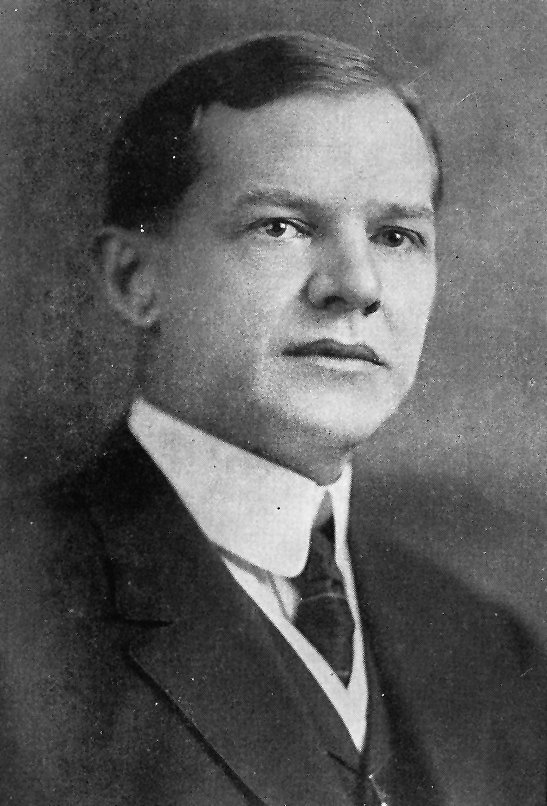
Historical · U.S. House · Georgia · District 3
Charles Crisp
Former U.S. Representative · Georgia District 3 · 1895–1933 · Democratic
Charles Crisp represented Georgia's District 3 in the United States House of Representatives (1895–1933) for the Democratic party. The page below collects sourced biographical facts, term history, committee roles, and provenance for Crisp.
Bioguide ID: C000909
Key facts
- Full name
- Charles Crisp
- State
- Georgia
- District
- District 3
- Party
- Democratic
- House service
- 1895–1933
- First House term
- 1895
- Status
- Left office
- Current term ends
- —
- Born
- 1870
- Bioguide ID
- C000909
- Committee assignments
- —
- Dataset version
- 1.20260606
Biographical narrative
826 words · sourced from the Wikipedia REST extract
Charles Crisp was an American politician who served as a U.S. Representative from Georgia. A member of the Democratic Party, he held office for a total of eleven terms in the House of Representatives, beginning in the late 19th century and continuing into the early 20th century. Crisp's political career was marked by his involvement in various legislative roles, including serving as a parliamentarian and a judge, as well as his participation in significant national commissions.
Early life and career
Charles Robert Crisp was born on October 19, 1870, in Ellaville, Georgia. He was the son of Charles Frederick Crisp, who was a prominent politician and had immigrated from England. Crisp's early education took place in the public schools of Americus, Georgia, where he developed a foundation for his future career in law and politics.
After completing his education, Crisp began his professional career in public service by working as a clerk in the Interior Department in Washington, D.C., from 1889 to 1891. This experience provided him with insight into the workings of the federal government. Following his tenure in the Interior Department, he served as a parliamentarian for the House of Representatives from 1891 to 1895. During this period, he gained valuable experience in legislative procedures and parliamentary rules, which would later inform his work as a Congressman.
Crisp pursued legal studies and was admitted to the bar in 1895, subsequently starting his law practice in Americus, Georgia. His legal career was briefly interrupted when he was elected to fill a vacancy in the Fifty-fourth Congress following the death of his father, Charles F. Crisp. He served in this capacity from December 19, 1896, to March 3, 1897. After this initial term, he chose not to seek re-election and returned to his law practice.
In addition to his legal work, Crisp was appointed as the judge of the city court of Americus, a position he held from 1900 to 1912. His judicial experience further solidified his reputation in the legal community and prepared him for future roles in public service. He returned to the role of parliamentarian in the Sixty-second Congress and also served as the parliamentarian for the Democratic National Convention in 1912, showcasing his ongoing involvement in political processes.
House tenure
Crisp's significant political career in the U.S. House of Representatives began in earnest when he was elected to the Sixty-third Congress, starting his long tenure on March 4, 1913. Over the next two decades, he was re-elected to nine additional Congresses, serving until October 7, 1932, when he resigned to take a position on the United States Tariff Commission. His lengthy service in the House was characterized by his commitment to his constituents in Georgia's 3rd congressional district and his active participation in various legislative initiatives.
Throughout his time in Congress, Crisp was involved in numerous debates and discussions regarding national policies, particularly those that affected his home state and the broader Southern region. His legislative actions and decisions reflected the political climate of the time, including the challenges and changes brought about by World War I and the Great Depression.
In 1932, Crisp resigned from Congress to join the United States Tariff Commission, a role that allowed him to continue influencing economic policy at a national level. He served on the commission until December 30, 1932. Following his resignation, he sought the Democratic nomination for the U.S. Senate to fill the vacancy left by the death of William J. Harris. However, he was unsuccessful in the primary election, losing to the former governor Richard Russell Jr.
Legislative focus and committees
During his tenure in the House of Representatives, Crisp was involved in a range of legislative issues, although specific details regarding the bills he sponsored or supported are not documented in the available records. His experience as a parliamentarian likely influenced his understanding of legislative procedures, enabling him to navigate complex political landscapes effectively.
Crisp's role on the United States Tariff Commission further emphasized his focus on economic matters, particularly in relation to trade policies and tariffs, which were critical issues during the early 20th century. His participation in the American World War Debt Funding Commission also indicated his engagement with international financial matters, reflecting the interconnectedness of domestic and foreign policy during his time in office.
After leaving the Tariff Commission, Crisp returned to his legal practice in Washington, D.C., where he continued to apply his extensive knowledge of law and politics. His career spanned a transformative period in American history, marked by significant social and economic changes.
Charles Crisp passed away on February 7, 1937, in Americus, Georgia. He was interred in Oak Grove Cemetery, leaving behind a legacy as a dedicated public servant who contributed to the political landscape of Georgia and the United States during a pivotal era. His long career in the House of Representatives and various legislative roles exemplified his commitment to public service and the governance of his state and nation.
Notable legislation
Sponsored and co-sponsored legislation for Charles Crisp is pending operator curation. The biographical narrative above carries the same provenance trail until per-bill rows are written.
Sources
- [1]https://en.wikipedia.org/wiki/Charles_R._CrispWikipedia · retrieved 2026-06-06
Notable quotes
Sourced quotes for Charles Crisp are pending operator curation. Narrative-scope provenance remains attached below.
Sources
- [1]https://en.wikipedia.org/wiki/Charles_R._CrispWikipedia · retrieved 2026-06-06
Key positions
Curated policy positions for Charles Crisp are pending operator review. The biographical narrative above carries the same provenance trail until per-topic positions are written.
Sources
- [1]https://en.wikipedia.org/wiki/Charles_R._CrispWikipedia · retrieved 2026-06-06
Terms served
- 1895–1897U.S. House · Term 1 · Democratic
- 1913–1915U.S. House · Term 2 · Democratic
- 1915–1917U.S. House · Term 3 · Democratic
- 1917–1919U.S. House · Term 4 · Democratic
- 1919–1921U.S. House · Term 5 · Democratic
- 1921–1923U.S. House · Term 6 · Democratic
- 1923–1925U.S. House · Term 7 · Democratic
- 1925–1927U.S. House · Term 8 · Democratic
- 1927–1929U.S. House · Term 9 · Democratic
- 1929–1931U.S. House · Term 10 · Democratic
- 1931–1933U.S. House · Term 11 · Democratic
Sources & provenance
Every attributable claim above carries a per-section [N] marker that resolves to the corresponding URL below. Each entry records the upstream provider, the canonical URL, and the timestamp at which the source was retrieved by the ingest pipeline.
Key facts
- https://bioguide.congress.gov/search/bio/C000909bioguide · retrieved 2026-06-06
- https://www.govtrack.us/congress/members/403021govtrack · retrieved 2026-06-06
Biographical narrative
- https://en.wikipedia.org/wiki/Charles_R._Crispwikipedia · retrieved 2026-06-06
Find your representative
Every U.S. state elects representatives by district. Browse Georgia’s delegation, the full former-representative roster, or explore the role and term length.
Related on The Candidate
- Preceded by Philip CookEarlier holder of the Georgia District 3 House seat · Democratic.Open
- Succeeded by Stephen PaceLater holder of the Georgia District 3 House seat · Democratic.Open
- Andrew SloanFormer U.S. Representative · Georgia District 1 · RepublicanOpen
- Anthony WayneFormer U.S. Representative · Georgia District 1Open
- Archibald MacIntyreFormer U.S. Representative · Georgia District 1 · DemocraticOpen
- Bo GinnFormer U.S. Representative · Georgia District 1 · DemocraticOpen