
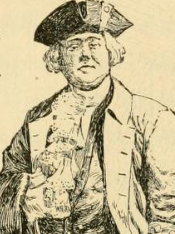
Historical · U.S. House · Georgia · District 3
George Mathews
Former U.S. Representative · Georgia District 3 · 1789–1791
George Mathews represented Georgia's District 3 in the United States House of Representatives (1789–1791). The page below collects sourced biographical facts, term history, committee roles, and provenance for Mathews.
Bioguide ID: M000234
Key facts
- Full name
- George Mathews
- State
- Georgia
- District
- District 3
- Party
- —
- House service
- 1789–1791
- First House term
- 1789
- Status
- Left office
- Current term ends
- —
- Born
- 1739
- Bioguide ID
- M000234
- Committee assignments
- —
- Dataset version
- 1.20260606
Biographical narrative
823 words · sourced from the Wikipedia REST extract
George Mathews was an American soldier and politician who served as a U.S. Representative for Georgia's 3rd congressional district. His political career was marked by significant involvement in both military and civil governance, including service as a governor and a member of the Continental Army during the American Revolutionary War. Mathews' life spanned from August 30, 1739, to August 30, 1812, during which he played a notable role in the early political landscape of the United States.
Early life and career
George Mathews was born in Augusta County, Virginia, in 1739, to Ann Archer and John Mathews, who were among the early Scotch-Irish immigrants to America. His father was a prominent figure in the local community, serving as a militia captain and holding various public offices, which likely influenced George's later involvement in civic affairs. Growing up in a family of eleven children, Mathews was described as dynamic and energetic, traits that would characterize his later endeavors.
Although it is suggested that he may have received some education at the local Augusta Academy, Mathews remained largely illiterate throughout his life. His formative years were spent exploring the wilderness around his father's farm, where he gained firsthand experience with the dangers posed by local Native American tribes. This early exposure to frontier life would shape his character and future military career.
After his father's death, Mathews inherited 300 acres of farmland and, by 1762, partnered with his brother Sampson to establish a mercantile business in Staunton, Virginia. The brothers expanded their operations significantly, acquiring property along the western frontier and establishing trading outposts. Their business involved both the sale of goods and the controversial practice of dealing in forced labor, including convict servants and enslaved Africans. This involvement in the labor trade was a significant aspect of their business, contributing to the economic landscape of the region.
Mathews' civic engagement began early in his career. He was elected to the Augusta Parish vestry in 1763 and served in various local government roles, including high sheriff and justice of the peace. His political career took a notable turn when he was appointed captain of the militia in 1766. Mathews gained wider recognition for his military leadership during the Battle of Point Pleasant in 1774, where he played a crucial role in the conflict between Virginia militia and Native American forces. This battle was significant in the context of colonial expansion and tensions leading up to the American Revolutionary War.
House tenure
George Mathews' political career advanced significantly after the American Revolutionary War. Following his military service, where he achieved the rank of colonel and was later brevetted brigadier general, he transitioned into political life in Georgia. Mathews moved to Georgia after the war and quickly became a prominent figure in the state's governance. His political career in Georgia included two nonconsecutive terms as governor, during which he was involved in significant political decisions, including the ratification of the United States Constitution.
In 1789, Mathews was elected to the 1st United States Congress as a representative for Georgia's 3rd congressional district. His tenure in the House of Representatives marked a critical period in the early formation of the United States government. Although his time in Congress was relatively brief, it was part of a larger trajectory that included significant political developments in the newly formed nation. Mathews' congressional term ended on March 3, 1791, after which he returned to state politics.
Legislative focus and committees
During his time in the House of Representatives, George Mathews was involved in the foundational legislative processes that shaped the early United States. While specific details regarding his legislative initiatives or committee assignments are not documented, it is known that the early Congress was focused on establishing the framework for the new government, addressing issues such as the organization of the executive branch, the establishment of a federal judiciary, and the creation of a Bill of Rights.
Mathews' experience as a military leader and governor likely informed his contributions to discussions surrounding national defense and governance. His background in commerce and trade would have also provided valuable insights into economic policies during a time when the nation was still developing its economic identity.
After his congressional service, Mathews continued to be active in public life, including a controversial role in the Patriot War of East Florida, where he attempted to annex Spanish territory for the United States. This endeavor, however, was met with political disapproval and led to significant debate regarding his actions and the instructions he received from the federal government.
In summary, George Mathews was a significant figure in early American history, with a career that spanned military service and political leadership. His contributions to the governance of Georgia and his role in the U.S. Congress reflect the complexities of the formative years of the United States. His life and career illustrate the interconnectedness of military and political spheres during a pivotal time in American history.
Notable legislation
Sponsored and co-sponsored legislation for George Mathews is pending operator curation. The biographical narrative above carries the same provenance trail until per-bill rows are written.
Sources
- [1]https://en.wikipedia.org/wiki/George_Mathews_(soldier)Wikipedia · retrieved 2026-06-06
Notable quotes
Sourced quotes for George Mathews are pending operator curation. Narrative-scope provenance remains attached below.
Sources
- [1]https://en.wikipedia.org/wiki/George_Mathews_(soldier)Wikipedia · retrieved 2026-06-06
Key positions
Curated policy positions for George Mathews are pending operator review. The biographical narrative above carries the same provenance trail until per-topic positions are written.
Sources
- [1]https://en.wikipedia.org/wiki/George_Mathews_(soldier)Wikipedia · retrieved 2026-06-06
Terms served
- 1789–1791U.S. House · Term 1
Sources & provenance
Every attributable claim above carries a per-section [N] marker that resolves to the corresponding URL below. Each entry records the upstream provider, the canonical URL, and the timestamp at which the source was retrieved by the ingest pipeline.
Key facts
- https://bioguide.congress.gov/search/bio/M000234bioguide · retrieved 2026-06-06
- https://www.govtrack.us/congress/members/407252govtrack · retrieved 2026-06-06
Biographical narrative
- https://en.wikipedia.org/wiki/George_Mathews_(soldier)wikipedia · retrieved 2026-06-06
Find your representative
Every U.S. state elects representatives by district. Browse Georgia’s delegation, the full former-representative roster, or explore the role and term length.
Related on The Candidate
- Succeeded by Francis WillisLater holder of the Georgia District 3 House seat.Open
- Andrew SloanFormer U.S. Representative · Georgia District 1 · RepublicanOpen
- Anthony WayneFormer U.S. Representative · Georgia District 1Open
- Archibald MacIntyreFormer U.S. Representative · Georgia District 1 · DemocraticOpen
- Bo GinnFormer U.S. Representative · Georgia District 1 · DemocraticOpen
- Representatives from GeorgiaEvery former U.S. Representative who has represented Georgia.Open