
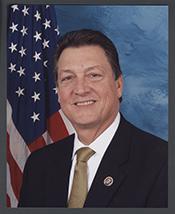
Historical · U.S. House · Georgia · District 3
Lynn Westmoreland
Former U.S. Representative · Georgia District 3 · 2005–2017 · Republican
Lynn Westmoreland represented Georgia's District 3 in the United States House of Representatives (2005–2017) for the Republican party. The page below collects sourced biographical facts, term history, committee roles, and provenance for Westmoreland.
Bioguide ID: W000796
Key facts
- Full name
- Lynn Westmoreland
- State
- Georgia
- District
- District 3
- Party
- Republican
- House service
- 2005–2017
- First House term
- 2005
- Status
- Left office
- Current term ends
- —
- Born
- 1950
- Bioguide ID
- W000796
- Committee assignments
- —
- Dataset version
- 1.20260605
Biographical narrative
950 words · sourced from the Wikipedia REST extract
Lynn A. Westmoreland is a former American politician who served as a U.S. Representative for Georgia's 3rd congressional district from 2007 until 2017, and previously represented the 8th district from 2005 to 2007. A member of the Republican Party, Westmoreland's political career spans over two decades, during which he held various leadership roles and participated in numerous legislative initiatives. His tenure in the U.S. House of Representatives was marked by a focus on conservative principles and a commitment to issues such as small business support and election law reform.
Early life and career
Lynn A. Westmoreland was born on April 2, 1950, in Atlanta, Georgia. He is the son of Margaret Ferrell and Leon Acton Westmoreland. Growing up in the metropolitan Atlanta area, Westmoreland completed his high school education but did not pursue a college degree. He attended Georgia State University for a brief period before leaving to join the family construction business, where he eventually rose to an executive position.
Westmoreland's political career began in the Georgia House of Representatives, where he served from 1993 until 2005. During this time, he gained recognition for his leadership abilities and was elected as the House Republican Leader in 2001. In this capacity, he was involved in significant legislative battles, particularly during the redistricting process in 2001, which was dominated by the Democratic majority. Westmoreland initially opposed partisan gerrymandering but later played a crucial role in the mid-decade redistricting that occurred in 2005 after Republicans regained control of the Georgia legislature in the 2004 elections. His decision to support the redistricting efforts reflected a strategic shift as he prepared to transition to a national political role.
In late 2003, Westmoreland announced his candidacy for the U.S. House of Representatives, which led to his election in 2005. He continued to serve in the Georgia House until he officially took office in Washington, D.C.
House tenure
Westmoreland's tenure in the U.S. House of Representatives began in January 2005, when he was elected to represent Georgia's 8th congressional district. He served in this capacity until 2007, when he was redistricted into the 3rd congressional district, which he represented until the conclusion of his term in January 2017. Over the course of his six terms in office, Westmoreland was appointed to several key committees, including the U.S. House Committee on Small Business, the U.S. House Committee on Government Reform, and the U.S. House Committee on Transportation and Infrastructure.
In January 2015, following a reorganization of the House Intelligence Committee, Westmoreland was appointed as the first chairman of a newly established subcommittee focused on Cybersecurity and the National Security Agency. His involvement in this committee highlighted his interest in national security issues and the importance of cybersecurity in the modern legislative landscape.
Throughout his congressional career, Westmoreland was known for his conservative stance on various issues. He was a co-sponsor of legislation aimed at displaying the Ten Commandments in both the House of Representatives and the Senate, as well as in courthouses under specific historical contexts. His commitment to conservative values was reflected in his voting record and public statements, which often aligned with the positions of the Republican Party.
In 2008, Westmoreland ran unopposed in the Republican primary and subsequently defeated his Democratic opponent in the general election. Following this victory, he briefly considered a run for the office of Governor of Georgia in 2010 but ultimately decided against it. During this period, he also signed a pledge from Americans for Prosperity, committing to oppose any legislation related to global warming that would result in tax increases.
Westmoreland's ideological alignment was consistently noted throughout his congressional career. According to GovTrack, he was ranked as one of the most conservative members of the House of Representatives during both the 112th and 114th Congresses. His conservative ideology was a defining characteristic of his legislative approach and interactions with colleagues.
Legislative focus and committees
During his time in Congress, Westmoreland sponsored and co-sponsored a variety of bills that reflected his legislative priorities. Notable among these was H.R. 3229, which aimed to mint $1 infantry coins to support the National Infantry Museum, successfully signed into law in 2008. He also introduced legislation to increase campaign contribution limits for political action committees and proposed standards for energy consumption in commercial refrigerators.
Westmoreland's legislative efforts extended to health care, where he introduced H.R. 3985, a bill aimed at prohibiting certain payments under the Patient Protection and Affordable Care Act, as well as H.R. 4604, which sought to allow consumers to opt out of having their personal information collected by the Consumer Financial Protection Bureau.
In addition to his legislative initiatives, Westmoreland served on several important committees, including the Committee on Financial Services, where he was involved in subcommittees focused on financial institutions and consumer credit, as well as insurance and housing. He was also a member of the Permanent Select Committee on Intelligence and participated in the House Select Committee investigating the events surrounding the 2012 terrorist attack in Benghazi. His involvement in these committees underscored his engagement with both domestic and national security issues.
Westmoreland's congressional career was not without controversy. In 2008, he faced criticism for remarks he made regarding then-Democratic presidential nominee Barack Obama and his wife, which were perceived as racially charged. The media attention surrounding these comments led to public scrutiny and necessitated a response from Westmoreland.
Lynn A. Westmoreland's career in the U.S. House of Representatives was characterized by a commitment to conservative principles, active participation in legislative processes, and a focus on issues relevant to his constituents in Georgia. After serving six terms, he concluded his tenure in January 2017, leaving behind a legacy shaped by his political ideology and legislative contributions.
Notable legislation
Sponsored and co-sponsored legislation for Lynn Westmoreland is pending operator curation. The biographical narrative above carries the same provenance trail until per-bill rows are written.
Sources
- [1]https://en.wikipedia.org/wiki/Lynn_WestmorelandWikipedia · retrieved 2026-06-05
Notable quotes
Sourced quotes for Lynn Westmoreland are pending operator curation. Narrative-scope provenance remains attached below.
Sources
- [1]https://en.wikipedia.org/wiki/Lynn_WestmorelandWikipedia · retrieved 2026-06-05
Key positions
Curated policy positions for Lynn Westmoreland are pending operator review. The biographical narrative above carries the same provenance trail until per-topic positions are written.
Sources
- [1]https://en.wikipedia.org/wiki/Lynn_WestmorelandWikipedia · retrieved 2026-06-05
Terms served
- 2005–2007U.S. House · Term 1 · Republican
- 2007–2009U.S. House · Term 2 · Republican
- 2009–2011U.S. House · Term 3 · Republican
- 2011–2013U.S. House · Term 4 · Republican
- 2013–2015U.S. House · Term 5 · Republican
- 2015–2017U.S. House · Term 6 · Republican
Sources & provenance
Every attributable claim above carries a per-section [N] marker that resolves to the corresponding URL below. Each entry records the upstream provider, the canonical URL, and the timestamp at which the source was retrieved by the ingest pipeline.
Key facts
- https://bioguide.congress.gov/search/bio/W000796bioguide · retrieved 2026-06-05
- http://westmoreland.house.govhouse.gov · retrieved 2026-06-05
Biographical narrative
- https://en.wikipedia.org/wiki/Lynn_Westmorelandwikipedia · retrieved 2026-06-05
Find your representative
Every U.S. state elects representatives by district. Browse Georgia’s delegation, the full former-representative roster, or explore the role and term length.
Related on The Candidate
- Preceded by Richard RayEarlier holder of the Georgia District 3 House seat · Democratic.Open
- Succeeded by A. Ferguson IVLater holder of the Georgia District 3 House seat · Republican.Open
- Andrew SloanFormer U.S. Representative · Georgia District 1 · RepublicanOpen
- Anthony WayneFormer U.S. Representative · Georgia District 1Open
- Archibald MacIntyreFormer U.S. Representative · Georgia District 1 · DemocraticOpen
- Bo GinnFormer U.S. Representative · Georgia District 1 · DemocraticOpen