
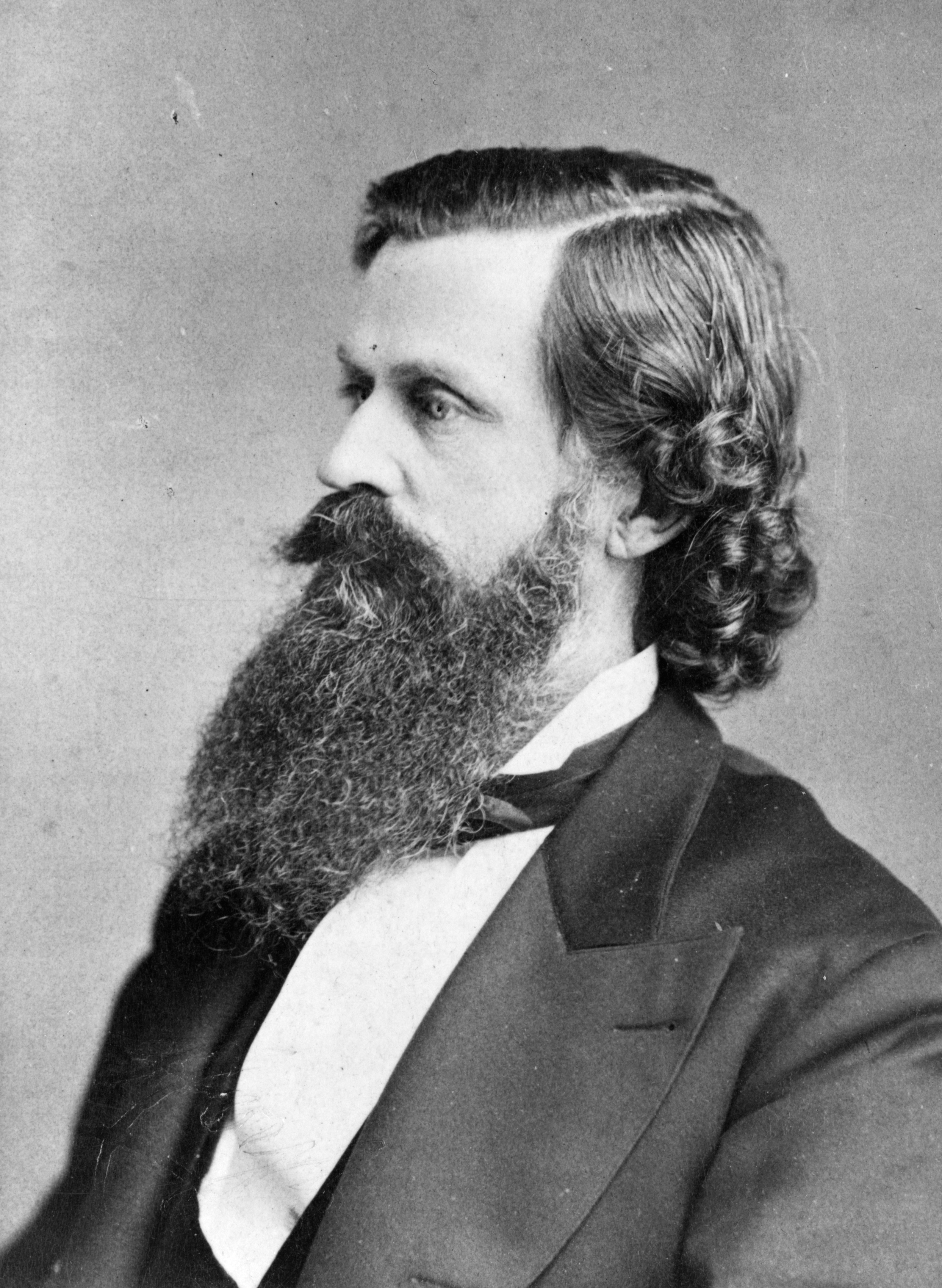
Historical · U.S. House · Georgia · District 4
Henry Harris
Former U.S. Representative · Georgia District 4 · 1873–1887 · Democratic
Henry Harris represented Georgia's District 4 in the United States House of Representatives (1873–1887) for the Democratic party. The page below collects sourced biographical facts, term history, committee roles, and provenance for Harris.
Bioguide ID: H000239
Key facts
- Full name
- Henry Harris
- State
- Georgia
- District
- District 4
- Party
- Democratic
- House service
- 1873–1887
- First House term
- 1873
- Status
- Left office
- Current term ends
- —
- Born
- 1828
- Bioguide ID
- H000239
- Committee assignments
- —
- Dataset version
- 1.20260606
Biographical narrative
1,023 words · sourced from the Wikipedia REST extract
Henry Harris was a U.S. Representative from Georgia who served in the House of Representatives during the late 19th century. A member of the Democratic Party, he represented Georgia's 4th congressional district across four terms. His political career spanned from 1873 to 1887, during which he participated in significant legislative activities and contributed to the political landscape of his time. In addition to his congressional service, Harris held various roles, including a position in the U.S. Postal Service under President Cleveland. His life and career reflect the complexities of American politics during the Reconstruction era and the post-Civil War period.
Early life and career
Henry Richard Harris was born on February 2, 1828, in Sparta, Georgia. His early years were spent in the small town of Greenville, Georgia, where his family relocated in 1833. This transition marked the beginning of his formative years in a community that would later play a significant role in his life and career. Harris pursued his education at an academy in Mount Zion, Georgia, which provided him with a foundation for his future endeavors. He furthered his studies at Emory College in Oxford, Georgia, graduating in 1847. This academic background equipped him with the knowledge and skills that would later inform his political career.
Harris's involvement in public service began early in his life. He participated in the State constitutional convention in 1861, a critical moment in Georgia's history as the state grappled with issues surrounding secession and the Civil War. His commitment to the Confederate cause led him to serve as a colonel in the Confederate States Army during the Civil War. This military experience not only shaped his views but also positioned him as a prominent figure in his community, as many former soldiers returned to civilian life seeking leadership roles.
After the war, Harris transitioned into a career in agriculture, which was a common path for many individuals in the South during the Reconstruction era. He engaged in farming and other agricultural pursuits, contributing to the local economy and establishing himself as a respected member of the community. His background in agriculture would later influence his legislative priorities and the issues he championed during his time in Congress.
House tenure
Harris's political career in the U.S. House of Representatives began when he was elected as a Democrat to the Forty-third Congress, which convened on March 4, 1873. He successfully secured re-election for the Forty-fourth and Forty-fifth Congresses, serving in total for six years in these three consecutive terms until March 3, 1879. His tenure in the House was marked by a period of significant political change in the United States, particularly in the South, as the nation sought to rebuild and redefine itself after the Civil War.
During his time in Congress, Harris was involved in various legislative activities that reflected the interests and concerns of his constituents in Georgia. However, his political career faced challenges, as he was not successful in his bid for re-election to the Forty-sixth Congress in 1878. This setback did not deter him from public service, as he returned to Congress when he was elected to the Forty-ninth Congress, serving from March 4, 1885, until March 3, 1887. His return to the House demonstrated his continued relevance in Georgia politics and his ability to connect with voters.
After completing his final term in Congress, Harris chose not to seek renomination in 1886. This decision marked the end of his legislative career, but it did not signify a retreat from public service. Instead, he was appointed by President Grover Cleveland as the Third Assistant Postmaster General of the United States, a position he held from April 1, 1887, to March 18, 1889. This role allowed him to remain engaged in federal service and contribute to the administration of postal services during a time of significant growth and change in the United States.
Legislative focus and committees
Throughout his congressional career, Harris's legislative focus was shaped by his background and the needs of his constituents. As a representative from Georgia, he was particularly attuned to the agricultural interests of his district. The post-Civil War South was undergoing significant economic transformation, and Harris's experience as a farmer likely influenced his advocacy for policies that supported agricultural development and rural communities.
While specific details about the bills he sponsored or the committees he served on are not provided, it is reasonable to infer that his legislative priorities would have included issues pertinent to the agricultural sector, land use, and economic recovery efforts in the South. The Reconstruction era was characterized by efforts to rebuild the Southern economy, and Harris's background as a soldier and farmer positioned him to address the challenges faced by his constituents during this tumultuous period.
Harris's tenure in Congress coincided with a time of significant political realignment in the United States. The Democratic Party, which he represented, was working to regain influence in the South after the Civil War and the subsequent Reconstruction policies imposed by the federal government. His role as a member of the House of Representatives placed him at the center of these efforts, allowing him to advocate for the interests of his district and contribute to the broader Democratic agenda.
After leaving Congress, Harris continued to engage in public service and community affairs. His appointment as Third Assistant Postmaster General is indicative of his ongoing commitment to serving the public and contributing to the governance of the nation. Following his departure from this role, he returned to his agricultural pursuits, remaining active in the community until his death on October 15, 1909, in Odessadale, Georgia. He was interred in Greenville Cemetery, a testament to his lifelong connection to the area.
Harris's legacy is also reflected in the community of Harris City, Georgia, which was founded by and named after his family. This naming underscores the impact he had on his region and the enduring recognition of his contributions to local history. His life and career encapsulate the complexities of American politics during a transformative period, highlighting the intersections of military service, agriculture, and public service in shaping the trajectory of a representative's career.
Notable legislation
Sponsored and co-sponsored legislation for Henry Harris is pending operator curation. The biographical narrative above carries the same provenance trail until per-bill rows are written.
Sources
- [1]https://en.wikipedia.org/wiki/Henry_R._HarrisWikipedia · retrieved 2026-06-06
Notable quotes
Sourced quotes for Henry Harris are pending operator curation. Narrative-scope provenance remains attached below.
Sources
- [1]https://en.wikipedia.org/wiki/Henry_R._HarrisWikipedia · retrieved 2026-06-06
Key positions
Curated policy positions for Henry Harris are pending operator review. The biographical narrative above carries the same provenance trail until per-topic positions are written.
Sources
- [1]https://en.wikipedia.org/wiki/Henry_R._HarrisWikipedia · retrieved 2026-06-06
Terms served
- 1873–1875U.S. House · Term 1 · Democratic
- 1875–1877U.S. House · Term 2 · Democratic
- 1877–1879U.S. House · Term 3 · Democratic
- 1885–1887U.S. House · Term 4 · Democratic
Sources & provenance
Every attributable claim above carries a per-section [N] marker that resolves to the corresponding URL below. Each entry records the upstream provider, the canonical URL, and the timestamp at which the source was retrieved by the ingest pipeline.
Key facts
- https://bioguide.congress.gov/search/bio/H000239bioguide · retrieved 2026-06-06
- https://www.govtrack.us/congress/members/405117govtrack · retrieved 2026-06-06
Biographical narrative
- https://en.wikipedia.org/wiki/Henry_R._Harriswikipedia · retrieved 2026-06-06
Find your representative
Every U.S. state elects representatives by district. Browse Georgia’s delegation, the full former-representative roster, or explore the role and term length.
Related on The Candidate
- Preceded by Erasmus BeckEarlier holder of the Georgia District 4 House seat · Democratic.Open
- Succeeded by Thomas GrimesLater holder of the Georgia District 4 House seat · Democratic.Open
- Andrew SloanFormer U.S. Representative · Georgia District 1 · RepublicanOpen
- Anthony WayneFormer U.S. Representative · Georgia District 1Open
- Archibald MacIntyreFormer U.S. Representative · Georgia District 1 · DemocraticOpen
- Bo GinnFormer U.S. Representative · Georgia District 1 · DemocraticOpen