
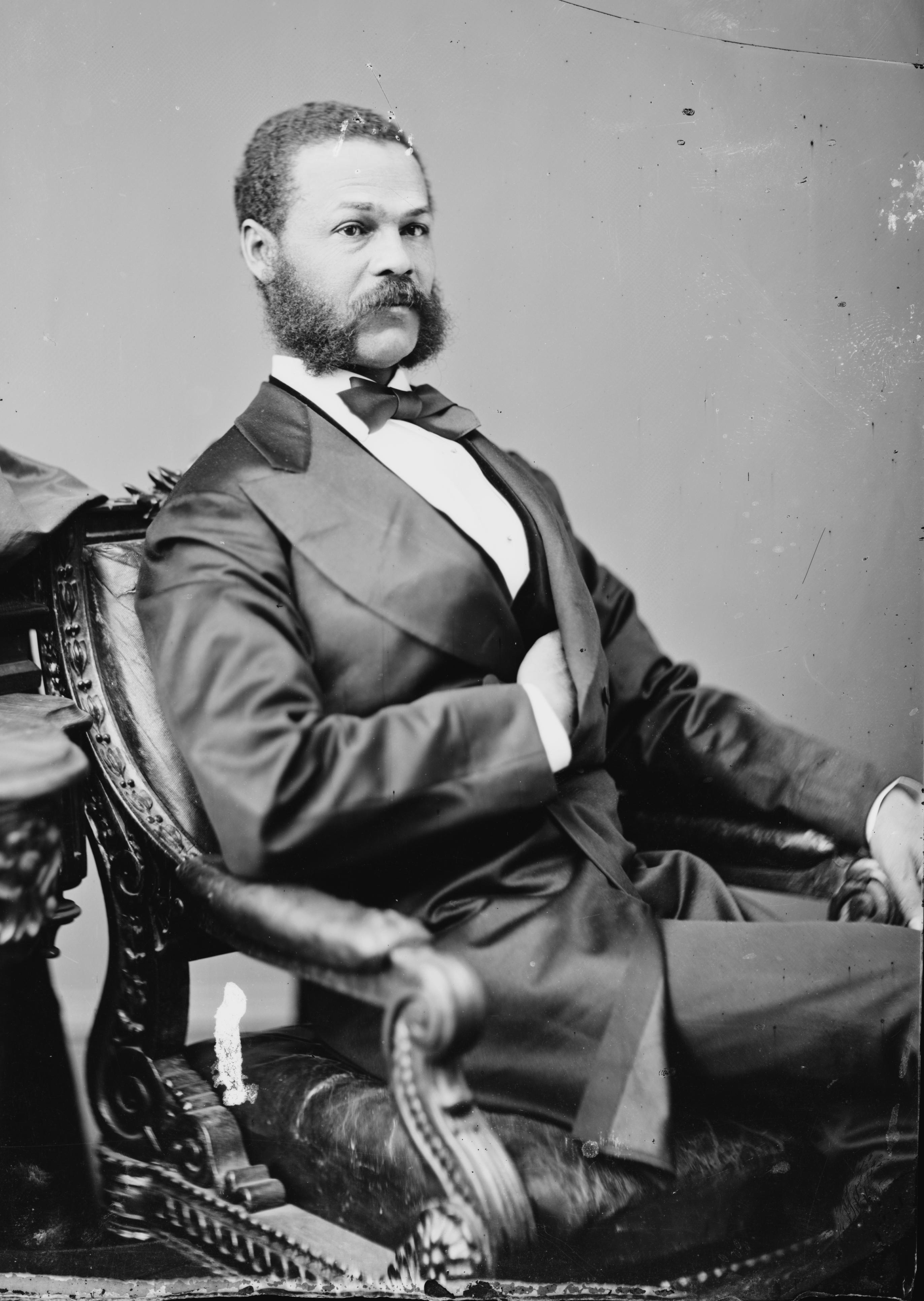
Historical · U.S. House · Georgia · District 4
Jefferson Long
Former U.S. Representative · Georgia District 4 · 1869–1871 · Republican
Jefferson Long represented Georgia's District 4 in the United States House of Representatives (1869–1871) for the Republican party. The page below collects sourced biographical facts, term history, committee roles, and provenance for Long.
Bioguide ID: L000419
Key facts
- Full name
- Jefferson Long
- State
- Georgia
- District
- District 4
- Party
- Republican
- House service
- 1869–1871
- First House term
- 1869
- Status
- Left office
- Current term ends
- —
- Born
- 1836
- Bioguide ID
- L000419
- Committee assignments
- —
- Dataset version
- 1.20260606
Biographical narrative
857 words · sourced from the Wikipedia REST extract
Jefferson Long was a significant figure in American history, serving as a U.S. Representative for Georgia's 4th congressional district from 1869 to 1871. He holds the distinction of being the second African American to be sworn into the U.S. House of Representatives and the first African American congressman from Georgia. Long's tenure in Congress was marked by his vocal opposition to measures that he believed undermined the rights of African Americans and the integrity of the Reconstruction efforts following the Civil War. His contributions to the political landscape of his time remain notable, particularly as he was the only African American to represent Georgia until the election of Andrew Young in 1972.
Early life and career
Jefferson Franklin Long was born on March 3, 1836, in Crawford County, Georgia, into a complex social structure as the son of an enslaved mother and a white father. His early life was shaped by the institution of slavery, which imposed significant limitations on his opportunities. Despite these challenges, Long demonstrated a strong desire for education and self-improvement. He taught himself to read and write, an act that was illegal for enslaved individuals at the time. This pursuit of knowledge was facilitated by his work as a typesetter for a newspaper in Macon, Georgia, where he gained valuable skills that would later aid his professional endeavors.
By 1860, Long had married Lucinda Carhart and started a family, establishing himself as a community member in Macon. The end of the American Civil War in 1865 marked a turning point in his life, as he was emancipated and subsequently became a successful merchant tailor. His business acumen and leadership qualities allowed him to thrive in the post-war economy, and he became a prominent figure in the local Republican Party by 1867. Long's involvement in politics was part of a broader movement during Reconstruction, as African Americans sought to assert their rights and participate in the governance of their communities.
House tenure
Long's congressional career began when he was elected to the Forty-first Congress, representing Georgia's 4th district. His term commenced on January 16, 1870, and concluded on March 3, 1871. During this period, Georgia was experiencing significant political upheaval, having been without congressional representation from March 1869 until December 1870 due to the state's failure to ratify the Fifteenth Amendment, which aimed to secure voting rights for African American men.
As a member of the House, Long made history by becoming the first African American Representative to speak on the floor. He is particularly remembered for his opposition to the Amnesty Bill, which sought to relieve former Confederates of their political disabilities. Long's speech articulated his concerns about the implications of such a measure, emphasizing the ongoing struggles faced by loyal citizens and the potential resurgence of disloyalty among those who had previously engaged in acts of violence against the government. His stance reflected the broader tensions of the Reconstruction era, as African Americans and their allies fought to secure their rights in the face of resistance from former Confederates and their sympathizers.
Despite his impactful tenure, Long did not seek re-election in 1870, largely due to the anti-Reconstruction efforts that were gaining momentum within the white-majority Georgia Republican Party. After leaving Congress, he remained active in political circles, serving as a delegate to the Republican National Convention from 1872 to 1880. His involvement in these conventions underscored his commitment to the Republican Party and the principles of Reconstruction, even as the political landscape shifted against African American participation.
Legislative focus and committees
During his time in the House of Representatives, Jefferson Long's legislative focus was primarily centered on issues pertinent to the African American community and the broader goals of Reconstruction. His opposition to the Amnesty Bill highlighted his commitment to ensuring that the rights of African Americans were not compromised in the political negotiations of the time. Long's advocacy for civil rights and his efforts to represent the interests of his constituents were significant aspects of his congressional legacy.
While specific details regarding the committees Long served on during his time in office are not documented, his role as a congressman during a critical period in American history positioned him to influence discussions related to civil rights, economic development, and social justice. His contributions were part of a larger narrative of African American political engagement during Reconstruction, a time when many African Americans sought to shape the future of their communities and the nation.
After his congressional term ended, Long returned to his tailoring business in Macon, where he continued to work alongside one of his sons. His post-congressional life reflected a dedication to his family and community, even as he navigated the challenges of a society still grappling with the legacies of slavery and segregation.
Jefferson Long passed away from influenza on February 4, 1901. He was interred at Linwood Cemetery in Macon, Georgia. His life and career remain a testament to the resilience and determination of African Americans during a pivotal era in U.S. history, and his legacy continues to be recognized as part of the ongoing struggle for civil rights and representation in American politics.
Notable legislation
Sponsored and co-sponsored legislation for Jefferson Long is pending operator curation. The biographical narrative above carries the same provenance trail until per-bill rows are written.
Sources
- [1]https://en.wikipedia.org/wiki/Jefferson_F._LongWikipedia · retrieved 2026-06-06
Notable quotes
Sourced quotes for Jefferson Long are pending operator curation. Narrative-scope provenance remains attached below.
Sources
- [1]https://en.wikipedia.org/wiki/Jefferson_F._LongWikipedia · retrieved 2026-06-06
Key positions
Curated policy positions for Jefferson Long are pending operator review. The biographical narrative above carries the same provenance trail until per-topic positions are written.
Sources
- [1]https://en.wikipedia.org/wiki/Jefferson_F._LongWikipedia · retrieved 2026-06-06
Terms served
- 1869–1871U.S. House · Term 1 · Republican
Sources & provenance
Every attributable claim above carries a per-section [N] marker that resolves to the corresponding URL below. Each entry records the upstream provider, the canonical URL, and the timestamp at which the source was retrieved by the ingest pipeline.
Key facts
- https://bioguide.congress.gov/search/bio/L000419bioguide · retrieved 2026-06-06
- https://www.govtrack.us/congress/members/406910govtrack · retrieved 2026-06-06
Biographical narrative
- https://en.wikipedia.org/wiki/Jefferson_F._Longwikipedia · retrieved 2026-06-06
Find your representative
Every U.S. state elects representatives by district. Browse Georgia’s delegation, the full former-representative roster, or explore the role and term length.
Related on The Candidate
- Preceded by Lucius GartrellEarlier holder of the Georgia District 4 House seat · Democratic.Open
- Succeeded by Erasmus BeckLater holder of the Georgia District 4 House seat · Democratic.Open
- Andrew SloanFormer U.S. Representative · Georgia District 1 · RepublicanOpen
- Anthony WayneFormer U.S. Representative · Georgia District 1Open
- Archibald MacIntyreFormer U.S. Representative · Georgia District 1 · DemocraticOpen
- Bo GinnFormer U.S. Representative · Georgia District 1 · DemocraticOpen