
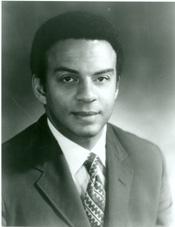
Historical · U.S. House · Georgia · District 5
Andrew Young Jr.
Former U.S. Representative · Georgia District 5 · 1973–1979 · Democratic
Andrew Young Jr. represented Georgia's District 5 in the United States House of Representatives (1973–1979) for the Democratic party. The page below collects sourced biographical facts, term history, committee roles, and provenance for Jr..
Bioguide ID: Y000028
Key facts
- Full name
- Andrew Young Jr.
- State
- Georgia
- District
- District 5
- Party
- Democratic
- House service
- 1973–1979
- First House term
- 1973
- Status
- Left office
- Current term ends
- —
- Born
- 1932
- Bioguide ID
- Y000028
- Committee assignments
- —
- Dataset version
- 1.20260605
Biographical narrative
1,016 words · sourced from the Wikipedia REST extract
Andrew Young is a notable American politician, diplomat, and civil rights activist who served as a U.S. Representative for Georgia's 5th congressional district from 1973 until 1979. A member of the Democratic Party, Young was a prominent figure in the civil rights movement, having worked closely with Martin Luther King Jr. and served as the executive director of the Southern Christian Leadership Conference (SCLC). Following his congressional tenure, he was appointed as the United States Ambassador to the United Nations by President Jimmy Carter, becoming the first African American to hold this position. Young's career has been marked by his commitment to social justice, public policy, and political advocacy.
Early life and career
Andrew Young was born on March 12, 1932, in New Orleans, Louisiana. He was raised in a household that valued education and community service; his mother, Daisy Young, was a schoolteacher, while his father, Andrew Jackson Young, was a dentist. Growing up in a relatively affluent environment, Young experienced the complexities of segregation firsthand. His father took proactive measures to ensure that Young and his brother could defend themselves, hiring a professional boxer for training. Young's upbringing instilled in him a strong sense of social responsibility, which would later influence his career choices.
Young's educational journey began at Dillard University, where he studied for one year before transferring to Howard University, where he completed his undergraduate degree. He later earned a divinity degree from Hartford Seminary in Connecticut in 1955. During his time in college, he became a member of the Alpha Phi Alpha fraternity, which further connected him to a network of leaders in the African American community.
After completing his education, Young began his career as a pastor. His first appointment was in Marion, Alabama, where he met Jean Childs, who would later become his wife. It was during this time that Young became deeply involved in the civil rights movement, inspired by Mahatma Gandhi's philosophy of nonviolent resistance. He actively encouraged African Americans to register to vote, often facing threats to his safety as he worked to empower the community.
In 1955, Young accepted a position at Bethany Congregational Church in Thomasville, Georgia. By 1957, he had moved to New York City to work with the Youth Division of the National Council of Churches. His efforts included outreach programs aimed at engaging secular youth, and he became a familiar face on the CBS program "Look Up and Live." Young continued his pastoral work in Georgia, serving at the Evergreen Congregational Church from 1957 to 1959.
In 1960, Young joined the Southern Christian Leadership Conference, which was pivotal in the civil rights movement. He relocated to Atlanta in 1961 and became involved in voter registration efforts. His mediation skills were instrumental during the 1963 Birmingham protests, where he worked to facilitate dialogue between conflicting communities. Young's leadership in the civil rights movement culminated in his appointment as the executive director of the SCLC in 1964, where he collaborated closely with Martin Luther King Jr. on various campaigns, including those in Birmingham, St. Augustine, Selma, and Atlanta. His activism led to his arrest during protests, contributing to the eventual passage of landmark legislation such as the Civil Rights Act of 1964 and the Voting Rights Act of 1965.
House tenure
Andrew Young's political career in the U.S. House of Representatives began when he ran for the 5th District seat in Georgia as a Democrat in 1970, although he was not successful in that initial attempt. After regrouping and receiving support from influential figures, he ran again in 1972 and won the election. Young was re-elected in 1974 and 1976, serving a total of three terms in Congress until his departure in January 1979.
During his time in the House, Young was a member of the Congressional Black Caucus, where he played a significant role in advocating for issues affecting African Americans and marginalized communities. His legislative efforts included involvement in debates surrounding foreign policy, particularly regarding U.S. support for Portuguese colonial efforts in southern Africa. Young's positions often reflected his commitment to social justice and international human rights.
In Congress, Young served on several influential committees, including the Rules Committee and the Banking and Urban Development Committee. His legislative accomplishments included opposing the Vietnam War and advocating for the establishment of the U.S. Institute for Peace. He also worked to secure federal funding for local initiatives, such as the Metropolitan Atlanta Rapid Transit Authority (MARTA) and the development of the Chattahoochee River National Recreation Area.
Legislative focus and committees
Throughout his congressional tenure, Andrew Young focused on a range of issues that reflected his background in civil rights and community activism. His work was characterized by a commitment to social equity, urban development, and international diplomacy. Young's involvement in the Congressional Black Caucus allowed him to collaborate with other African American lawmakers to address systemic inequalities and advocate for policies that would benefit underrepresented populations.
Young's opposition to the Vietnam War was a significant aspect of his legislative agenda. He sought to redirect U.S. foreign policy towards more peaceful resolutions and advocated for the establishment of the U.S. Institute for Peace, which aimed to promote conflict resolution and prevent war. His efforts in this area were part of a broader critique of American military involvement abroad, emphasizing the need for diplomacy and dialogue.
In addition to his focus on foreign relations, Young was active in urban development issues. He worked to secure funding for transportation infrastructure in Atlanta, recognizing the importance of efficient public transit systems in urban areas. His initiatives included negotiating federal funds for MARTA, which has become a vital component of Atlanta's public transportation network.
Young's tenure in Congress was marked by a dedication to advancing civil rights and social justice, both domestically and internationally. His legislative work laid the groundwork for future efforts to address inequality and promote human rights, reflecting the values he championed throughout his career. After leaving Congress in 1979, Young continued to influence public policy and advocacy, further solidifying his legacy as a prominent figure in American politics and civil rights.
Notable legislation
Sponsored and co-sponsored legislation for Andrew Young Jr. is pending operator curation. The biographical narrative above carries the same provenance trail until per-bill rows are written.
Sources
- [1]https://en.wikipedia.org/wiki/Andrew_YoungWikipedia · retrieved 2026-06-05
Notable quotes
Sourced quotes for Andrew Young Jr. are pending operator curation. Narrative-scope provenance remains attached below.
Sources
- [1]https://en.wikipedia.org/wiki/Andrew_YoungWikipedia · retrieved 2026-06-05
Key positions
Curated policy positions for Andrew Young Jr. are pending operator review. The biographical narrative above carries the same provenance trail until per-topic positions are written.
Sources
- [1]https://en.wikipedia.org/wiki/Andrew_YoungWikipedia · retrieved 2026-06-05
Terms served
- 1973–1975U.S. House · Term 1 · Democratic
- 1975–1977U.S. House · Term 2 · Democratic
- 1977–1979U.S. House · Term 3 · Democratic
Sources & provenance
Every attributable claim above carries a per-section [N] marker that resolves to the corresponding URL below. Each entry records the upstream provider, the canonical URL, and the timestamp at which the source was retrieved by the ingest pipeline.
Key facts
- https://bioguide.congress.gov/search/bio/Y000028bioguide · retrieved 2026-06-05
- https://www.govtrack.us/congress/members/411962govtrack · retrieved 2026-06-05
Biographical narrative
- https://en.wikipedia.org/wiki/Andrew_Youngwikipedia · retrieved 2026-06-05
Find your representative
Every U.S. state elects representatives by district. Browse Georgia’s delegation, the full former-representative roster, or explore the role and term length.
Related on The Candidate
- Preceded by Standish ThompsonEarlier holder of the Georgia District 5 House seat · Republican.Open
- Succeeded by John LewisLater holder of the Georgia District 5 House seat · Democratic.Open
- Andrew SloanFormer U.S. Representative · Georgia District 1 · RepublicanOpen
- Anthony WayneFormer U.S. Representative · Georgia District 1Open
- Archibald MacIntyreFormer U.S. Representative · Georgia District 1 · DemocraticOpen
- Bo GinnFormer U.S. Representative · Georgia District 1 · DemocraticOpen