
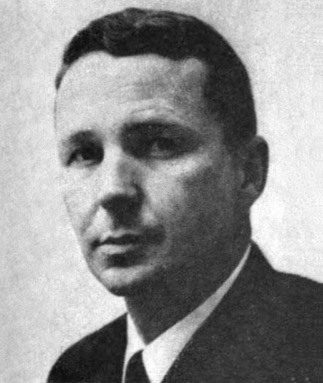
Historical · U.S. House · Georgia · District 5
Charles Weltner
Former U.S. Representative · Georgia District 5 · 1963–1967 · Democratic
Charles Weltner represented Georgia's District 5 in the United States House of Representatives (1963–1967) for the Democratic party. The page below collects sourced biographical facts, term history, committee roles, and provenance for Weltner.
Bioguide ID: W000290
Key facts
- Full name
- Charles Weltner
- State
- Georgia
- District
- District 5
- Party
- Democratic
- House service
- 1963–1967
- First House term
- 1963
- Status
- Left office
- Current term ends
- —
- Born
- 1927
- Bioguide ID
- W000290
- Committee assignments
- —
- Dataset version
- 1.20260605
Biographical narrative
902 words · sourced from the Wikipedia REST extract
Charles Weltner was an American jurist and politician who served as a Democratic U.S. Representative for Georgia's 5th congressional district from 1963 to 1967. Known for his liberal stance on civil rights and education, Weltner's political career was marked by his commitment to social justice and his principled stands against segregationist policies. After leaving Congress, he continued his public service as a judge and later as an associate justice of the Supreme Court of Georgia.
Early life and career
Charles Longstreet Weltner was born on December 17, 1927, in Atlanta, Georgia. He pursued higher education at Oglethorpe University, where he earned a bachelor's degree in 1948. Following his undergraduate studies, Weltner attended Columbia Law School in New York City, graduating with a law degree in 1950. His education laid the foundation for a career in law and public service.
Weltner served in the United States Army for two years, which contributed to his understanding of civic duty and governance. After his military service, he returned to Atlanta, where he practiced law. During this time, he became actively involved in significant social issues, particularly opposing Georgia's county-unit system, which was a method of voting that disproportionately favored rural areas over urban centers. He also worked to protect the public school system during a period when state leaders threatened to close schools in response to integration efforts.
Weltner's early activism set the stage for his entry into politics. His commitment to civil rights and educational equity resonated with constituents, leading to his election to the U.S. House of Representatives.
House tenure
In 1962, Charles Weltner was elected to represent Georgia's 5th congressional district in the U.S. House of Representatives. He ran as a Democrat against Republican candidate Leland James O'Callaghan, securing a victory with a margin of approximately 11.2%. Weltner's election came during a tumultuous period in American history, characterized by the civil rights movement and significant social change.
Weltner was re-elected in 1964, again defeating O'Callaghan, this time by a narrower margin. His tenure in Congress lasted until January 3, 1967, during which he served two full terms. Throughout his time in office, he was known for his progressive views and willingness to take a stand on controversial issues, particularly those related to civil rights.
One notable aspect of Weltner's congressional career was his response to the 1963 bombing of the 16th Street Baptist Church in Birmingham, Alabama, which resulted in the deaths of four young girls. He was one of only two Southern members of Congress to publicly condemn the act of violence, reflecting his commitment to civil rights and social justice. Additionally, he was among the few members of Georgia's congressional delegation to support the Voting Rights Act of 1965, emphasizing the importance of protecting the voting rights of all citizens.
Despite his progressive stance on civil rights, Weltner's voting record was complex. He initially voted against the Civil Rights Act of 1964, aligning with many of his Southern colleagues. However, he later supported the final version of the legislation that included amendments from the Senate. This shift illustrated the evolving political landscape of the time and Weltner's own journey toward a more consistent commitment to civil rights.
Weltner's political career faced challenges, particularly in 1966 when he chose not to seek re-election. The state Democratic Party required him to sign a loyalty oath that would have obligated him to support Lester Maddox, a staunch segregationist running for governor. Weltner refused to compromise his principles, stating that he would rather leave Congress than abandon his values. His decision was met with mixed reactions, with some praising his courage while others criticized his choice as politically unwise.
Legislative focus and committees
During his time in the House, Charles Weltner focused on several key issues, with a strong emphasis on civil rights, education, and social justice. His legislative priorities reflected the broader struggles of the 1960s, as the nation grappled with issues of racial equality and access to education.
Weltner was particularly active in supporting measures aimed at dismantling segregation and promoting equal rights. His vote for the Voting Rights Act of 1965 was a significant moment in his legislative career, as it represented a commitment to ensuring that all citizens, regardless of race, had the right to participate in the democratic process. This act was a cornerstone of the civil rights movement and marked a pivotal shift in American law and society.
In addition to his civil rights advocacy, Weltner was also concerned with educational issues. He supported initiatives aimed at preserving public education and ensuring that schools remained open and accessible to all students, particularly in the context of integration. His legal background informed his approach to these issues, as he understood the implications of legal decisions on the lives of individuals and communities.
Weltner's involvement in Congress was not limited to civil rights; he also participated in various committees that addressed a range of legislative matters. His work contributed to discussions on policies that affected the lives of his constituents and the broader American public. His commitment to social justice and equality remained central to his legislative agenda throughout his time in office.
After leaving Congress, Weltner continued to serve the public in various capacities, including a judicial career that spanned several decades. His legacy as a politician and jurist is marked by his dedication to principles of justice and equality, which he upheld throughout his life.
Notable legislation
Sponsored and co-sponsored legislation for Charles Weltner is pending operator curation. The biographical narrative above carries the same provenance trail until per-bill rows are written.
Sources
- [1]https://en.wikipedia.org/wiki/Charles_L._WeltnerWikipedia · retrieved 2026-06-05
Notable quotes
Sourced quotes for Charles Weltner are pending operator curation. Narrative-scope provenance remains attached below.
Sources
- [1]https://en.wikipedia.org/wiki/Charles_L._WeltnerWikipedia · retrieved 2026-06-05
Key positions
Curated policy positions for Charles Weltner are pending operator review. The biographical narrative above carries the same provenance trail until per-topic positions are written.
Sources
- [1]https://en.wikipedia.org/wiki/Charles_L._WeltnerWikipedia · retrieved 2026-06-05
Terms served
- 1963–1965U.S. House · Term 1 · Democratic
- 1965–1967U.S. House · Term 2 · Democratic
Sources & provenance
Every attributable claim above carries a per-section [N] marker that resolves to the corresponding URL below. Each entry records the upstream provider, the canonical URL, and the timestamp at which the source was retrieved by the ingest pipeline.
Key facts
- https://bioguide.congress.gov/search/bio/W000290bioguide · retrieved 2026-06-05
- https://www.govtrack.us/congress/members/411454govtrack · retrieved 2026-06-05
Biographical narrative
- https://en.wikipedia.org/wiki/Charles_L._Weltnerwikipedia · retrieved 2026-06-05
Find your representative
Every U.S. state elects representatives by district. Browse Georgia’s delegation, the full former-representative roster, or explore the role and term length.
Related on The Candidate
- Preceded by James DavisEarlier holder of the Georgia District 5 House seat · Democratic.Open
- Succeeded by Standish ThompsonLater holder of the Georgia District 5 House seat · Republican.Open
- Andrew SloanFormer U.S. Representative · Georgia District 1 · RepublicanOpen
- Anthony WayneFormer U.S. Representative · Georgia District 1Open
- Archibald MacIntyreFormer U.S. Representative · Georgia District 1 · DemocraticOpen
- Bo GinnFormer U.S. Representative · Georgia District 1 · DemocraticOpen