
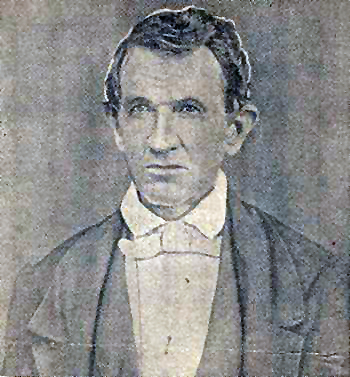
Historical · U.S. House · Georgia · District 6
Tomlinson Fort
Former U.S. Representative · Georgia District 6 · 1827–1829 · Jackson
Tomlinson Fort represented Georgia's District 6 in the United States House of Representatives (1827–1829) for the Jackson party. The page below collects sourced biographical facts, term history, committee roles, and provenance for Fort.
Bioguide ID: F000289
Key facts
- Full name
- Tomlinson Fort
- State
- Georgia
- District
- District 6
- Party
- Jackson
- House service
- 1827–1829
- First House term
- 1827
- Status
- Left office
- Current term ends
- —
- Born
- 1787
- Bioguide ID
- F000289
- Committee assignments
- —
- Dataset version
- 1.20260606
Biographical narrative
967 words · sourced from the Wikipedia REST extract
Tomlinson Fort was a prominent figure in early 19th-century Georgia, serving as a medical doctor, politician, and banker. He was a member of the United States House of Representatives, representing Georgia's 6th congressional district as a Jacksonian from 1827 to 1829. His career spanned various sectors, including medicine and public service, and he played a significant role in the development of key institutions in Georgia. Fort's contributions to both the medical field and the political landscape of his time have left a lasting impact on the state.
Early life and career
Tomlinson Fort was born on July 14, 1787, in Warrenton, Georgia. He grew up in a period marked by significant social and political changes in the United States. After completing his preparatory studies, Fort pursued a career in medicine, which was a respected profession at the time. He received medical training at the Philadelphia Medical College in 1809, where he gained foundational knowledge and skills that would serve him throughout his career. By 1810, he had moved to Milledgeville, Georgia, where he began practicing medicine. His medical career would ultimately span over four decades, during which he became well-known in the community for his contributions to healthcare.
In addition to his medical practice, Fort's early life was also characterized by his involvement in military service. During the War of 1812, he enlisted in a volunteer company of the Georgia Militia, where he was elected captain. This experience not only showcased his leadership abilities but also exposed him to the challenges and realities of military life. Fort sustained a wound during his service, an injury that would later contribute to his death at the age of 72. His military service is a testament to his commitment to his community and country during a tumultuous period in American history.
House tenure
Tomlinson Fort's political career began in the Georgia House of Representatives, where he served four consecutive terms from 1818 to 1826. His tenure in the state legislature was marked by significant contributions to the establishment of important institutions in Georgia. Notably, he played a crucial role in the formation of the Medical College of Georgia, which aimed to enhance medical education and training in the state. This institution would become a cornerstone of medical education in Georgia and has continued to evolve over the years.
In addition to his work in medical education, Fort was instrumental in the establishment of the state lunatic asylum in Milledgeville. This institution was significant for its time, as it represented a growing awareness of mental health issues and the need for dedicated facilities to care for individuals with mental health conditions. Fort's advocacy for these initiatives demonstrated his commitment to improving the welfare of his constituents and addressing pressing social issues.
In 1827, Fort was elected as a Jacksonian candidate to the 20th United States Congress, marking his entry into national politics. He served one term in the House of Representatives from March 4, 1827, to March 3, 1829. During his time in Congress, Fort was part of a legislative body that was navigating the complexities of a young nation. The political landscape was characterized by debates over issues such as states' rights, economic development, and the expansion of the United States. Although specific details of his legislative actions during this period are not extensively documented, his election as a Jacksonian indicates alignment with the political philosophies of President Andrew Jackson, which emphasized populism and a strong executive branch.
Following his congressional term, Fort returned to Georgia, where he continued to engage in public service. He concluded his political career by serving as the Mayor of Milledgeville from 1847 to 1848. This role allowed him to influence local governance and contribute to the development of his community in a different capacity.
Legislative focus and committees
During his time in the Georgia House of Representatives and the U.S. House of Representatives, Tomlinson Fort's legislative focus reflected his background in medicine and his commitment to public welfare. His involvement in the establishment of the Medical College of Georgia and the state lunatic asylum indicates a strong interest in healthcare and mental health issues. These initiatives were particularly significant in the context of the early 19th century, a time when medical understanding and public health policies were still developing.
Fort's work in the Georgia legislature also highlighted the importance of education and institutional support in addressing societal needs. By advocating for the Medical College, he recognized the necessity of training qualified medical professionals to serve the growing population of Georgia. The establishment of the lunatic asylum further underscored his awareness of mental health as a critical area requiring attention and resources.
While specific committee assignments during his congressional tenure are not detailed in the available records, it is reasonable to infer that his medical background may have influenced his participation in discussions related to health policy and education. His experiences as a physician and community leader likely provided him with valuable insights into the needs of his constituents and the broader implications of health-related legislation.
After his political career, Fort resumed his medical practice in Milledgeville, where he continued to serve his community. He later rose to the position of president of the State Bank of Georgia, a role that allowed him to influence economic development in the region. During his tenure at the bank, he played a part in financing the construction of the Western and Atlantic Railroad, an important infrastructure project that would facilitate transportation and commerce in Georgia.
Tomlinson Fort passed away on May 11, 1859, in Milledgeville, Georgia. His contributions to medicine, politics, and banking reflect a multifaceted career dedicated to public service and community improvement. He is buried in the City Cemetery, where his legacy continues to be recognized as part of Georgia's rich historical narrative.
Notable legislation
Sponsored and co-sponsored legislation for Tomlinson Fort is pending operator curation. The biographical narrative above carries the same provenance trail until per-bill rows are written.
Sources
- [1]https://en.wikipedia.org/wiki/Tomlinson_Fort_(congressman)Wikipedia · retrieved 2026-06-06
Notable quotes
Sourced quotes for Tomlinson Fort are pending operator curation. Narrative-scope provenance remains attached below.
Sources
- [1]https://en.wikipedia.org/wiki/Tomlinson_Fort_(congressman)Wikipedia · retrieved 2026-06-06
Key positions
Curated policy positions for Tomlinson Fort are pending operator review. The biographical narrative above carries the same provenance trail until per-topic positions are written.
Sources
- [1]https://en.wikipedia.org/wiki/Tomlinson_Fort_(congressman)Wikipedia · retrieved 2026-06-06
Terms served
- 1827–1829U.S. House · Term 1 · Jackson
Sources & provenance
Every attributable claim above carries a per-section [N] marker that resolves to the corresponding URL below. Each entry records the upstream provider, the canonical URL, and the timestamp at which the source was retrieved by the ingest pipeline.
Key facts
- https://bioguide.congress.gov/search/bio/F000289bioguide · retrieved 2026-06-06
- https://www.govtrack.us/congress/members/404239govtrack · retrieved 2026-06-06
Biographical narrative
- https://en.wikipedia.org/wiki/Tomlinson_Fort_(congressman)wikipedia · retrieved 2026-06-06
Find your representative
Every U.S. state elects representatives by district. Browse Georgia’s delegation, the full former-representative roster, or explore the role and term length.
Related on The Candidate
- Succeeded by Howell CobbLater holder of the Georgia District 6 House seat · Democratic.Open
- Andrew SloanFormer U.S. Representative · Georgia District 1 · RepublicanOpen
- Anthony WayneFormer U.S. Representative · Georgia District 1Open
- Archibald MacIntyreFormer U.S. Representative · Georgia District 1 · DemocraticOpen
- Bo GinnFormer U.S. Representative · Georgia District 1 · DemocraticOpen
- Representatives from GeorgiaEvery former U.S. Representative who has represented Georgia.Open