
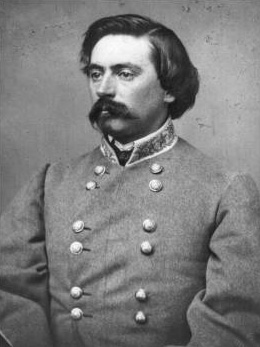
Historical · U.S. House · Georgia · District 7
Pierce Young
Former U.S. Representative · Georgia District 7 · 1867–1875 · Democratic
Pierce Young represented Georgia's District 7 in the United States House of Representatives (1867–1875) for the Democratic party. The page below collects sourced biographical facts, term history, committee roles, and provenance for Young.
Bioguide ID: Y000048
Key facts
- Full name
- Pierce Young
- State
- Georgia
- District
- District 7
- Party
- Democratic
- House service
- 1867–1875
- First House term
- 1867
- Status
- Left office
- Current term ends
- —
- Born
- 1836
- Bioguide ID
- Y000048
- Committee assignments
- —
- Dataset version
- 1.20260606
Biographical narrative
877 words · sourced from the Wikipedia REST extract
Pierce Young was an American soldier and politician who served as a U.S. Representative for Georgia's 7th congressional district. A member of the Democratic Party, he was elected to the House of Representatives for four terms from 1868 to 1875, following his service as a major general in the Confederate Army during the American Civil War. After his congressional career, Young held various diplomatic positions, including consul-general in St. Petersburg, Russia, and Envoy Extraordinary and Minister Plenipotentiary to Guatemala and Honduras.
Early life and career
Pierce Manning Butler Young was born on November 15, 1836, in Spartanburg, South Carolina. He was the son of Dr. R. M. Young, whose lineage included Capt. William Young, a soldier who served under George Washington during the American Revolution. Young's maternal grandmother had ties to the Cavaliers of England, having migrated to Maryland in the 1740s. She was married to Mourning Stone, a Loyalist during the American Revolution, who provided refuge to Lord Cornwallis during military campaigns in South Carolina.
During his early childhood, Young's family relocated to Bartow County, Georgia. His father ensured that Young and his siblings received a quality education through private tutors. At the age of thirteen, Young enrolled in the Georgia Military Institute located in Marietta, where he completed his studies and graduated in 1856. Following his graduation, he briefly pursued legal studies before receiving an appointment to the United States Military Academy in 1857. However, he resigned from the Academy just two months before his expected graduation due to Georgia's decision to secede from the Union.
House tenure
After returning to Georgia in early 1861, Young began his military career by accepting a commission as a second lieutenant in the 1st Georgia Infantry regiment. He opted to decline this initial commission in favor of a similar rank in the artillery. By July of that year, he had been promoted to first lieutenant and was assigned to the staff of General Braxton Bragg in Pensacola, Florida. Concurrently, he served as aide-de-camp to General W. H. T. Walker. Young's military career progressed rapidly; he was appointed adjutant of the Georgia Legion, also known as Cobb's Legion, in July and was promoted to major in September and lieutenant colonel in November, where he commanded the cavalry section of the legion.
Young's cavalry unit became part of Wade Hampton's brigade in J.E.B. Stuart's cavalry division within the Army of Northern Virginia in 1862. He gained recognition for his bravery during the Maryland Campaign, receiving a promotion to colonel. Young played a significant role in the Battle of Brandy Station and was involved in the cavalry operations during the Gettysburg campaign. He sustained injuries during a skirmish near Brandy Station in August 1863. By October of that year, he had been promoted to brigadier general and took command of Hampton's old brigade, which included several cavalry regiments.
Throughout the Civil War, Young demonstrated military skill and leadership, particularly during the Bristoe and Mine Run Campaigns. His tactical maneuvers on October 12, 1863, led to a successful operation that forced an enemy division to retreat across the Rappahannock River. In 1864, he actively participated in the Overland Campaign in Virginia, temporarily assuming command of the cavalry division following Stuart's death. Young was later tasked with gathering reinforcements to defend Augusta, Georgia, against the advancing forces of General William T. Sherman. He was promoted to major general in December 1864 and continued to serve in various capacities until the conclusion of the war.
After the Civil War, Young returned to Georgia and transitioned into civilian life as a planter. His political career began when he was elected to the U.S. House of Representatives as a Democrat, serving four consecutive terms from 1868 until 1875. During his tenure, he participated in the legislative process and contributed to discussions relevant to his constituents and the nation. Young sought a fifth term but was ultimately defeated by a candidate supported by the Grange movement, William Harrell Felton.
Legislative focus and committees
During his time in Congress, Young's legislative focus reflected the interests and concerns of his constituents in Georgia, particularly in the post-Civil War context. His background as a former military officer likely influenced his perspectives on issues related to defense, veterans, and the reconstruction of the South. While specific details regarding the bills he sponsored or supported are not provided, it is understood that his role as a congressman would have involved participation in various committees and discussions pertinent to the governance of the nation during a transformative period in American history.
Following his congressional service, Young continued his public service in the diplomatic arena. In 1878, he was appointed as the United States commissioner to the Paris Exposition, showcasing American innovation and culture abroad. He later served as consul-general at St. Petersburg, Russia, from 1885 to 1887. His diplomatic career culminated in his appointment as Envoy Extraordinary and Minister Plenipotentiary to Guatemala and Honduras from 1893 until his death in 1896.
Pierce Young passed away on July 6, 1896, in New York City. He was laid to rest in Oak Hill Cemetery, located in Cartersville, Georgia. His life encompassed significant military, political, and diplomatic contributions, reflecting a complex legacy shaped by the tumultuous events of the 19th century in America.
Notable legislation
Sponsored and co-sponsored legislation for Pierce Young is pending operator curation. The biographical narrative above carries the same provenance trail until per-bill rows are written.
Sources
- [1]https://en.wikipedia.org/wiki/Pierce_M._B._YoungWikipedia · retrieved 2026-06-06
Notable quotes
Sourced quotes for Pierce Young are pending operator curation. Narrative-scope provenance remains attached below.
Sources
- [1]https://en.wikipedia.org/wiki/Pierce_M._B._YoungWikipedia · retrieved 2026-06-06
Key positions
Curated policy positions for Pierce Young are pending operator review. The biographical narrative above carries the same provenance trail until per-topic positions are written.
Sources
- [1]https://en.wikipedia.org/wiki/Pierce_M._B._YoungWikipedia · retrieved 2026-06-06
Terms served
- 1867–1869U.S. House · Term 1 · Democratic
- 1869–1871U.S. House · Term 2 · Democratic
- 1871–1873U.S. House · Term 3 · Democratic
- 1873–1875U.S. House · Term 4 · Democratic
Sources & provenance
Every attributable claim above carries a per-section [N] marker that resolves to the corresponding URL below. Each entry records the upstream provider, the canonical URL, and the timestamp at which the source was retrieved by the ingest pipeline.
Key facts
- https://bioguide.congress.gov/search/bio/Y000048bioguide · retrieved 2026-06-06
- https://www.govtrack.us/congress/members/411980govtrack · retrieved 2026-06-06
Biographical narrative
- https://en.wikipedia.org/wiki/Pierce_M._B._Youngwikipedia · retrieved 2026-06-06
Find your representative
Every U.S. state elects representatives by district. Browse Georgia’s delegation, the full former-representative roster, or explore the role and term length.
Related on The Candidate
- Preceded by Nathaniel FosterEarlier holder of the Georgia District 7 House seat · American.Open
- Succeeded by William FeltonLater holder of the Georgia District 7 House seat · Ind. Democrat.Open
- Andrew SloanFormer U.S. Representative · Georgia District 1 · RepublicanOpen
- Anthony WayneFormer U.S. Representative · Georgia District 1Open
- Archibald MacIntyreFormer U.S. Representative · Georgia District 1 · DemocraticOpen
- Bo GinnFormer U.S. Representative · Georgia District 1 · DemocraticOpen