
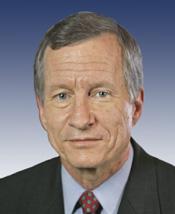
Historical · U.S. House · Georgia · District 8
Jim Marshall
Former U.S. Representative · Georgia District 8 · 2003–2011 · Democratic
Jim Marshall represented Georgia's District 8 in the United States House of Representatives (2003–2011) for the Democratic party. The page below collects sourced biographical facts, term history, committee roles, and provenance for Marshall.
Bioguide ID: M001146
Key facts
- Full name
- Jim Marshall
- State
- Georgia
- District
- District 8
- Party
- Democratic
- House service
- 2003–2011
- First House term
- 2003
- Status
- Left office
- Current term ends
- —
- Born
- 1948
- Bioguide ID
- M001146
- Committee assignments
- —
- Dataset version
- 1.20260605
Biographical narrative
1,014 words · sourced from the Wikipedia REST extract
James Creel Marshall is a former American attorney and politician who served as a member of the United States House of Representatives from 2003 to 2011. Representing Georgia's 8th congressional district, which included Macon and much of rural Central Georgia, Marshall was affiliated with the Democratic Party. His tenure in Congress was marked by significant electoral challenges and a commitment to various local and national issues.
Early life and career
Born on March 31, 1948, in Ithaca, New York, Jim Marshall was raised in a military family, being the son and grandson of army generals. His upbringing involved frequent relocations, which culminated in his graduation from the McGill Institute in Mobile, Alabama, a school that later merged to form McGill-Toolen Catholic High School. In 1966, he began his studies at Princeton University but left in 1968 to enlist in the United States Army. Marshall served in the Vietnam War as an Airborne Ranger reconnaissance platoon sergeant, where he distinguished himself and earned two Bronze Stars with "V" devices for valor, as well as a Purple Heart for his service. His military contributions were recognized when he was inducted into the U.S. Army Ranger Hall of Fame in June 2006.
After completing his military service, Marshall returned to Princeton in 1970 and graduated in 1972 with an A.B. in politics. His senior thesis focused on the economic conditions in Tanzania, reflecting an early interest in global issues. Following his undergraduate education, he worked in various capacities for two years before pursuing a legal education at Boston University, where he earned his Juris Doctor (J.D.) in 1977.
Marshall began his legal career by clerking for two federal district court judges before joining the faculty at Mercer University's Walter F. George School of Law in Macon. There, he taught courses in property, commercial law, insurance, creditor's rights, insolvency, reorganization, and small business law. His commitment to diversity in legal education was evident as he served as a minority recruiter and advisor to the Black Law Student Association at Mercer. Alongside his teaching responsibilities, he developed a commercial litigation and business insolvency consulting practice from 1987 to 1995. During this period, he actively engaged in civic affairs, holding positions such as president of Leadership Macon and the Macon Bar Association, as well as chairman of the Macon Housing Authority. His political involvement began to take shape as he co-chaired the 1990 gubernatorial campaign of Andrew Young, a former U.S. Congressman and U.N. Ambassador, and later chaired the successful state senate campaign of Robert Brown, the first African American elected to that body from outside the Atlanta metropolitan area since Reconstruction.
Marshall's political career advanced when he was elected as the Mayor of Macon, serving from 1995 to 1999. His administration focused on fiscal responsibility, resulting in increased city reserves, reduced debt, and lower property taxes. He also implemented a new public safety communications system. His leadership during Hurricane Hugo garnered national attention when he encouraged local citizens to house thousands of refugees and even pursued a felon on foot, showcasing his commitment to community safety and welfare.
House tenure
Marshall's congressional career began with his election to the U.S. House of Representatives in 2003 after a challenging electoral landscape. He initially ran for Congress in 2000 as the Democratic candidate for Georgia's 8th District but was defeated by incumbent Republican Saxby Chambliss. Following the 2000 Census, the district was redrawn, and Marshall successfully ran for the newly configured 3rd District in 2002, defeating Republican Calder Clay in a closely contested race. This victory made him the only white Democrat in Georgia's House delegation at the time.
In 2004, Marshall faced Clay again in a rematch and won decisively, securing 63% of the vote, even as George W. Bush carried the district with 56%. His tenure continued to be marked by electoral challenges, particularly after the Georgia state legislature redrew the congressional map again in 2005, creating a more Republican-leaning 8th District. Despite these challenges, Marshall managed to win re-election in 2006 against former U.S. Congressman Mac Collins, albeit in a very tight race that saw him win by a narrow margin of 51% to 49%. This election was significant, as it highlighted the shifting political landscape in Georgia and the challenges faced by Democrats in the state.
Throughout his four terms in Congress, Marshall developed a reputation for bipartisanship, particularly in his working relationship with Republican Saxby Chambliss. His ability to navigate a politically divided environment was a hallmark of his tenure, as he sought to represent the interests of his constituents while engaging with members of the opposing party.
Legislative focus and committees
During his time in the House, Marshall focused on a variety of legislative issues pertinent to his constituents and the broader national landscape. His work often emphasized local concerns, including economic development, education, and public safety. He was known for advocating for policies that would benefit rural communities and address the unique challenges they faced.
Marshall served on several committees during his congressional tenure, which allowed him to influence legislation in key areas. His committee assignments provided him with a platform to address issues related to agriculture, education, and infrastructure, all of which were vital to the constituents of Georgia's 8th District. His legislative efforts were characterized by a commitment to improving the quality of life for his constituents through targeted initiatives and collaborative efforts with other lawmakers.
In addition to his legislative work, Marshall's post-congressional career included a significant role as the president of the United States Institute of Peace from September 2012 to January 2014. His contributions to the field of armed violence reduction were recognized in 2013 when he was listed among the 100 most influential people in the world by the British advocacy organization Action on Armed Violence.
Marshall's career reflects a blend of legal expertise, civic engagement, and political service, underscoring his dedication to public service and the communities he represented. His tenure in the U.S. House of Representatives was marked by both challenges and achievements, illustrating the complexities of serving in a dynamic political environment.
Notable legislation
Sponsored and co-sponsored legislation for Jim Marshall is pending operator curation. The biographical narrative above carries the same provenance trail until per-bill rows are written.
Sources
- [1]https://en.wikipedia.org/wiki/Jim_Marshall_(Georgia_politician)Wikipedia · retrieved 2026-06-05
Notable quotes
Sourced quotes for Jim Marshall are pending operator curation. Narrative-scope provenance remains attached below.
Sources
- [1]https://en.wikipedia.org/wiki/Jim_Marshall_(Georgia_politician)Wikipedia · retrieved 2026-06-05
Key positions
Curated policy positions for Jim Marshall are pending operator review. The biographical narrative above carries the same provenance trail until per-topic positions are written.
Sources
- [1]https://en.wikipedia.org/wiki/Jim_Marshall_(Georgia_politician)Wikipedia · retrieved 2026-06-05
Terms served
- 2003–2005U.S. House · Term 1 · Democratic
- 2005–2007U.S. House · Term 2 · Democratic
- 2007–2009U.S. House · Term 3 · Democratic
- 2009–2011U.S. House · Term 4 · Democratic
Sources & provenance
Every attributable claim above carries a per-section [N] marker that resolves to the corresponding URL below. Each entry records the upstream provider, the canonical URL, and the timestamp at which the source was retrieved by the ingest pipeline.
Key facts
- https://bioguide.congress.gov/search/bio/M001146bioguide · retrieved 2026-06-05
- http://jimmarshall.house.govhouse.gov · retrieved 2026-06-05
Biographical narrative
- https://en.wikipedia.org/wiki/Jim_Marshall_(Georgia_politician)wikipedia · retrieved 2026-06-05
Find your representative
Every U.S. state elects representatives by district. Browse Georgia’s delegation, the full former-representative roster, or explore the role and term length.
Related on The Candidate
- Preceded by James Rowland Jr.Earlier holder of the Georgia District 8 House seat · Democratic.Open
- Andrew SloanFormer U.S. Representative · Georgia District 1 · RepublicanOpen
- Anthony WayneFormer U.S. Representative · Georgia District 1Open
- Archibald MacIntyreFormer U.S. Representative · Georgia District 1 · DemocraticOpen
- Bo GinnFormer U.S. Representative · Georgia District 1 · DemocraticOpen
- Democratic PartyFederal candidates and office holders on the Democratic line.Open