
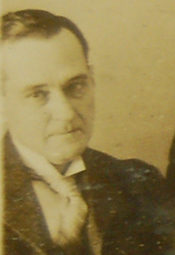
Historical · U.S. House · Georgia · District 8
William Howard
Former U.S. Representative · Georgia District 8 · 1897–1911 · Democratic
William Howard represented Georgia's District 8 in the United States House of Representatives (1897–1911) for the Democratic party. The page below collects sourced biographical facts, term history, committee roles, and provenance for Howard.
Bioguide ID: H000848
Key facts
- Full name
- William Howard
- State
- Georgia
- District
- District 8
- Party
- Democratic
- House service
- 1897–1911
- First House term
- 1897
- Status
- Left office
- Current term ends
- —
- Born
- 1857
- Bioguide ID
- H000848
- Committee assignments
- —
- Dataset version
- 1.20260606
Biographical narrative
993 words · sourced from the Wikipedia REST extract
William Howard was a prominent American politician and jurist who served as a U.S. Representative for Georgia's 8th congressional district. A member of the Democratic Party, Howard's political career spanned over a decade, during which he was elected to the House of Representatives seven times. His tenure in Congress was marked by significant involvement in legislative matters and public service. Born on December 6, 1857, in Berwick, Louisiana, Howard's early life and education laid the foundation for his future career in law and politics. He passed away on July 5, 1932, in Augusta, Georgia.
Early life and career
William Howard was born into a family that would eventually relocate to Georgia during his formative years. This transition was significant in shaping his identity and future career. He received his early education at the Martin Institute in Jefferson, Georgia, where he developed a strong academic foundation. Following his secondary education, Howard pursued higher education at the University of Georgia in Athens, where he graduated in 1877 with a Bachelor of Philosophy degree. This academic achievement was pivotal, as it equipped him with the knowledge and skills necessary for his future endeavors in law and public service.
After completing his education, Howard was admitted to the Georgia state bar in 1880, marking the beginning of his legal career. He began practicing law in Lexington, Georgia, where he quickly established himself as a competent and respected attorney. His legal expertise and dedication to public service led to his election as the solicitor general of Georgia's northern circuit in 1884. In this role, he was responsible for prosecuting criminal cases and representing the state in legal matters, a position he held until 1896. His tenure as solicitor general provided him with valuable experience in the legal system and helped to build his reputation as a capable public servant.
In 1896, Howard transitioned from state-level politics to the national stage by successfully running for a seat in the United States House of Representatives. His election marked the beginning of a significant chapter in his career, as he would go on to serve multiple terms in Congress. Howard's legal background and experience in public office positioned him well for his role as a legislator, where he would engage in the complex workings of federal governance.
House tenure
William Howard's congressional career began in 1897, and over the course of his time in the House of Representatives, he was re-elected six additional times. His electoral success can be attributed to his established reputation as a lawyer and public servant, as well as his alignment with the Democratic Party's values during a period of significant political change in the United States. Howard's tenure in Congress lasted until March 3, 1911, when he concluded his final term.
During his time in the House, Howard was involved in various legislative activities and discussions that shaped the policies of his era. Although specific details regarding the bills he sponsored or supported are not provided, it is clear that his legal background informed his contributions to legislative debates and decision-making processes. His experience as a solicitor general likely influenced his perspectives on law and justice, which he brought to his role as a U.S. Representative.
In addition to his legislative responsibilities, Howard engaged in various public service roles outside of Congress. He served on the Board of Regents of the Smithsonian Institution from 1905 to 1912, a position that allowed him to contribute to the governance and oversight of one of the nation's premier cultural and scientific institutions. His involvement with the Smithsonian reflects his commitment to education and public knowledge, further demonstrating his dedication to serving the public interest.
Despite his electoral successes, Howard faced challenges in his political career. He lost the nomination for the 1910 election, which marked the end of his time in the House of Representatives. This defeat did not diminish his influence or involvement in public affairs, as he continued to engage in various roles in the years following his congressional tenure.
Legislative focus and committees
While specific details regarding Howard's legislative focus and committee assignments are not provided, it can be inferred that his legal background and experience as a solicitor general informed his approach to governance and policy-making. As a member of the Democratic Party during a transformative period in American history, Howard likely engaged with issues pertinent to his constituents in Georgia and the broader national landscape.
Following his departure from Congress, Howard continued to be active in public service. In 1911, he was appointed by President William Howard Taft to the United States Tariff Board, where he served until 1913. This role involved advising on tariff policies and trade regulations, areas that were crucial to the economic interests of the nation. His appointment to the Tariff Board indicates that he was recognized for his expertise and ability to contribute to important national discussions.
In addition to his work on the Tariff Board, Howard played a significant role in a high-profile legal case in 1915. He was appointed to appeal the death sentence of Leo Frank, who had been convicted of the murder of Mary Phagan. Howard's involvement in this case showcased his legal acumen and commitment to justice, as he identified flaws in the prosecution's case and advocated for a commutation of Frank's sentence. His efforts ultimately led to the commutation of the death sentence to life in prison, highlighting his dedication to ensuring a fair legal process.
Throughout his life, Howard maintained a commitment to public service and the legal profession. His contributions to the legal field and his involvement in significant public issues reflect a career dedicated to the principles of justice and governance. After moving to Augusta, Georgia, following his tenure on the Tariff Board, Howard continued to be recognized for his contributions until his death in 1932. He was laid to rest in Clarke Cemetery in Lexington, Georgia, leaving behind a legacy of public service and legal advocacy.
Notable legislation
Sponsored and co-sponsored legislation for William Howard is pending operator curation. The biographical narrative above carries the same provenance trail until per-bill rows are written.
Sources
- [1]https://en.wikipedia.org/wiki/William_M._HowardWikipedia · retrieved 2026-06-06
Notable quotes
Sourced quotes for William Howard are pending operator curation. Narrative-scope provenance remains attached below.
Sources
- [1]https://en.wikipedia.org/wiki/William_M._HowardWikipedia · retrieved 2026-06-06
Key positions
Curated policy positions for William Howard are pending operator review. The biographical narrative above carries the same provenance trail until per-topic positions are written.
Sources
- [1]https://en.wikipedia.org/wiki/William_M._HowardWikipedia · retrieved 2026-06-06
Terms served
- 1897–1899U.S. House · Term 1 · Democratic
- 1899–1901U.S. House · Term 2 · Democratic
- 1901–1903U.S. House · Term 3 · Democratic
- 1903–1905U.S. House · Term 4 · Democratic
- 1905–1907U.S. House · Term 5 · Democratic
- 1907–1909U.S. House · Term 6 · Democratic
- 1909–1911U.S. House · Term 7 · Democratic
Sources & provenance
Every attributable claim above carries a per-section [N] marker that resolves to the corresponding URL below. Each entry records the upstream provider, the canonical URL, and the timestamp at which the source was retrieved by the ingest pipeline.
Key facts
- https://bioguide.congress.gov/search/bio/H000848bioguide · retrieved 2026-06-06
- https://www.govtrack.us/congress/members/405695govtrack · retrieved 2026-06-06
Biographical narrative
- https://en.wikipedia.org/wiki/William_M._Howardwikipedia · retrieved 2026-06-06
Find your representative
Every U.S. state elects representatives by district. Browse Georgia’s delegation, the full former-representative roster, or explore the role and term length.
Related on The Candidate
- Preceded by Thomas LawsonEarlier holder of the Georgia District 8 House seat · Democratic.Open
- Succeeded by Samuel TribbleLater holder of the Georgia District 8 House seat · Democratic.Open
- Andrew SloanFormer U.S. Representative · Georgia District 1 · RepublicanOpen
- Anthony WayneFormer U.S. Representative · Georgia District 1Open
- Archibald MacIntyreFormer U.S. Representative · Georgia District 1 · DemocraticOpen
- Bo GinnFormer U.S. Representative · Georgia District 1 · DemocraticOpen