
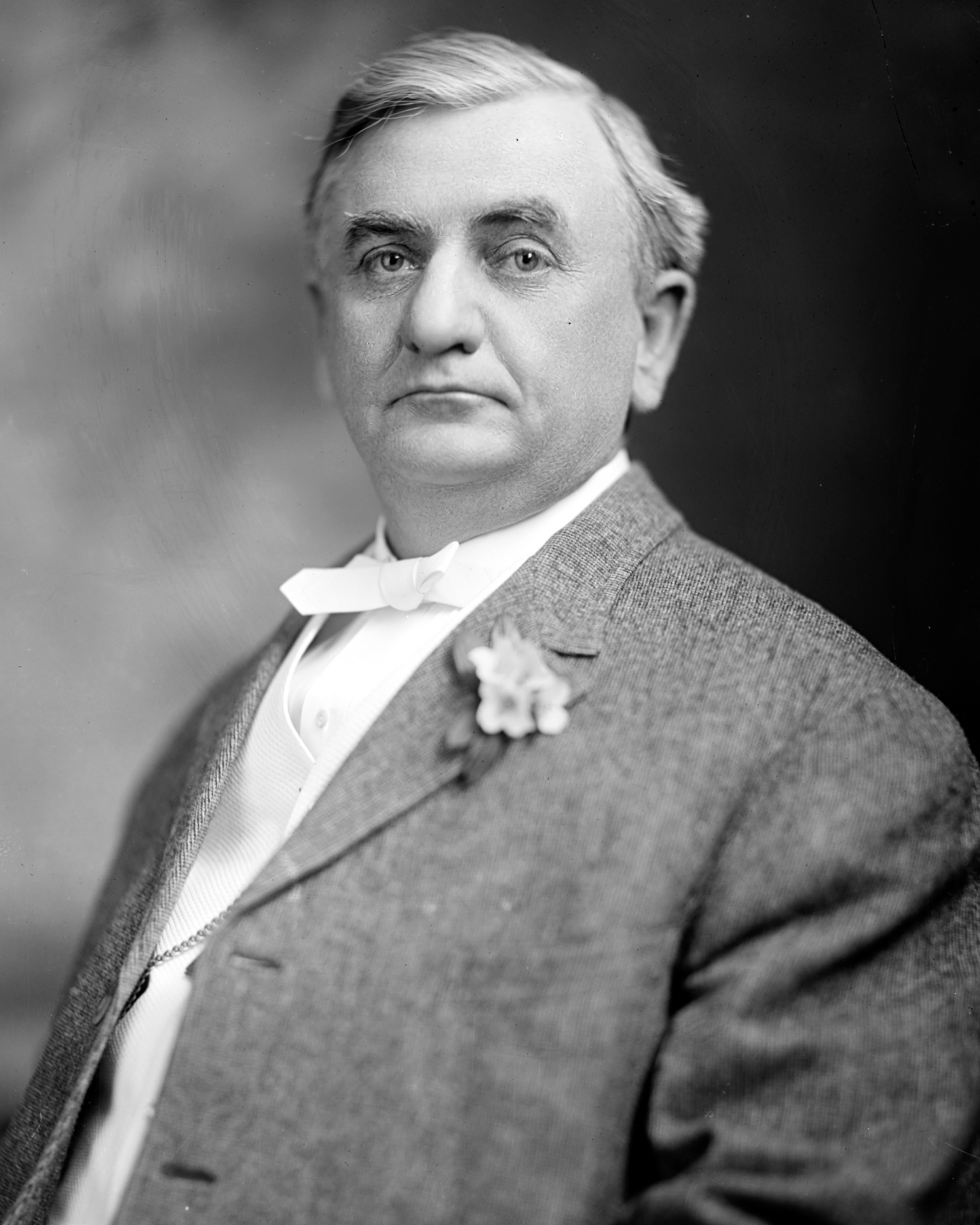
Historical · U.S. House · Georgia · District 9
Thomas Bell
Former U.S. Representative · Georgia District 9 · 1905–1931 · Democratic
Thomas Bell represented Georgia's District 9 in the United States House of Representatives (1905–1931) for the Democratic party. The page below collects sourced biographical facts, term history, committee roles, and provenance for Bell.
Bioguide ID: B000348
Key facts
- Full name
- Thomas Bell
- State
- Georgia
- District
- District 9
- Party
- Democratic
- House service
- 1905–1931
- First House term
- 1905
- Status
- Left office
- Current term ends
- —
- Born
- 1861
- Bioguide ID
- B000348
- Committee assignments
- —
- Dataset version
- 1.20260606
Biographical narrative
1,067 words · sourced from the Wikipedia REST extract
Thomas Bell was an American politician who served as a U.S. Representative for Georgia's 9th congressional district from 1905 until 1931. A member of the Democratic Party, he held significant roles during his tenure, including serving as the House majority whip from 1913 to 1915. His political career spanned over two decades, during which he was involved in various legislative matters and party leadership. Bell's legacy is marked by his long service in Congress and his controversial stances on civil rights issues during a transformative period in American history.
Early life and career
Thomas Montgomery Bell was born on March 17, 1861, in Nacoochee Valley, located near Cleveland, Georgia. His early life in this region of Georgia laid the foundation for his future endeavors in both education and politics. After completing his education at Moore's Business University in Atlanta, Bell began his professional career as a public school teacher in Cleveland, where he taught from 1878 to 1879. This experience in education likely influenced his understanding of the needs and challenges faced by his community.
Following his brief tenure in education, Bell transitioned into the business sector as a traveling salesman, a role that would have afforded him the opportunity to engage with various communities across Georgia. This experience in sales likely honed his communication skills and helped him build a network that would later benefit his political career. His involvement in local governance began when he was elected as the clerk of the superior court of Hall County, Georgia, a position he held from 1898 until 1904. This role provided him with valuable insights into the legal and administrative processes of government, further preparing him for a career in public service.
In 1904, Bell's political ambitions led him to seek a seat in the U.S. House of Representatives. He successfully won the election and began his congressional career on March 4, 1905. His election marked the beginning of a significant chapter in his life, as he would go on to serve a total of 13 terms in the House, a testament to his political resilience and the support he garnered from his constituents.
House tenure
During his extensive tenure in the U.S. House of Representatives, which lasted until March 3, 1931, Thomas Bell became a prominent figure in Georgia politics. His long service in Congress allowed him to build a reputation as a reliable member of the Democratic Party, and he was known for his ability to navigate the complexities of legislative processes. Bell's leadership skills were recognized when he was appointed as the House majority whip from 1913 to 1915, a role that involved coordinating party strategy and ensuring party discipline among members.
As a congressman, Bell participated in various legislative initiatives and debates that shaped the nation during the early 20th century. His tenure coincided with significant events, including World War I and the subsequent social changes that emerged in its aftermath. Bell's involvement in these matters placed him at the center of discussions that would influence both domestic and foreign policy.
Throughout his time in office, Bell was known for his commitment to the interests of his constituents in Georgia. He worked on issues pertinent to the region, including agriculture, infrastructure, and economic development. His long-standing presence in Congress allowed him to advocate for the needs of his district effectively, and he often sought to bring federal resources to Georgia to support local initiatives.
Despite his lengthy service and leadership roles, Bell's political career was not without controversy. His views on civil rights, particularly regarding anti-lynching legislation, drew criticism. In 1922, he was a vocal opponent of efforts to pass anti-lynching laws, reflecting the prevailing attitudes of some Southern politicians during that era. His stance on these issues highlighted the complexities of his political legacy, as he navigated the tensions between his constituents' views and the broader national discourse on civil rights.
Bell's congressional career came to an end after he faced an unsuccessful renomination in 1930. Following his departure from Congress, he returned to the private sector, where he continued to engage with the community in Gainesville, Georgia. His post-congressional life allowed him to reflect on his years of public service and the impact he had on his constituents and the state of Georgia.
Legislative focus and committees
Throughout his congressional career, Thomas Bell's legislative focus encompassed a range of issues that were significant to his constituents and the nation. His work in the House of Representatives included participation in various committees that addressed key areas of governance. While specific committee assignments during his tenure are not detailed in the available records, it is common for members of Congress to serve on committees that align with their interests and the needs of their districts.
Bell's involvement in legislative matters often revolved around economic issues, particularly those affecting agriculture and rural development, which were crucial to Georgia's economy. As a representative from a predominantly agrarian state, he likely advocated for policies that supported farmers and agricultural workers, seeking to enhance their livelihoods and promote economic stability in the region.
In addition to economic issues, Bell's tenure coincided with significant social changes in the United States, including the Progressive Era reforms. While his specific contributions to these reforms are not detailed, it is reasonable to infer that he participated in discussions and legislative efforts aimed at addressing the challenges of the time, including labor rights, women's suffrage, and public health initiatives.
Bell's role as House majority whip further positioned him to influence legislative priorities and party strategy. In this capacity, he was responsible for rallying support for party initiatives and ensuring that members adhered to party lines during critical votes. His leadership during this period was essential in navigating the complexities of a diverse and often divided Congress.
In summary, Thomas Bell's legislative focus and committee work reflected his commitment to serving the interests of his constituents while also engaging with the broader national issues of his time. His long tenure in Congress allowed him to witness and participate in significant developments in American history, leaving a lasting impact on the political landscape of Georgia and the nation. After his departure from Congress, Bell continued to be a figure of local significance until his passing on March 18, 1941, in Gainesville, Georgia. His life and career remain a part of the historical narrative of American politics during the early 20th century.
Notable legislation
Sponsored and co-sponsored legislation for Thomas Bell is pending operator curation. The biographical narrative above carries the same provenance trail until per-bill rows are written.
Sources
- [1]https://en.wikipedia.org/wiki/Thomas_M._Bell_(Georgia_politician)Wikipedia · retrieved 2026-06-06
Notable quotes
Sourced quotes for Thomas Bell are pending operator curation. Narrative-scope provenance remains attached below.
Sources
- [1]https://en.wikipedia.org/wiki/Thomas_M._Bell_(Georgia_politician)Wikipedia · retrieved 2026-06-06
Key positions
Curated policy positions for Thomas Bell are pending operator review. The biographical narrative above carries the same provenance trail until per-topic positions are written.
Sources
- [1]https://en.wikipedia.org/wiki/Thomas_M._Bell_(Georgia_politician)Wikipedia · retrieved 2026-06-06
Terms served
- 1905–1907U.S. House · Term 1 · Democratic
- 1907–1909U.S. House · Term 2 · Democratic
- 1909–1911U.S. House · Term 3 · Democratic
- 1911–1913U.S. House · Term 4 · Democratic
- 1913–1915U.S. House · Term 5 · Democratic
- 1915–1917U.S. House · Term 6 · Democratic
- 1917–1919U.S. House · Term 7 · Democratic
- 1919–1921U.S. House · Term 8 · Democratic
- 1921–1923U.S. House · Term 9 · Democratic
- 1923–1925U.S. House · Term 10 · Democratic
- 1925–1927U.S. House · Term 11 · Democratic
- 1927–1929U.S. House · Term 12 · Democratic
- 1929–1931U.S. House · Term 13 · Democratic
Sources & provenance
Every attributable claim above carries a per-section [N] marker that resolves to the corresponding URL below. Each entry records the upstream provider, the canonical URL, and the timestamp at which the source was retrieved by the ingest pipeline.
Key facts
- https://bioguide.congress.gov/search/bio/B000348bioguide · retrieved 2026-06-06
- https://www.govtrack.us/congress/members/401340govtrack · retrieved 2026-06-06
Biographical narrative
- https://en.wikipedia.org/wiki/Thomas_M._Bell_(Georgia_politician)wikipedia · retrieved 2026-06-06
Find your representative
Every U.S. state elects representatives by district. Browse Georgia’s delegation, the full former-representative roster, or explore the role and term length.
Related on The Candidate
- Preceded by Farish TateEarlier holder of the Georgia District 9 House seat · Democratic.Open
- Succeeded by John WoodLater holder of the Georgia District 9 House seat · Democratic.Open
- Andrew SloanFormer U.S. Representative · Georgia District 1 · RepublicanOpen
- Anthony WayneFormer U.S. Representative · Georgia District 1Open
- Archibald MacIntyreFormer U.S. Representative · Georgia District 1 · DemocraticOpen
- Bo GinnFormer U.S. Representative · Georgia District 1 · DemocraticOpen