
Historical · U.S. House · Georgia · District 9
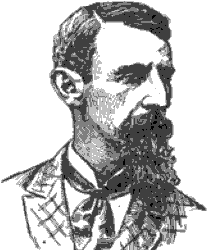
Thomas Winn
Former U.S. Representative · Georgia District 9 · 1891–1893 · Democratic
Thomas Winn represented Georgia's District 9 in the United States House of Representatives (1891–1893) for the Democratic party. The page below collects sourced biographical facts, term history, committee roles, and provenance for Winn.
Bioguide ID: W000638
Key facts
- Full name
- Thomas Winn
- State
- Georgia
- District
- District 9
- Party
- Democratic
- House service
- 1891–1893
- First House term
- 1891
- Status
- Left office
- Current term ends
- —
- Born
- 1839
- Bioguide ID
- W000638
- Committee assignments
- —
- Dataset version
- 1.20260606
Biographical narrative
917 words · sourced from the Wikipedia REST extract
Thomas Winn was an American attorney and politician who served as a U.S. Representative for Georgia's 9th congressional district from 1891 to 1893. A member of the Democratic Party, Winn's political career was preceded by a diverse background that included military service during the Civil War and a commitment to local education and agriculture. His tenure in the House of Representatives was marked by the political dynamics of the post-Civil War South, and he ultimately chose not to seek re-election after completing one term in office.
Early life and career
Thomas Elisha Winn was born on May 21, 1839, near Athens, Georgia. He was the second child of Richard Dickinson Winn and Charlotte Mitchell Winn. Growing up in a family that valued education, he attended the Carrollton Masonic Institute in Georgia, which provided him with a foundational education. Following this, he furthered his studies at Emory and Henry College, where he likely developed the skills and knowledge that would later serve him in his legal and political career.
After completing his education, Winn pursued a career in law. He studied diligently and was admitted to the bar in 1861, marking the beginning of his legal practice in Alpharetta, Georgia. His legal career, however, was interrupted by the outbreak of the Civil War, during which he enlisted in the Confederate States Army. He began his military service as a first lieutenant and quickly ascended through the ranks, ultimately achieving the rank of lieutenant colonel in the Twenty-fourth Regiment of the Georgia Infantry. Throughout the war, he served with the Army of Northern Virginia, under the command of General Robert E. Lee, until the conflict concluded in 1865.
Following the Civil War, Winn returned to his legal practice in Milton County, Georgia. He resumed his work as an attorney and also took on civic responsibilities, serving as the solicitor of the county court for a two-year period. However, in 1868, he shifted his focus from law to agriculture, dedicating himself to farming while still engaging in community service. His involvement in local governance included a significant role as a school commissioner for Gwinnett County, a position he held from 1876 until 1890. This role underscored his commitment to education and the development of local schools during a time when educational reform was becoming increasingly important in the South.
House tenure
Winn's political career culminated in his election to the United States House of Representatives. He was elected as a Democrat to represent Georgia's 9th congressional district in the Fifty-second Congress, with his term commencing on March 4, 1891. His election occurred during a period of significant political change in the South, as the region was grappling with the aftermath of the Civil War and the complexities of Reconstruction.
During his time in Congress, Winn participated in the legislative process and contributed to discussions that were relevant to his constituents in Georgia. His tenure lasted until March 3, 1893, at which point he chose not to seek re-election. The decision not to run for a second term may have been influenced by various factors, including the political climate of the time and his personal aspirations.
Winn's single term in the House of Representatives was characterized by the challenges faced by Southern politicians in the post-war era. The political landscape was marked by a struggle for power and influence as the Democratic Party sought to re-establish itself in the South following the disruptions caused by the Civil War and Reconstruction. Although specific details regarding his legislative initiatives or committee assignments are not provided, it can be inferred that his background as an attorney and his experience in local governance would have informed his approach to the issues facing his constituents.
Legislative focus and committees
While specific details about Thomas Winn's legislative focus and committee assignments during his time in Congress are not extensively documented, it is important to contextualize his role within the broader political environment of the late 19th century. As a member of the Democratic Party, Winn would have aligned with the party's platform, which often emphasized states' rights, agrarian interests, and opposition to certain federal interventions that were perceived to undermine local governance.
Given his background in law and education, it is reasonable to assume that Winn may have had an interest in legislation related to legal reform, education, and agricultural policies. His previous experience as a school commissioner suggests a commitment to improving educational opportunities, which could have influenced his legislative priorities. Additionally, his agricultural pursuits after the war may have led him to advocate for policies that supported farmers and rural communities in Georgia.
The late 19th century was a time of significant economic and social change in the United States, with issues such as industrialization, labor rights, and economic inequality coming to the forefront of national discourse. As a representative from a Southern state, Winn would have navigated these complex issues while considering the unique challenges faced by his constituents in Georgia.
After completing his term in the House of Representatives, Thomas Winn returned to private life. He continued to reside in Georgia, where he remained engaged in community affairs. He passed away on June 5, 1925, in Atlanta, Georgia, at the Confederate Soldiers' Home. His final resting place is in Ridge Grove Cemetery, located near Greensboro, Georgia. Winn's life and career reflect the experiences of many Southern politicians during a transformative period in American history, characterized by the lingering effects of the Civil War and the ongoing evolution of the nation.
Notable legislation
Sponsored and co-sponsored legislation for Thomas Winn is pending operator curation. The biographical narrative above carries the same provenance trail until per-bill rows are written.
Sources
- [1]https://en.wikipedia.org/wiki/Thomas_E._WinnWikipedia · retrieved 2026-06-06
Notable quotes
Sourced quotes for Thomas Winn are pending operator curation. Narrative-scope provenance remains attached below.
Sources
- [1]https://en.wikipedia.org/wiki/Thomas_E._WinnWikipedia · retrieved 2026-06-06
Key positions
Curated policy positions for Thomas Winn are pending operator review. The biographical narrative above carries the same provenance trail until per-topic positions are written.
Sources
- [1]https://en.wikipedia.org/wiki/Thomas_E._WinnWikipedia · retrieved 2026-06-06
Terms served
- 1891–1893U.S. House · Term 1 · Democratic
Sources & provenance
Every attributable claim above carries a per-section [N] marker that resolves to the corresponding URL below. Each entry records the upstream provider, the canonical URL, and the timestamp at which the source was retrieved by the ingest pipeline.
Key facts
- https://bioguide.congress.gov/search/bio/W000638bioguide · retrieved 2026-06-06
- https://www.govtrack.us/congress/members/411792govtrack · retrieved 2026-06-06
Biographical narrative
- https://en.wikipedia.org/wiki/Thomas_E._Winnwikipedia · retrieved 2026-06-06
Find your representative
Every U.S. state elects representatives by district. Browse Georgia’s delegation, the full former-representative roster, or explore the role and term length.
Related on The Candidate
- Preceded by Allen CandlerEarlier holder of the Georgia District 9 House seat · Democratic.Open
- Succeeded by Farish TateLater holder of the Georgia District 9 House seat · Democratic.Open
- Andrew SloanFormer U.S. Representative · Georgia District 1 · RepublicanOpen
- Anthony WayneFormer U.S. Representative · Georgia District 1Open
- Archibald MacIntyreFormer U.S. Representative · Georgia District 1 · DemocraticOpen
- Bo GinnFormer U.S. Representative · Georgia District 1 · DemocraticOpen