
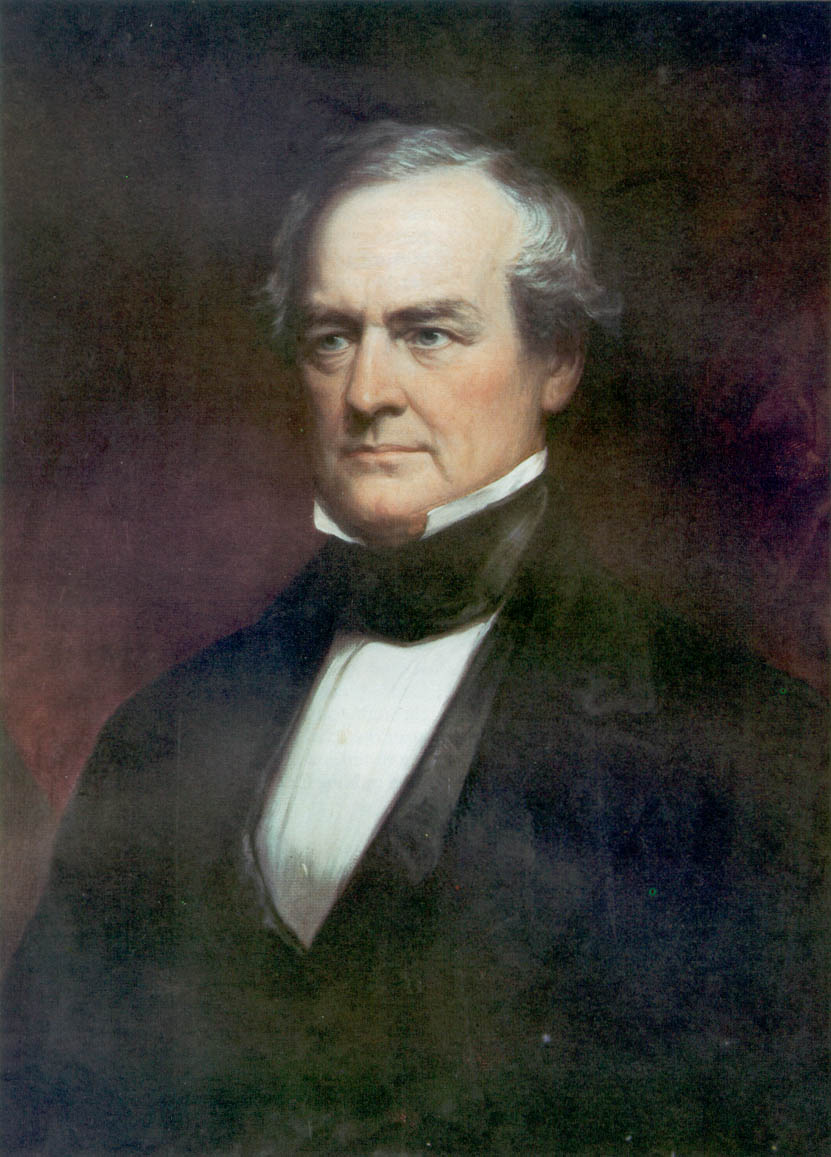
Historical · U.S. House · Georgia · At-Large
George Crawford
Former U.S. Representative · Georgia At-Large · 1841–1843 · Whig
George Crawford represented Georgia's At-Large in the United States House of Representatives (1841–1843) for the Whig party. The page below collects sourced biographical facts, term history, committee roles, and provenance for Crawford.
Bioguide ID: C000890
Key facts
- Full name
- George Crawford
- State
- Georgia
- District
- At-Large
- Party
- Whig
- House service
- 1841–1843
- First House term
- 1841
- Status
- Left office
- Current term ends
- —
- Born
- 1798
- Bioguide ID
- C000890
- Committee assignments
- —
- Dataset version
- 1.20260606
Biographical narrative
959 words · sourced from the Wikipedia REST extract
George Crawford was a prominent political figure in the 19th century, serving as a U.S. Representative for Georgia's at-large district. A member of the Whig Party, he held office from 1841 until 1843. His political career was marked by various significant roles, including serving as Georgia's attorney general, governor, and Secretary of War. Crawford's life was characterized by his legal background, political ambitions, and involvement in key historical events during a turbulent period in American history.
Early life and career
George Walker Crawford was born on December 22, 1798, in Columbia County, Georgia. He was the fourth son of Peter and Mary Ann Crawford. His father, a veteran of the American Revolutionary War from Virginia, settled in Georgia to claim a land share known as a bounty grant, which was designated for those who had fought for independence. Peter Crawford acquired a substantial tract of land, which he named Belair Plantation, located near his uncle, Joel Crawford, a notable figure in Georgia politics.
Growing up on the family estate, George Crawford was influenced by both his father and his cousin, William H. Crawford, who was gaining recognition for his own political endeavors. Peter Crawford was not only a practicing attorney but also an active participant in Georgia politics, serving as Columbia County's first clerk of courts and later as a long-serving representative in the state legislature. William H. Crawford, his cousin, became a local legend for his political service and was known for his involvement in two famous duels.
George Crawford's education was primarily conducted at home, where he had access to his father's extensive library. He later attended the College of New Jersey's school of law, which would eventually become Princeton University, graduating with a bachelor's degree in 1820. Following this, he completed an internship under Richard Henry Wilde and was licensed to practice law in 1822. He established a legal practice in Augusta, partnering with Henry H. Cumming. Additionally, Crawford obtained a master's degree from the Franklin College of Arts and Sciences, the founding college of the University of Georgia. His early career also included service as a second lieutenant in the 10th Regiment of the Georgia Militia from 1824 to 1825.
In 1826, Crawford married Mary Ann MacIntosh, and the couple had four children: William Peter, Sarah MacIntosh, Anna Elizabeth, and Charles. The following year, he began his political career by accepting an appointment as Georgia's attorney general.
House tenure
George Crawford's tenure in the U.S. House of Representatives began in 1841 when he was elected to fill the seat vacated by Richard W. Habersham, who had passed away while in office. Crawford served as a member of the Whig Party, which was active during a time of significant political realignment in the United States. His congressional service lasted until March 3, 1843, marking a brief but notable period in his political career.
During his time in the House, Crawford participated in the legislative process at a time when the nation was grappling with various issues, including debates over states' rights and the expansion of slavery. Although specific details about his legislative activities during this period are not extensively documented, his alignment with the Whig Party suggests that he was involved in the party's efforts to address economic issues and promote infrastructure development.
Following his congressional term, Crawford continued his political journey by being elected as Georgia's 38th governor, a position he held from 1843 to 1847. His governorship was significant as he became the only Whig Party candidate in the state's history to occupy the Governor's Mansion.
Legislative focus and committees
Throughout his political career, George Crawford's legislative focus reflected the broader concerns of his time, particularly regarding states' rights and the role of the federal government. His early involvement in Georgia politics as a representative in the General Assembly's lower house indicated his commitment to these principles, which were central to the Whig Party's platform during the early 19th century.
Crawford's role as attorney general prior to his congressional service provided him with a legal foundation that likely influenced his legislative priorities. His experience in the state legislature and as a legal practitioner would have equipped him with insights into the complexities of governance and the legal implications of proposed legislation.
During his time in the U.S. House, Crawford was part of a legislative body that was navigating the contentious issues of the era, including the expansion of slavery into new territories and the growing divide between Northern and Southern states. While specific committee assignments or legislative initiatives during his House tenure are not detailed, it can be inferred that his legal background and political affiliations shaped his contributions to the legislative process.
After leaving Congress, Crawford continued to be active in public service, eventually serving as Secretary of War under President Zachary Taylor from 1849 to 1850. His time in the cabinet was marred by controversy, particularly related to a probate claim he settled, which became known as the Galphin Affair. This incident ultimately impacted his political aspirations, leading to his resignation following President Taylor's unexpected death.
In 1861, Crawford emerged from political retirement to serve as a delegate to Georgia's Secession Convention, where he was elected as the Permanent President of the Convention. This role placed him at the forefront of Georgia's decision to secede from the Union and join the Confederate States of America, marking a significant chapter in both his life and the history of the United States.
George Crawford's life and career encapsulate the complexities of American politics during a transformative period. His contributions as a lawyer, politician, and public servant reflect the evolving landscape of governance in the antebellum South and the challenges faced by leaders in a nation on the brink of civil conflict.
Notable legislation
Sponsored and co-sponsored legislation for George Crawford is pending operator curation. The biographical narrative above carries the same provenance trail until per-bill rows are written.
Sources
- [1]https://en.wikipedia.org/wiki/George_W._CrawfordWikipedia · retrieved 2026-06-06
Notable quotes
Sourced quotes for George Crawford are pending operator curation. Narrative-scope provenance remains attached below.
Sources
- [1]https://en.wikipedia.org/wiki/George_W._CrawfordWikipedia · retrieved 2026-06-06
Key positions
Curated policy positions for George Crawford are pending operator review. The biographical narrative above carries the same provenance trail until per-topic positions are written.
Sources
- [1]https://en.wikipedia.org/wiki/George_W._CrawfordWikipedia · retrieved 2026-06-06
Terms served
- 1841–1843U.S. House · Term 1 · Whig
Sources & provenance
Every attributable claim above carries a per-section [N] marker that resolves to the corresponding URL below. Each entry records the upstream provider, the canonical URL, and the timestamp at which the source was retrieved by the ingest pipeline.
Key facts
- https://bioguide.congress.gov/search/bio/C000890bioguide · retrieved 2026-06-06
- https://www.govtrack.us/congress/members/403002govtrack · retrieved 2026-06-06
Biographical narrative
- https://en.wikipedia.org/wiki/George_W._Crawfordwikipedia · retrieved 2026-06-06
Find your representative
Every U.S. state elects representatives by district. Browse Georgia’s delegation, the full former-representative roster, or explore the role and term length.
Related on The Candidate
- Preceded by Hines HoltEarlier holder of the Georgia At-Large House seat · Whig.Open
- Succeeded by Absalom ChappellLater holder of the Georgia At-Large House seat · Whig.Open
- Andrew SloanFormer U.S. Representative · Georgia District 1 · RepublicanOpen
- Anthony WayneFormer U.S. Representative · Georgia District 1Open
- Archibald MacIntyreFormer U.S. Representative · Georgia District 1 · DemocraticOpen
- Bo GinnFormer U.S. Representative · Georgia District 1 · DemocraticOpen