
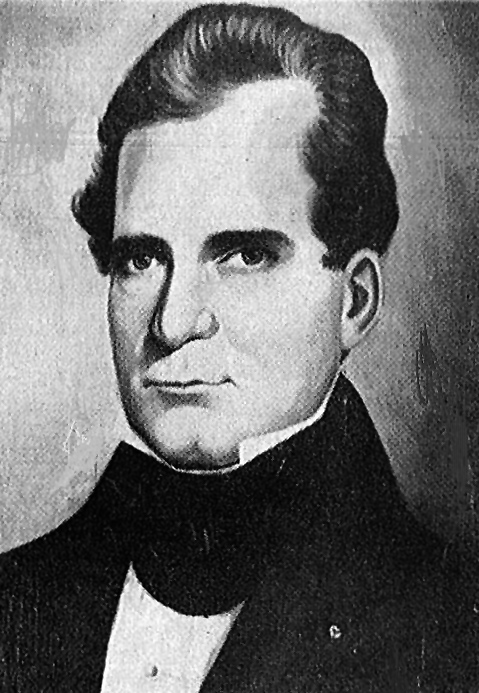
Historical · U.S. House · Georgia · At-Large
John Coffee
Former U.S. Representative · Georgia At-Large · 1833–1837 · Jackson
John Coffee represented Georgia's At-Large in the United States House of Representatives (1833–1837) for the Jackson party. The page below collects sourced biographical facts, term history, committee roles, and provenance for Coffee.
Bioguide ID: C000583
Key facts
- Full name
- John Coffee
- State
- Georgia
- District
- At-Large
- Party
- Jackson
- House service
- 1833–1837
- First House term
- 1833
- Status
- Left office
- Current term ends
- —
- Born
- 1782
- Bioguide ID
- C000583
- Committee assignments
- —
- Dataset version
- 1.20260606
Biographical narrative
803 words · sourced from the Wikipedia REST extract
John Coffee was a U.S. Representative from Georgia, affiliated with the Jacksonian Democratic Party. He served in the House of Representatives during the 1830s, representing the at-large congressional district of Georgia. His political career was preceded by a notable military background, and he was also involved in state politics prior to his congressional service. Coffee's life and career were marked by his contributions to both military and political spheres in the early 19th century.
Early life and career
John Coffee was born on December 3, 1782, in Prince Edward County, Virginia. He was part of a prominent family, being the grandson of Peter Coffee, Sr. and Susannah Mathews. His early life in Virginia was marked by the social and economic dynamics of the time, which included the institution of slavery. At the age of 18, in 1800, Coffee moved with his family to Hancock County, Georgia. There, his parents established a cotton plantation that relied on the labor of enslaved African Americans, reflecting the agricultural practices prevalent in the Southern United States during that period.
In 1807, Coffee relocated to Telfair County, Georgia, where he continued to develop his own plantation. This move was significant as it placed him in a region that was rapidly expanding and developing in the early 19th century. Coffee's involvement in agriculture would later intersect with his military and political endeavors, as the plantation economy was a central aspect of life in Georgia at the time.
Coffee's military career began as he rose to the rank of general in the Georgia state militia. His leadership was particularly notable in the 1820s when he oversaw the construction of a vital supply road through Georgia. This road, known as "Coffee Road," facilitated transportation to the newly established Florida Territory. The road played an essential role in the logistics of the region and is now referred to as the "Old Coffee Road," reflecting Coffee's contributions to infrastructure development in Georgia.
House tenure
John Coffee's political career in the legislative arena began when he was elected to the Georgia Senate, where he served from 1819 to 1827. His tenure in the state senate laid the groundwork for his subsequent election to the United States Congress. In 1833, Coffee was elected as a Jacksonian Democrat to the Twenty-third Congress, marking the beginning of his service in the U.S. House of Representatives. He continued to serve in the Twenty-fourth Congress, holding office until his death in 1836.
During his time in Congress, Coffee was involved in the legislative processes of the early 19th century, a period characterized by significant political and social change in the United States. His role as a congressman allowed him to influence national policy and represent the interests of his constituents in Georgia. Coffee's political alignment with the Jacksonian Democrats positioned him within a party that emphasized agrarian interests, individual liberties, and opposition to centralized banking.
Coffee's congressional career was cut short when he passed away on September 25, 1836, at his plantation near Jacksonville, Georgia. His death occurred shortly before he was posthumously re-elected to the Twenty-fifth Congress, an indication of the esteem in which he was held by his constituents. The news of his passing did not reach the electoral process in time, and he was elected to serve despite his death.
Legislative focus and committees
While specific details regarding the legislative initiatives and committee assignments during John Coffee's time in Congress are not extensively documented, his affiliation with the Jacksonian Democratic Party suggests that his legislative focus likely aligned with the party's principles. The Jacksonian Democrats were known for advocating for the rights of the common man, promoting agrarian interests, and opposing elitist policies that favored the wealthy.
Coffee's background as a plantation owner and military leader may have influenced his perspectives on issues related to agriculture, land use, and military affairs. His experience in the state militia and the construction of infrastructure could have also informed his views on national defense and the importance of transportation networks for economic development.
In addition to his legislative duties, Coffee's contributions to the state of Georgia extended beyond his time in office. His legacy is reflected in the naming of Coffee County, Georgia, and General Coffee State Park, both of which honor his contributions to the state. The establishment of these locations underscores the significance of his role in Georgia's history and the lasting impact of his work in both military and political spheres.
John Coffee's life and career exemplify the interconnectedness of military service and political leadership in the early 19th century United States. His journey from a plantation owner to a congressman illustrates the pathways available to individuals in that era, particularly in the context of the Southern states. His contributions to Georgia's infrastructure and political landscape remain part of the state's historical narrative.
Notable legislation
Sponsored and co-sponsored legislation for John Coffee is pending operator curation. The biographical narrative above carries the same provenance trail until per-bill rows are written.
Sources
- [1]https://en.wikipedia.org/wiki/John_E._CoffeeWikipedia · retrieved 2026-06-06
Notable quotes
Sourced quotes for John Coffee are pending operator curation. Narrative-scope provenance remains attached below.
Sources
- [1]https://en.wikipedia.org/wiki/John_E._CoffeeWikipedia · retrieved 2026-06-06
Key positions
Curated policy positions for John Coffee are pending operator review. The biographical narrative above carries the same provenance trail until per-topic positions are written.
Sources
- [1]https://en.wikipedia.org/wiki/John_E._CoffeeWikipedia · retrieved 2026-06-06
Terms served
- 1833–1835U.S. House · Term 1 · Jackson
- 1835–1837U.S. House · Term 2 · Jackson
Sources & provenance
Every attributable claim above carries a per-section [N] marker that resolves to the corresponding URL below. Each entry records the upstream provider, the canonical URL, and the timestamp at which the source was retrieved by the ingest pipeline.
Key facts
- https://bioguide.congress.gov/search/bio/C000583bioguide · retrieved 2026-06-06
- https://www.govtrack.us/congress/members/402712govtrack · retrieved 2026-06-06
Biographical narrative
- https://en.wikipedia.org/wiki/John_E._Coffeewikipedia · retrieved 2026-06-06
Find your representative
Every U.S. state elects representatives by district. Browse Georgia’s delegation, the full former-representative roster, or explore the role and term length.
Related on The Candidate
- Preceded by Daniel NewnanEarlier holder of the Georgia At-Large House seat · Jackson.Open
- Succeeded by Edward BlackLater holder of the Georgia At-Large House seat · Democratic.Open
- Andrew SloanFormer U.S. Representative · Georgia District 1 · RepublicanOpen
- Anthony WayneFormer U.S. Representative · Georgia District 1Open
- Archibald MacIntyreFormer U.S. Representative · Georgia District 1 · DemocraticOpen
- Bo GinnFormer U.S. Representative · Georgia District 1 · DemocraticOpen