
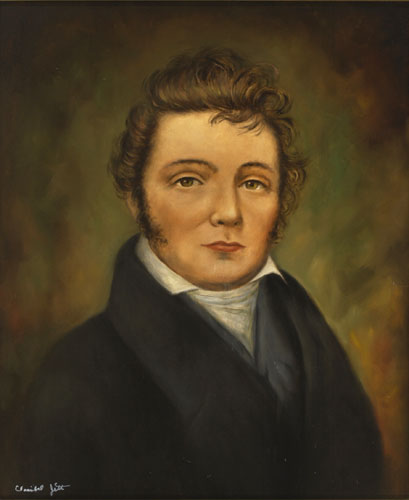
Historical · U.S. House · Georgia · At-Large
Robert Reid
Former U.S. Representative · Georgia At-Large · 1817–1823 · Republican
Robert Reid represented Georgia's At-Large in the United States House of Representatives (1817–1823) for the Republican party. The page below collects sourced biographical facts, term history, committee roles, and provenance for Reid.
Bioguide ID: R000151
Key facts
- Full name
- Robert Reid
- State
- Georgia
- District
- At-Large
- Party
- Republican
- House service
- 1817–1823
- First House term
- 1817
- Status
- Left office
- Current term ends
- —
- Born
- 1789
- Bioguide ID
- R000151
- Committee assignments
- —
- Dataset version
- 1.20260606
Biographical narrative
976 words · sourced from the Wikipedia REST extract
Robert Reid was a prominent figure in early American politics, serving as a U.S. Representative for Georgia and later becoming the fourth territorial governor of Florida. His political career spanned several significant periods in American history, and he held various judicial positions throughout his life. Born in 1789 in South Carolina, Reid's journey through public service began with a legal education and practice in Georgia, leading to his election to Congress. His life was marked by personal challenges, including multiple marriages and the loss of family members, which shaped his character and public service ethos. Reid's legacy includes his contributions to the governance of Florida and his involvement in the early legislative processes of the United States.
Early life and career
Robert Reid was born on September 8, 1789, in Prince William Parish, located in the Beaufort District of South Carolina. His early education took place at the University of South Carolina, where he developed a foundation in legal studies. Following his education, Reid moved to Augusta, Georgia, where he began to practice law. His legal career set the stage for his entry into public service, as he became involved in various judicial roles within the state.
At the age of 27, Reid embarked on a career in public service, initially taking on the responsibilities of a judge. His judicial experience included serving as a judge in the superior court of Georgia and as a circuit court judge for Middle Georgia. Additionally, he held the position of city judge in Augusta, where he contributed to the local legal landscape. These roles not only showcased his legal acumen but also established his reputation as a dedicated public servant.
Reid's political career began to take shape when he was elected as a U.S. Representative for Georgia. He served in the 15th, 16th, and 17th United States Congresses, beginning his first term in 1817. His tenure in Congress coincided with a period of significant growth and change in the United States, as the nation was expanding westward and grappling with various political and social issues.
House tenure
During his time in the House of Representatives, Reid was involved in legislative discussions and decisions that were crucial to the development of the nation. He represented Georgia's at-large district, which encompassed the entire state, reflecting the early structure of congressional representation before the establishment of specific congressional districts. Reid's service in Congress lasted until March 3, 1823, marking the end of his three terms in office.
Reid's legislative focus during his congressional tenure was shaped by the pressing issues of the time, including matters related to statehood, territorial expansion, and the governance of newly acquired lands. His role as a representative allowed him to advocate for the interests of Georgia and contribute to the broader national dialogue on these important topics. While specific legislative achievements from his time in office are not detailed, his participation in Congress during this formative period in American history was significant.
Following his congressional service, Reid continued to engage in public service, transitioning to various judicial roles and ultimately being appointed as the United States judge for the district of East Florida in May 1832. This appointment by President Andrew Jackson further solidified Reid's influence in the legal and political realms, particularly as Florida was undergoing its own transitions toward statehood.
Legislative focus and committees
Reid's legislative focus during his time in the House of Representatives was influenced by the broader context of American politics in the early 19th century. The period was marked by debates over issues such as territorial expansion, the rights of states, and the governance of newly acquired territories. As a representative from Georgia, Reid was positioned to address the concerns of his constituents while also contributing to national discussions on these vital matters.
While specific committee assignments during his congressional tenure are not detailed in the available records, it is common for representatives of that era to have served on committees that dealt with issues pertinent to their states and the nation. These committees would have played a crucial role in shaping legislation and addressing the needs of the constituents they represented. Reid's legal background likely informed his contributions to discussions on judicial matters, land policies, and other legislative initiatives.
Reid's later appointment as governor of Florida in December 1839 by President Martin Van Buren marked another significant chapter in his public service career. As governor, he presided over the convention that drafted Florida's first constitution, a foundational document that would guide the governance of the territory. His leadership during this period was critical as Florida navigated its path toward statehood and dealt with the complexities of the Second Seminole War.
Throughout his life, Reid faced numerous personal challenges, including the loss of family members and the responsibilities of multiple marriages. He married three times, first to Anna Margaret McClaws, with whom he had five children. Following her death, he married Elizabeth Napier D. Randolph, who also passed away tragically. His third marriage to Mary Martha Reid resulted in two sons. The personal tragedies he endured, including the loss of children and grandchildren, profoundly impacted his life and service.
Reid's life came to an end on July 1, 1841, when he succumbed to a yellow fever epidemic in Florida. His death marked the conclusion of a life dedicated to public service and governance, leaving behind a legacy that encompassed both his contributions to the early legislative framework of the United States and his role in the development of Florida as a territory.
In summary, Robert Reid's career as a U.S. Representative and later as the governor of Florida reflects the complexities of early American governance and the personal challenges faced by public figures of his time. His contributions to both Georgia and Florida highlight the interconnectedness of state and national politics during a formative period in American history.
Notable legislation
Sponsored and co-sponsored legislation for Robert Reid is pending operator curation. The biographical narrative above carries the same provenance trail until per-bill rows are written.
Sources
- [1]https://en.wikipedia.org/wiki/Robert_R._ReidWikipedia · retrieved 2026-06-06
Notable quotes
Sourced quotes for Robert Reid are pending operator curation. Narrative-scope provenance remains attached below.
Sources
- [1]https://en.wikipedia.org/wiki/Robert_R._ReidWikipedia · retrieved 2026-06-06
Key positions
Curated policy positions for Robert Reid are pending operator review. The biographical narrative above carries the same provenance trail until per-topic positions are written.
Sources
- [1]https://en.wikipedia.org/wiki/Robert_R._ReidWikipedia · retrieved 2026-06-06
Terms served
- 1817–1819U.S. House · Term 1 · Republican
- 1819–1821U.S. House · Term 2 · Republican
- 1821–1823U.S. House · Term 3 · Republican
Sources & provenance
Every attributable claim above carries a per-section [N] marker that resolves to the corresponding URL below. Each entry records the upstream provider, the canonical URL, and the timestamp at which the source was retrieved by the ingest pipeline.
Key facts
- https://bioguide.congress.gov/search/bio/R000151bioguide · retrieved 2026-06-06
- https://www.govtrack.us/congress/members/409128govtrack · retrieved 2026-06-06
Biographical narrative
- https://en.wikipedia.org/wiki/Robert_R._Reidwikipedia · retrieved 2026-06-06
Find your representative
Every U.S. state elects representatives by district. Browse Georgia’s delegation, the full former-representative roster, or explore the role and term length.
Related on The Candidate
- Preceded by Bolling HallEarlier holder of the Georgia At-Large House seat · Republican.Open
- Succeeded by George CaryLater holder of the Georgia At-Large House seat · Jackson.Open
- Andrew SloanFormer U.S. Representative · Georgia District 1 · RepublicanOpen
- Anthony WayneFormer U.S. Representative · Georgia District 1Open
- Archibald MacIntyreFormer U.S. Representative · Georgia District 1 · DemocraticOpen
- Bo GinnFormer U.S. Representative · Georgia District 1 · DemocraticOpen