
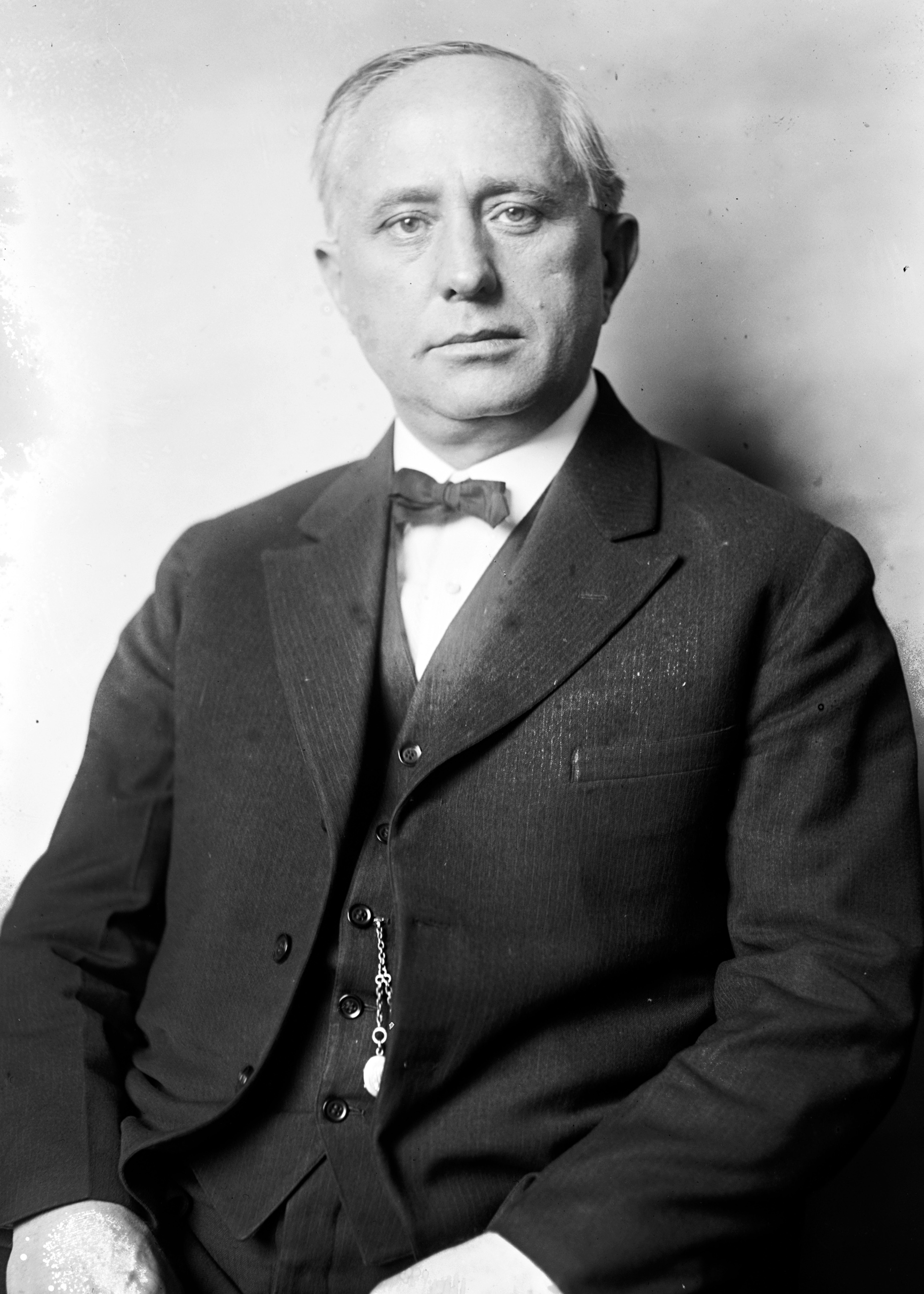
Historical · U.S. House · Iowa · District 6
Christian Ramseyer
Former U.S. Representative · Iowa District 6 · 1915–1933 · Republican
Christian Ramseyer represented Iowa's District 6 in the United States House of Representatives (1915–1933) for the Republican party. The page below collects sourced biographical facts, term history, committee roles, and provenance for Ramseyer.
Bioguide ID: R000031
Key facts
- Full name
- Christian Ramseyer
- State
- Iowa
- District
- District 6
- Party
- Republican
- House service
- 1915–1933
- First House term
- 1915
- Status
- Left office
- Current term ends
- —
- Born
- 1875
- Bioguide ID
- R000031
- Committee assignments
- —
- Dataset version
- 1.20260606
Biographical narrative
921 words · sourced from the Wikipedia REST extract
Christian William Ramseyer was a prominent figure in American politics, serving as a Republican U.S. Representative for Iowa's 6th congressional district. His tenure in the House of Representatives spanned from 1915 until 1933, during which he was elected to nine consecutive terms. Ramseyer's political career was marked by significant contributions to legislative processes, including the establishment of the Ramseyer Rule, which has had a lasting impact on how legislation is presented in Congress. After leaving Congress, he continued to serve the public as a commissioner for the United States Court of Claims until his death in 1943.
Early life and career
Christian Ramseyer was born on March 13, 1875, near Collinsville, Ohio. His early life was characterized by a move to Iowa at the age of twelve when his family relocated to Davis County in 1887, settling near the town of Pulaski. This transition marked the beginning of his deep connection to Iowa, a state that would become central to his identity and political career. Ramseyer attended local public schools, where he laid the foundation for his future academic pursuits.
In 1897, he graduated from the Southern Iowa Normal School, an institution dedicated to training teachers. Following this, he continued his education at Iowa State Teachers College in Cedar Falls, Iowa, where he completed his studies in 1902. Ramseyer's commitment to education led him to a career in teaching, during which he spent nine years in various educational roles. He served as a teacher, principal, and eventually as the superintendent of Bloomfield High School in Bloomfield, Iowa. His experiences in education not only shaped his understanding of community needs but also fostered a commitment to public service.
In 1906, Ramseyer graduated from the University of Iowa College of Law and was admitted to the bar the same year. He began practicing law in Bloomfield, where he established a legal career that would complement his growing interest in public affairs. His legal expertise was further recognized when he served as the prosecuting attorney for Davis County from 1911 to 1915. This role provided him with valuable experience in the legal system and heightened his visibility within the community, setting the stage for his entry into politics.
House tenure
Ramseyer's political career began in earnest when he was elected as a Republican to the Sixty-fourth Congress in 1914. His election marked the start of a long and impactful tenure in the U.S. House of Representatives, where he served from March 4, 1915, to March 3, 1933. Over the course of his nine terms, Ramseyer was re-elected eight consecutive times, a testament to his popularity and effectiveness as a representative.
His time in Congress coincided with significant national events, including World War I and the onset of the Great Depression. These events shaped the legislative landscape and influenced the priorities of Congress during his tenure. Ramseyer's ability to navigate the complexities of these times contributed to his sustained electoral success.
However, his congressional career faced challenges due to changes in Iowa's representation. In 1931, Iowa lost two congressional seats as a result of reapportionment, which placed Ramseyer and fellow Republican congressman Lloyd Thurston in the same district, specifically Iowa's 5th congressional district. This situation led to a competitive primary in 1932, where Ramseyer sought the Republican nomination against Thurston. Ultimately, Thurston emerged victorious in the primary, marking the end of Ramseyer's congressional career.
Despite his defeat, Ramseyer's influence on the legislative process remained significant. His contributions to the House and his understanding of legal matters positioned him as a respected figure in Congress. Following his departure from the House, he continued to serve the public in a different capacity.
Legislative focus and committees
Throughout his tenure in the House of Representatives, Ramseyer was involved in various legislative initiatives and served on multiple committees. His legal background and experience as a prosecutor informed his approach to lawmaking, allowing him to contribute meaningfully to discussions on legal and regulatory issues. While specific details about the bills he sponsored or supported are not provided, it is clear that his legal expertise was an asset in shaping policy.
One of Ramseyer's notable legacies is the establishment of what is now known as the Ramseyer Rule. This rule, which is part of the Standing Rules of the United States House of Representatives, mandates that bills must clearly indicate how they would alter existing laws. This requirement has led to the practice of "Ramseyering," where bills reported out of full House committees include provisions that show repealed or deleted portions of existing law in boldface brackets, while new additions are highlighted in italic typeface. This clarity in legislative documentation has been adopted by various legislative bodies beyond the U.S. Congress, reflecting the enduring impact of Ramseyer's contributions.
After leaving Congress, Ramseyer continued his public service as a commissioner for the United States Court of Claims, a position he held until his death on November 1, 1943, in Washington, D.C. His work in this role further demonstrated his commitment to the legal system and public service. Following his passing, he was interred in Odd Fellows Cemetery in Bloomfield, Iowa, a community that had been central to his life and career.
In summary, Christian Ramseyer's life was marked by a dedication to education, law, and public service. His nine terms in the U.S. House of Representatives were characterized by significant legislative contributions, particularly in the area of legal clarity and transparency in the legislative process. His legacy continues to influence how legislation is crafted and presented in Congress today.
Notable legislation
Sponsored and co-sponsored legislation for Christian Ramseyer is pending operator curation. The biographical narrative above carries the same provenance trail until per-bill rows are written.
Sources
- [1]https://en.wikipedia.org/wiki/C._William_RamseyerWikipedia · retrieved 2026-06-06
Notable quotes
Sourced quotes for Christian Ramseyer are pending operator curation. Narrative-scope provenance remains attached below.
Sources
- [1]https://en.wikipedia.org/wiki/C._William_RamseyerWikipedia · retrieved 2026-06-06
Key positions
Curated policy positions for Christian Ramseyer are pending operator review. The biographical narrative above carries the same provenance trail until per-topic positions are written.
Sources
- [1]https://en.wikipedia.org/wiki/C._William_RamseyerWikipedia · retrieved 2026-06-06
Terms served
- 1915–1917U.S. House · Term 1 · Republican
- 1917–1919U.S. House · Term 2 · Republican
- 1919–1921U.S. House · Term 3 · Republican
- 1921–1923U.S. House · Term 4 · Republican
- 1923–1925U.S. House · Term 5 · Republican
- 1925–1927U.S. House · Term 6 · Republican
- 1927–1929U.S. House · Term 7 · Republican
- 1929–1931U.S. House · Term 8 · Republican
- 1931–1933U.S. House · Term 9 · Republican
Sources & provenance
Every attributable claim above carries a per-section [N] marker that resolves to the corresponding URL below. Each entry records the upstream provider, the canonical URL, and the timestamp at which the source was retrieved by the ingest pipeline.
Key facts
- https://bioguide.congress.gov/search/bio/R000031bioguide · retrieved 2026-06-06
- https://www.govtrack.us/congress/members/409013govtrack · retrieved 2026-06-06
Biographical narrative
- https://en.wikipedia.org/wiki/C._William_Ramseyerwikipedia · retrieved 2026-06-06
Find your representative
Every U.S. state elects representatives by district. Browse Iowa’s delegation, the full former-representative roster, or explore the role and term length.
Related on The Candidate
- Preceded by Sanford KirkpatrickEarlier holder of the Iowa District 6 House seat · Democratic.Open
- Succeeded by Hubert UtterbackLater holder of the Iowa District 6 House seat · Democratic.Open
- Abby FinkenauerFormer U.S. Representative · Iowa District 1 · DemocraticOpen
- Augustus HallFormer U.S. Representative · Iowa District 1 · DemocraticOpen
- Benton HallFormer U.S. Representative · Iowa District 1 · DemocraticOpen
- Bernhart HennFormer U.S. Representative · Iowa District 1 · DemocraticOpen