
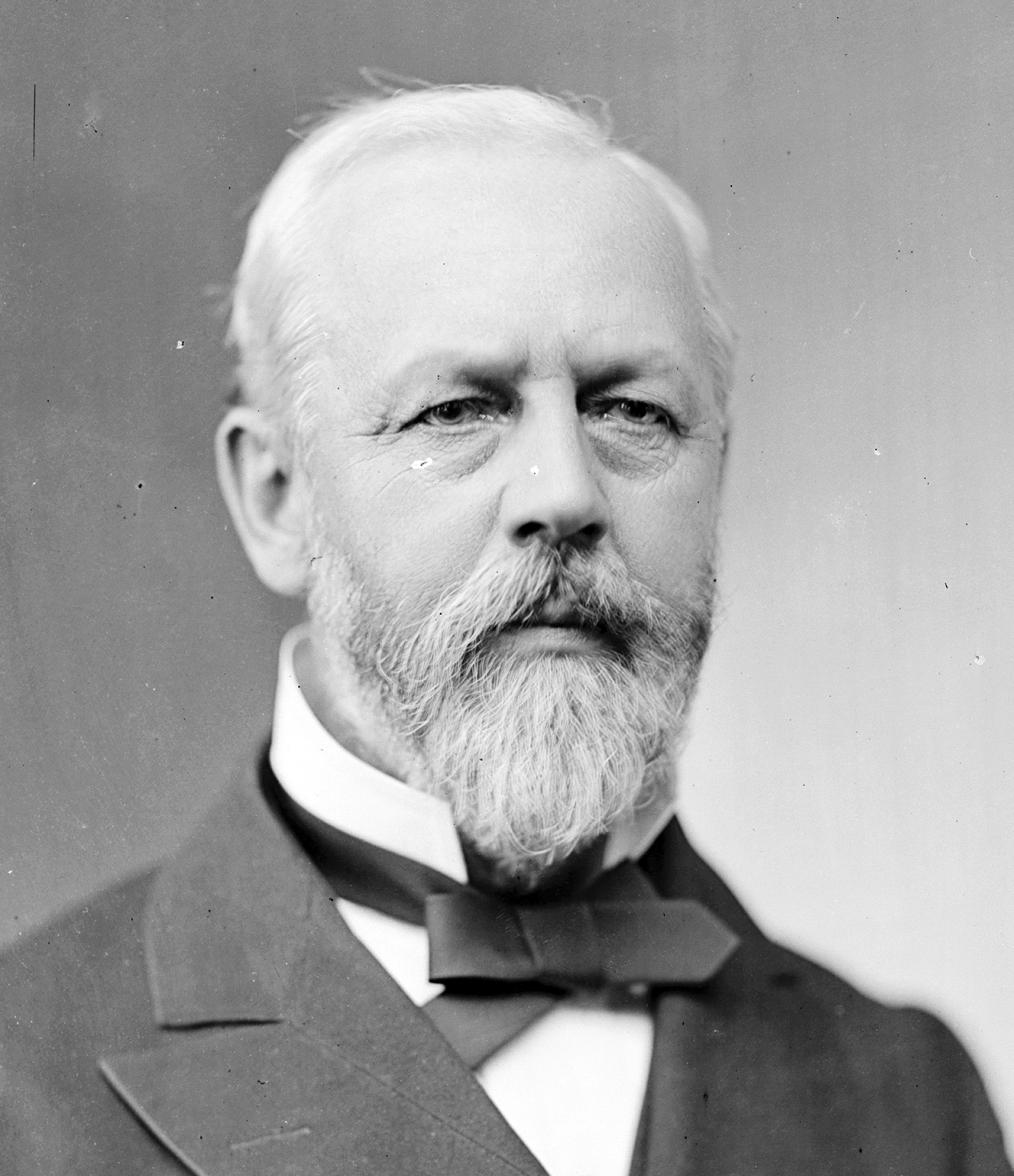
Historical · U.S. House · Illinois · District 1
William Aldrich
Former U.S. Representative · Illinois District 1 · 1877–1883 · Republican
William Aldrich represented Illinois's District 1 in the United States House of Representatives (1877–1883) for the Republican party. The page below collects sourced biographical facts, term history, committee roles, and provenance for Aldrich.
Bioguide ID: A000086
Key facts
- Full name
- William Aldrich
- State
- Illinois
- District
- District 1
- Party
- Republican
- House service
- 1877–1883
- First House term
- 1877
- Status
- Left office
- Current term ends
- —
- Born
- 1820
- Bioguide ID
- A000086
- Committee assignments
- —
- Dataset version
- 1.20260606
Biographical narrative
887 words · sourced from the Wikipedia REST extract
William Aldrich was an American politician and member of the Republican Party who served as a U.S. Representative for Illinois's 1st congressional district from 1877 until 1883. His political career was marked by a commitment to public service, which began long before his tenure in Congress. Aldrich's life journey took him from his early years in New York to various roles in Michigan and Wisconsin, ultimately leading him to a significant political role in Illinois. His legacy includes not only his own contributions to American politics but also the continuation of his family's political involvement, as his son later succeeded him in Congress.
Early life and career
William Aldrich was born on January 19, 1820, in Greenfield Center, located in the Town of Greenfield, New York. His early education took place in local schools, where he developed a foundation for his future endeavors. After completing his education, Aldrich transitioned into teaching, which was a common profession for individuals of his time seeking to contribute to their communities. This early involvement in education reflects a commitment to public service that would characterize his later political career.
In pursuit of broader opportunities, Aldrich moved to Michigan, where he began to establish himself in the business sector. He later relocated to Two Rivers, Wisconsin, where he worked as a shopkeeper and manufacturer. His entrepreneurial ventures provided him with valuable experience in managing a business and understanding the economic needs of his community. Aldrich's involvement in local governance began to take shape during this period; he served as the superintendent of schools from 1855 to 1856, a role that underscored his ongoing commitment to education and community development.
Aldrich's political career began to gain momentum when he was elected as the chairman of the county board of supervisors from 1857 to 1858. This position allowed him to influence local policy and governance, further solidifying his reputation as a dedicated public servant. In 1859, he was elected to the Wisconsin State Assembly, marking his first significant foray into state-level politics. His experiences in these various roles laid the groundwork for his future endeavors in Congress.
In 1861, Aldrich moved to Chicago, Illinois, where he opened another shop, continuing his career in business while also engaging in local politics. His involvement in the Chicago City Council in 1876 provided him with further experience in governance and public service, setting the stage for his election to the U.S. House of Representatives the following year.
House tenure
William Aldrich's tenure in the U.S. House of Representatives began in 1877, representing Illinois's 1st congressional district. He served three consecutive terms in Congress, during which he participated in the legislative process during a period of significant change in American society. His time in office coincided with the post-Civil War era, a time when the nation was grappling with issues related to reconstruction, economic development, and social change.
During his time in the House, Aldrich was involved in various legislative discussions and decisions that shaped the direction of the country. While specific details of the bills he supported or opposed are not documented, his role as a congressman would have required him to engage with a wide range of issues, from economic policies to social reforms. His experience in local and state governance likely informed his approach to national legislation, as he sought to represent the interests of his constituents in Illinois.
Aldrich's congressional career lasted until March 3, 1883, when he completed his final term. The end of his tenure marked a significant transition, both for him personally and for the political landscape of Illinois. His contributions during his time in office would have had lasting effects on the policies and governance of the state, as well as on the broader national stage.
Legislative focus and committees
While specific details regarding Aldrich's legislative focus and committee assignments during his time in Congress are not provided, it is reasonable to infer that his background in education, local governance, and business would have influenced his areas of interest and expertise. As a former superintendent of schools and a member of the county board of supervisors, he likely had a vested interest in education policy and local governance issues. Additionally, his experience as a shopkeeper and manufacturer may have led him to engage with economic and business-related legislation.
The late 19th century was a time of significant transformation in the United States, with rapid industrialization and urbanization reshaping the social and economic landscape. Aldrich's legislative work would have taken place against this backdrop, where issues such as labor rights, infrastructure development, and economic policy were at the forefront of national discussions. His role as a congressman would have required him to navigate these complex issues while advocating for the needs and interests of his constituents in Illinois.
After leaving Congress, Aldrich continued to be involved in public life until his death on December 3, 1885, in Fond du Lac, Wisconsin. He was laid to rest in Rosehill Cemetery in Chicago, where his legacy as a public servant remains. Aldrich's commitment to education, local governance, and his contributions to the U.S. House of Representatives reflect a life dedicated to the principles of public service and community engagement. His son, James Franklin Aldrich, would later follow in his footsteps, serving as a Congressman and continuing the family's political legacy.
Notable legislation
Sponsored and co-sponsored legislation for William Aldrich is pending operator curation. The biographical narrative above carries the same provenance trail until per-bill rows are written.
Sources
- [1]https://en.wikipedia.org/wiki/William_AldrichWikipedia · retrieved 2026-06-06
Notable quotes
Sourced quotes for William Aldrich are pending operator curation. Narrative-scope provenance remains attached below.
Sources
- [1]https://en.wikipedia.org/wiki/William_AldrichWikipedia · retrieved 2026-06-06
Key positions
Curated policy positions for William Aldrich are pending operator review. The biographical narrative above carries the same provenance trail until per-topic positions are written.
Sources
- [1]https://en.wikipedia.org/wiki/William_AldrichWikipedia · retrieved 2026-06-06
Terms served
- 1877–1879U.S. House · Term 1 · Republican
- 1879–1881U.S. House · Term 2 · Republican
- 1881–1883U.S. House · Term 3 · Republican
Sources & provenance
Every attributable claim above carries a per-section [N] marker that resolves to the corresponding URL below. Each entry records the upstream provider, the canonical URL, and the timestamp at which the source was retrieved by the ingest pipeline.
Key facts
- https://bioguide.congress.gov/search/bio/A000086bioguide · retrieved 2026-06-06
- https://www.govtrack.us/congress/members/400745govtrack · retrieved 2026-06-06
Biographical narrative
- https://en.wikipedia.org/wiki/William_Aldrichwikipedia · retrieved 2026-06-06
Find your representative
Every U.S. state elects representatives by district. Browse Illinois’s delegation, the full former-representative roster, or explore the role and term length.
Related on The Candidate
- Preceded by Bernard CaulfieldEarlier holder of the Illinois District 1 House seat · Democratic.Open
- Succeeded by Ransom DunhamLater holder of the Illinois District 1 House seat · Republican.Open
- Abner TaylorFormer U.S. Representative · Illinois District 1 · RepublicanOpen
- Adam SnyderFormer U.S. Representative · Illinois District 1 · DemocraticOpen
- Arthur MitchellFormer U.S. Representative · Illinois District 1 · DemocraticOpen
- Bennett StewartFormer U.S. Representative · Illinois District 1 · DemocraticOpen