
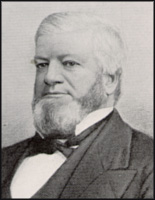
Historical · U.S. House · Illinois · District 1
John Rice
Former U.S. Representative · Illinois District 1 · 1873–1875 · Republican
John Rice represented Illinois's District 1 in the United States House of Representatives (1873–1875) for the Republican party. The page below collects sourced biographical facts, term history, committee roles, and provenance for Rice.
Bioguide ID: R000200
Key facts
- Full name
- John Rice
- State
- Illinois
- District
- District 1
- Party
- Republican
- House service
- 1873–1875
- First House term
- 1873
- Status
- Left office
- Current term ends
- —
- Born
- 1809
- Bioguide ID
- R000200
- Committee assignments
- —
- Dataset version
- 1.20260606
Biographical narrative
825 words · sourced from the Wikipedia REST extract
John Rice was an American politician, actor, and theatrical producer who served as a U.S. Representative for Illinois's 1st congressional district from 1873 until his death in 1874. A member of the Republican Party, Rice had a diverse career that included significant contributions to the theatrical scene in Chicago and a term as the city's mayor. His political career was marked by his conservative views and involvement in local governance during a transformative period in American history.
Early life and career
John Rice was born on May 28, 1809, in Easton, Maryland. He began his career in the performing arts, making his acting debut in Annapolis in 1829. His first professional role was as Uncle Barnwell in George Lillo's play, "The London Merchant." Over the years, Rice toured extensively along the East Coast and even ventured into the West Indies, showcasing his talents in various theatrical productions.
While residing in Philadelphia, Pennsylvania, Rice married into a family involved in the local theater scene, which further anchored his connection to the performing arts. By 1839, he had relocated his family to Buffalo, New York, where he managed a theater during the summer months. In the winter, he took on the role of theater manager in Albany, New York, continuing to build his reputation in the theatrical community.
In 1847, Rice moved to Chicago to perform at the River and Harbor Convention, which was notable for being the city's first national convention. He decided to remain in Chicago, where he established a permanent theater known as Rice's Theater. However, his initial venture faced a significant setback. On July 30, 1850, a fire broke out during a performance of Vincenzo Bellini's opera "La Sonnambula." Despite his attempts to calm the audience, the situation escalated into panic, resulting in the destruction of the theater and a financial loss of approximately $4,000. Following a benefit performance that raised only a small amount, Rice temporarily left Chicago for Milwaukee, Wisconsin.
Rice returned to Chicago in 1851 and constructed a new theater, this time built entirely of brick. He appointed James McVicker as the theater's manager and remained active in the theatrical scene until 1857. His contributions to the arts during this period were significant, as he played a key role in shaping the cultural landscape of Chicago.
House tenure
Rice's political career began to take shape in the 1860s, culminating in his election to the U.S. House of Representatives in 1872, where he represented Illinois's 1st congressional district. His term in Congress began in 1873, during a time when the nation was recovering from the Civil War and grappling with various social and economic challenges. Rice's tenure in the House was relatively short-lived, as he served until his death in 1874.
While in Congress, Rice faced health challenges, suffering from liver cancer. Despite his illness, he did not seek medical treatment and continued to fulfill his duties as a representative. His health deteriorated, and he passed away on December 17, 1874, in Norfolk, Virginia, at a home he had constructed there. His death occurred shortly after the election, and he had not sought re-election that year. This raised questions regarding the appointment of a replacement to complete his term, which was ultimately resolved when Bernard G. Caulfield won a special election to succeed him.
Rice's congressional career was marked by the challenges of his declining health, and he left behind a legacy that intertwined his theatrical background with his political endeavors. He was buried in Chicago's Rosehill Cemetery, where he was laid to rest alongside his contributions to both the arts and public service.
Legislative focus and committees
During his time in the House of Representatives, John Rice's legislative focus and committee assignments are not extensively documented. However, his background as a conservative Republican and his previous experience as mayor of Chicago likely influenced his perspectives on various issues. His tenure occurred during a period of significant political and social change in the United States, particularly in the aftermath of the Civil War.
Rice's political career was characterized by his conservative stance on labor issues, as evidenced by his actions during his mayoralty when he vetoed a plan to enforce an eight-hour workday. This decision led to public demonstrations and highlighted the tensions between labor and management during that era. While specific legislative initiatives or committee memberships during his time in Congress are not detailed, it can be inferred that his experiences in local governance and his conservative ideology shaped his approach to national issues.
In summary, John Rice's life spanned various domains, including theater and politics. His contributions to the cultural fabric of Chicago and his service in the U.S. House of Representatives reflect a multifaceted individual who navigated the complexities of American society in the 19th century. Despite the brevity of his congressional career, Rice's legacy endures through his involvement in both the arts and public service, marking him as a notable figure in Illinois history.
Notable legislation
Sponsored and co-sponsored legislation for John Rice is pending operator curation. The biographical narrative above carries the same provenance trail until per-bill rows are written.
Sources
- [1]https://en.wikipedia.org/wiki/John_Blake_RiceWikipedia · retrieved 2026-06-06
Notable quotes
Sourced quotes for John Rice are pending operator curation. Narrative-scope provenance remains attached below.
Sources
- [1]https://en.wikipedia.org/wiki/John_Blake_RiceWikipedia · retrieved 2026-06-06
Key positions
Curated policy positions for John Rice are pending operator review. The biographical narrative above carries the same provenance trail until per-topic positions are written.
Sources
- [1]https://en.wikipedia.org/wiki/John_Blake_RiceWikipedia · retrieved 2026-06-06
Terms served
- 1873–1875U.S. House · Term 1 · Republican
Sources & provenance
Every attributable claim above carries a per-section [N] marker that resolves to the corresponding URL below. Each entry records the upstream provider, the canonical URL, and the timestamp at which the source was retrieved by the ingest pipeline.
Key facts
- https://bioguide.congress.gov/search/bio/R000200bioguide · retrieved 2026-06-06
- https://www.govtrack.us/congress/members/409176govtrack · retrieved 2026-06-06
Biographical narrative
- https://en.wikipedia.org/wiki/John_Blake_Ricewikipedia · retrieved 2026-06-06
Find your representative
Every U.S. state elects representatives by district. Browse Illinois’s delegation, the full former-representative roster, or explore the role and term length.
Related on The Candidate
- Preceded by Norman JuddEarlier holder of the Illinois District 1 House seat · Republican.Open
- Succeeded by William AldrichLater holder of the Illinois District 1 House seat · Republican.Open
- Abner TaylorFormer U.S. Representative · Illinois District 1 · RepublicanOpen
- Adam SnyderFormer U.S. Representative · Illinois District 1 · DemocraticOpen
- Arthur MitchellFormer U.S. Representative · Illinois District 1 · DemocraticOpen
- Bennett StewartFormer U.S. Representative · Illinois District 1 · DemocraticOpen