
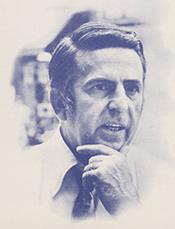
Historical · U.S. House · Illinois · District 10
Abner Mikva
Former U.S. Representative · Illinois District 10 · 1969–1981 · Democratic
Abner Mikva represented Illinois's District 10 in the United States House of Representatives (1969–1981) for the Democratic party. The page below collects sourced biographical facts, term history, committee roles, and provenance for Mikva.
Bioguide ID: M000703
Key facts
- Full name
- Abner Mikva
- State
- Illinois
- District
- District 10
- Party
- Democratic
- House service
- 1969–1981
- First House term
- 1969
- Status
- Left office
- Current term ends
- —
- Born
- 1926
- Bioguide ID
- M000703
- Committee assignments
- —
- Dataset version
- 1.20260605
Biographical narrative
966 words · sourced from the Wikipedia REST extract
Abner J. Mikva was an American politician, federal judge, and legal scholar who served as a U.S. Representative for Illinois. A member of the Democratic Party, Mikva had a notable career that spanned multiple branches of government, including the legislative and judicial branches. He served five terms in the U.S. House of Representatives from 1969 to 1981, representing both the 2nd and 10th congressional districts of Illinois. Following his tenure in Congress, he was appointed as a judge on the United States Court of Appeals for the District of Columbia Circuit, a position he held from 1979 until 1994. Mikva's career also included a role as White House Counsel during the presidency of Bill Clinton. His influence extended beyond politics into academia, where he mentored future leaders in law and politics.
Early life and career
Abner Joseph Mikva was born on January 21, 1926, in Milwaukee, Wisconsin, to Jewish immigrant parents, Ida and Henry Abraham Mikva, who fled Ukraine to escape pogroms. Growing up in a family that spoke Yiddish at home, Mikva experienced the challenges of the Great Depression, during which his father often faced unemployment, leading the family to rely on welfare support. He attended local public schools and later enlisted in the United States Army Air Corps during World War II. However, the war concluded just before he was deployed.
After his military service, Mikva utilized the benefits of the GI Bill to pursue higher education. He initially attended the University of Wisconsin–Milwaukee before transferring to Washington University in St. Louis. It was there that he met Zorita Rose (Zoe) Wise, whom he married after both graduated in 1948. The couple later moved to Chicago, where Mikva enrolled at the University of Chicago Law School, graduating with a Juris Doctor degree in 1951. During his time in law school, he served as the editor-in-chief of the University of Chicago Law Review.
Following his graduation, Mikva began his legal career by clerking for Supreme Court Justice Sherman Minton. He then returned to Chicago to practice law, eventually becoming a partner in a firm that handled a variety of cases, including labor, real estate, commercial, civil rights, and some criminal defense matters. His early interest in politics was evident when he volunteered for political campaigns, marking the beginning of his long-standing engagement in public service.
Mikva's political career took off when he was elected to the Illinois House of Representatives, where he served from 1956 to 1966. During his decade in the state legislature, he became part of a group known as the "Kosher Nostra," which included several reform-minded Democrats. This group aimed to promote clean governance and progressive policies in Illinois.
House tenure
Mikva's journey to the U.S. Congress began with a primary challenge in 1966, where he lost to the incumbent congressman Barrett O'Hara. However, he re-emerged as a community activist and successfully ran for Congress in 1968. He served in the U.S. House of Representatives from 1969 to 1973 and again from 1975 to 1979. Initially, he represented Illinois's 2nd congressional district, which included the South Side's lakefront wards, notably Hyde Park, where he resided and where the University of Chicago is located.
Throughout his congressional career, Mikva faced significant challenges, including attempts by both political parties to redistrict him out of his seat. The redistricting process for the 1972 elections placed Hyde Park in the 1st District, which would have forced him to compete against Democratic incumbent Ralph Metcalfe in a predominantly African American district. To avoid this, Mikva chose to run in the North Shore's 10th District.
In the 1972 election, Mikva was defeated by Republican Samuel H. Young. However, he returned to Congress in 1974 during a Democratic wave election, winning with a narrow majority. His reputation as a critic of the Chicago Democratic establishment helped him gain traction in the predominantly Republican suburban district. In 1976, he faced Young again in a rematch, winning by a slim margin of just 201 votes in what was one of the most expensive congressional races at that time. Mikva's final election victory came in 1978 when he defeated Republican State Representative John Porter by a margin of 650 votes, humorously referring to his win as a "landslide." He ultimately resigned from Congress to accept a judicial appointment.
Legislative focus and committees
During his time in the House of Representatives, Mikva was known for his commitment to various legislative issues, including civil rights, education, and social justice. His background as a lawyer and his experiences in the Illinois legislature informed his approach to policymaking. Mikva's legislative focus reflected his dedication to progressive values and his belief in the importance of government intervention in addressing social issues.
Mikva served on several committees during his tenure, which allowed him to influence legislation on a range of topics. His work in Congress was characterized by a collaborative spirit, and he often sought to build coalitions across party lines to advance his legislative goals. His ability to navigate complex political landscapes and advocate for his constituents contributed to his effectiveness as a legislator.
After leaving Congress, Mikva continued to serve the public in various capacities, including his appointment as a federal judge and his role as White House Counsel. His extensive career in public service and law left a lasting impact on American governance and the legal profession. Mikva's legacy is also evident in his contributions to legal education, where he mentored numerous students, including future leaders in law and politics.
Abner J. Mikva passed away on July 4, 2016, leaving behind a rich legacy of public service and legal scholarship. His career exemplifies the interconnectedness of the legislative, executive, and judicial branches of government, as he was one of the few individuals to serve in all three branches at the federal level.
Notable legislation
Sponsored and co-sponsored legislation for Abner Mikva is pending operator curation. The biographical narrative above carries the same provenance trail until per-bill rows are written.
Sources
- [1]https://en.wikipedia.org/wiki/Abner_MikvaWikipedia · retrieved 2026-06-05
Notable quotes
Sourced quotes for Abner Mikva are pending operator curation. Narrative-scope provenance remains attached below.
Sources
- [1]https://en.wikipedia.org/wiki/Abner_MikvaWikipedia · retrieved 2026-06-05
Key positions
Curated policy positions for Abner Mikva are pending operator review. The biographical narrative above carries the same provenance trail until per-topic positions are written.
Sources
- [1]https://en.wikipedia.org/wiki/Abner_MikvaWikipedia · retrieved 2026-06-05
Terms served
- 1969–1971U.S. House · Term 1 · Democratic
- 1971–1973U.S. House · Term 2 · Democratic
- 1975–1977U.S. House · Term 3 · Democratic
- 1977–1979U.S. House · Term 4 · Democratic
- 1979–1981U.S. House · Term 5 · Democratic
Sources & provenance
Every attributable claim above carries a per-section [N] marker that resolves to the corresponding URL below. Each entry records the upstream provider, the canonical URL, and the timestamp at which the source was retrieved by the ingest pipeline.
Key facts
- https://bioguide.congress.gov/search/bio/M000703bioguide · retrieved 2026-06-05
- https://www.govtrack.us/congress/members/407686govtrack · retrieved 2026-06-05
Biographical narrative
- https://en.wikipedia.org/wiki/Abner_Mikvawikipedia · retrieved 2026-06-05
Find your representative
Every U.S. state elects representatives by district. Browse Illinois’s delegation, the full former-representative roster, or explore the role and term length.
Related on The Candidate
- Preceded by Richard HoffmanEarlier holder of the Illinois District 10 House seat · Republican.Open
- Succeeded by Bob DoldLater holder of the Illinois District 10 House seat · Republican.Open
- Abner TaylorFormer U.S. Representative · Illinois District 1 · RepublicanOpen
- Adam SnyderFormer U.S. Representative · Illinois District 1 · DemocraticOpen
- Arthur MitchellFormer U.S. Representative · Illinois District 1 · DemocraticOpen
- Bennett StewartFormer U.S. Representative · Illinois District 1 · DemocraticOpen