
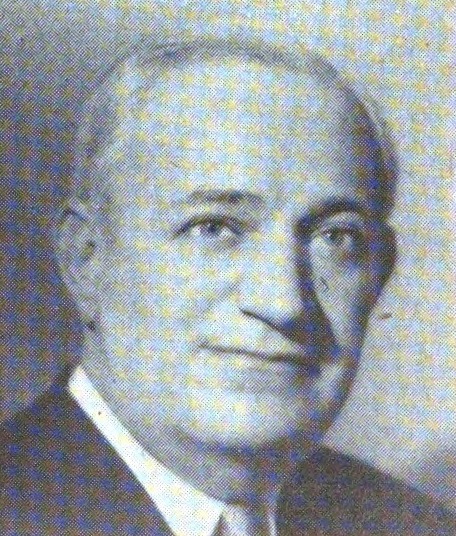
Historical · U.S. House · Illinois · District 10
Richard Hoffman
Former U.S. Representative · Illinois District 10 · 1949–1957 · Republican
Richard Hoffman represented Illinois's District 10 in the United States House of Representatives (1949–1957) for the Republican party. The page below collects sourced biographical facts, term history, committee roles, and provenance for Hoffman.
Bioguide ID: H000689
Key facts
- Full name
- Richard Hoffman
- State
- Illinois
- District
- District 10
- Party
- Republican
- House service
- 1949–1957
- First House term
- 1949
- Status
- Left office
- Current term ends
- —
- Born
- 1893
- Bioguide ID
- H000689
- Committee assignments
- —
- Dataset version
- 1.20260605
Biographical narrative
934 words · sourced from the Wikipedia REST extract
Richard Hoffman was a prominent figure in American politics during the mid-20th century, serving as a U.S. Representative from Illinois. A member of the Republican Party, he represented the 10th congressional district of Illinois from 1949 until 1957. Throughout his four terms in the House, Hoffman was involved in various legislative activities and community initiatives, reflecting the interests and needs of his constituents. His career in public service followed a diverse background in business and education, which shaped his approach to governance and community engagement.
Early life and career
Richard William Hoffman was born on December 23, 1893, in Chicago, Illinois. His early life in a major urban center likely exposed him to a variety of cultural and social influences that would later inform his political career. Following his formative years, Hoffman served in the military during World War I, an experience that not only contributed to his personal development but also instilled in him a sense of duty and service to his country. After the war, he transitioned into the business sector, where he engaged in the printing and publishing industry. This involvement in media and communication would have provided him with valuable insights into public opinion and the dissemination of information, skills that would later prove beneficial in his political endeavors.
In addition to his work in publishing, Hoffman ventured into the broadcasting industry by owning and operating radio stations in Chicago. This experience in media likely enhanced his public speaking abilities and understanding of mass communication, both of which are crucial for a successful political career. His entrepreneurial spirit and business acumen would have contributed to his reputation as a capable leader in both business and politics.
Hoffman also had a significant impact on local education. He served as the president of the board of education for J. Sterling Morton High School and Junior College during two separate terms, from 1933 to 1936 and again from 1939 to 1948. His leadership in the educational sector demonstrated his commitment to community development and the importance of education in fostering a knowledgeable citizenry. This role allowed him to influence educational policies and practices, further solidifying his standing in the community and preparing him for a future in public office.
House tenure
Hoffman's political career in the U.S. House of Representatives began when he was elected as a Republican to the 81st Congress, which convened on January 3, 1949. He was subsequently re-elected for three additional terms, serving in total from 1949 until January 3, 1957. During his time in Congress, Hoffman represented the interests of his constituents in Illinois' 10th congressional district, which encompasses parts of the Chicago metropolitan area. His tenure coincided with a period of significant change in American society, including post-war recovery and the early stages of the Cold War.
Throughout his four terms, Hoffman participated in various legislative activities and debates, contributing to discussions that shaped national policy. His experience in business and education likely informed his perspectives on economic and educational issues, which were critical during the post-war era. Although specific details regarding his legislative initiatives and voting record are not provided, it is evident that his background and community involvement would have influenced his approach to governance and policymaking.
In 1956, Hoffman chose not to seek renomination for the 85th Congress, marking the end of his congressional career. This decision allowed him to return to his previous business activities, where he continued to apply his skills and experience in the private sector. His departure from Congress reflected a common practice among politicians who, after serving multiple terms, opt to pursue other opportunities or retire from public life.
Legislative focus and committees
While specific details about Hoffman's legislative focus and committee assignments during his time in Congress are not available, it can be inferred that his background in education and business likely influenced his areas of interest. Representatives often align their legislative priorities with their professional experiences and the needs of their constituents. Given Hoffman's involvement in education, it is plausible that he advocated for policies aimed at improving educational opportunities and resources for students in his district.
Additionally, as a member of the Republican Party during a time of significant political and social change, Hoffman would have engaged in discussions surrounding economic policies, national security, and civil rights. The post-war period was marked by a growing emphasis on economic development and the expansion of social programs, which may have shaped the legislative landscape in which he operated. His experiences in the media and education sectors could have provided him with a unique perspective on the importance of communication and public engagement in the legislative process.
Hoffman's tenure in Congress was characterized by a commitment to serving his constituents and addressing their concerns. His background in business and education likely equipped him with the tools necessary to navigate the complexities of federal legislation and advocate effectively for the needs of his district. Although specific legislative achievements are not detailed, his four terms in the House reflect a sustained effort to represent the interests of the people of Illinois.
Following his departure from Congress, Hoffman returned to his business pursuits and continued to reside in Riverside, Illinois. He remained engaged in his community until his passing on July 6, 1975, in Maywood, Illinois. His contributions to public service and local governance left a lasting impact on the communities he served, and he was interred in Forest Home Cemetery in Forest Park, Illinois. Hoffman's life and career exemplify the multifaceted nature of public service, combining military service, business acumen, and a commitment to education and community development.
Notable legislation
Sponsored and co-sponsored legislation for Richard Hoffman is pending operator curation. The biographical narrative above carries the same provenance trail until per-bill rows are written.
Sources
- [1]https://en.wikipedia.org/wiki/Richard_W._HoffmanWikipedia · retrieved 2026-06-05
Notable quotes
Sourced quotes for Richard Hoffman are pending operator curation. Narrative-scope provenance remains attached below.
Sources
- [1]https://en.wikipedia.org/wiki/Richard_W._HoffmanWikipedia · retrieved 2026-06-05
Key positions
Curated policy positions for Richard Hoffman are pending operator review. The biographical narrative above carries the same provenance trail until per-topic positions are written.
Sources
- [1]https://en.wikipedia.org/wiki/Richard_W._HoffmanWikipedia · retrieved 2026-06-05
Terms served
- 1949–1951U.S. House · Term 1 · Republican
- 1951–1953U.S. House · Term 2 · Republican
- 1953–1955U.S. House · Term 3 · Republican
- 1955–1957U.S. House · Term 4 · Republican
Sources & provenance
Every attributable claim above carries a per-section [N] marker that resolves to the corresponding URL below. Each entry records the upstream provider, the canonical URL, and the timestamp at which the source was retrieved by the ingest pipeline.
Key facts
- https://bioguide.congress.gov/search/bio/H000689bioguide · retrieved 2026-06-05
- https://www.govtrack.us/congress/members/405542govtrack · retrieved 2026-06-05
Biographical narrative
- https://en.wikipedia.org/wiki/Richard_W._Hoffmanwikipedia · retrieved 2026-06-05
Find your representative
Every U.S. state elects representatives by district. Browse Illinois’s delegation, the full former-representative roster, or explore the role and term length.
Related on The Candidate
- Preceded by George PaddockEarlier holder of the Illinois District 10 House seat · Republican.Open
- Succeeded by Abner MikvaLater holder of the Illinois District 10 House seat · Democratic.Open
- Abner TaylorFormer U.S. Representative · Illinois District 1 · RepublicanOpen
- Adam SnyderFormer U.S. Representative · Illinois District 1 · DemocraticOpen
- Arthur MitchellFormer U.S. Representative · Illinois District 1 · DemocraticOpen
- Bennett StewartFormer U.S. Representative · Illinois District 1 · DemocraticOpen